- HOME
- Starting to Stop
- What Happens When You Stop
What Happens When You Stop Drinking Every Night

Written by Susan — Quit drinking at 37 • Sober since 1998 • Sharing what actually works
Written by Susan — Quit drinking at 37 • Sober since 1998 • Sharing what actually works
If you’ve been drinking every night for a while, you may have wondered what happens when you stop drinking every night — and whether it will feel like a loss or a relief. What often surprises people is how quickly things begin to shift — even if those changes feel small at first. Not perfectly, and not all at once — but enough to notice.
✅ Quick Answer: What happens when you stop drinking every night?
Most people notice better sleep, clearer thinking, improved mood, and more consistent energy. Over time, evenings begin to feel calmer and more intentional rather than automatic. This article is about habitual nightly drinking, not severe alcohol withdrawal.
🎙️ Want to hear the podcast hosts’ take?
The podcast conversation explores this topic from another perspective.
Jump to the podcast episode.
What Happens When You Stop Drinking Every Night? (What to Expect)
Let’s be honest — this part matters.
At first, evenings can feel:
- unfamiliar
- a little restless
- slightly “off”
That’s not a sign something’s wrong.
👉 It’s simply your usual pattern beginning to shift
Sleep Starts to Improve
Even if it doesn’t happen instantly, this is one of the biggest changes.
Without alcohol:
- sleep becomes deeper
- you wake up less during the night
- mornings feel clearer
👉 This alone can shift your entire day
This is often one of the first noticeable changes when you stop drinking every night.
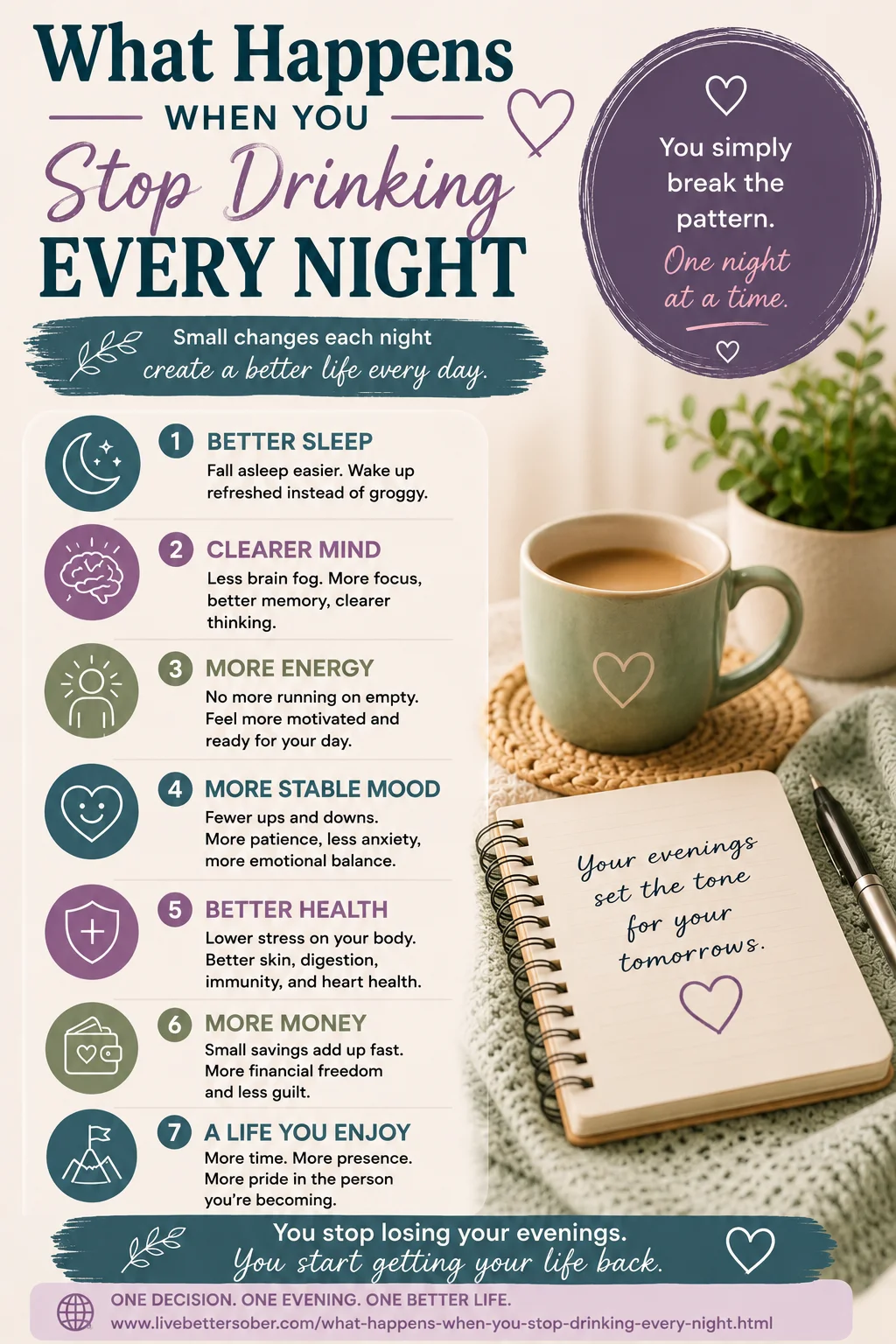
What Happens After 24 Hours Without Alcohol
The first 24 hours without alcohol usually aren’t dramatic.
For most people, it simply feels like the first evening they’ve decided not to follow the usual routine.
At this stage, you’re not necessarily feeling huge physical changes yet. The bigger shift is mental — realizing you didn’t have that nightly drink and got through the evening anyway.
That awareness can feel unfamiliar at first.
Not bad… just different.
The real adjustment often begins over the next several evenings, when your brain starts recognizing that this might not just be a one-night break, but the beginning of a new pattern.
What Happens 1 Week Without Alcohol
By the first week, the reality of the change starts to sink in.
This is often when restlessness shows up.
Not necessarily because something is wrong — but because your evenings are beginning to look different, and your brain is still adjusting to that change.
You may find yourself wondering:
👉 “Can I actually keep doing this?”
That uncertainty is normal.
At the same time, many people begin noticing small but encouraging shifts:
- slightly better sleep
- clearer thinking
- less mental fog
- more awareness of how automatic the old routine had become
This is also the stage where new associations begin to form.
Instead of automatically connecting evening time with drinking, your brain slowly starts adapting to a different rhythm.
And by the second or third week, many people feel something unexpected:
Relief.
Relief that they’ve made it this far… and relief that not drinking every night is starting to feel more possible than impossible.
What Happens After 1 Month Without Alcohol
After a month without alcohol, something deeper begins to change.
Not just physically — mentally.
You begin to realize that maybe this habit had more control over your life than you originally thought.
And with every evening you get through, your confidence starts growing.
Not in a loud way.
In a quiet, steady way.
The kind that comes from proving to yourself that you’re capable of changing something that once felt automatic.
You start noticing freedoms you may not have fully appreciated before:
- being able to drive anywhere at night without worrying
- saving money instead of constantly spending it on alcohol
- waking up without regret or mental exhaustion
- feeling more present in your own life
And over time, something even more important begins to build: self-trust.
You stop seeing yourself as someone who “needs” a drink every night to relax, cope, or get through the evening.
And that realization can change far more than your routine.
It can change how you see yourself moving forward.
The Habit Loses Its Grip
Once you’ve replaced the routine and experienced a few benefits…
👉 the pull starts to weaken
Not because you’re forcing it — but because you no longer need it in the same way.
If you’re just starting and want to understand where this habit comes from, begin here:
Why Do I Drink Every Night
And if you need practical ways to replace the habit in your evening routine, this will help:
What to Do Instead of Drinking at Night
Stopping doesn’t take something away from your evenings — it gives something back. More clarity, more control, and a sense that your time is your own again.
Once you start to experience that, it becomes much easier to keep going.
That sense of progress — even in small ways — builds confidence.
You start to trust yourself again, and that makes the next evening easier than the last.
The automatic pull you used to feel at a certain time of day becomes less predictable… then less frequent.
And eventually, it stops feeling like something you have to manage — and more like something that no longer fits your routine.
These are the shifts that tend to last, because they come from change happening beneath the surface.
Want the Podcast Version of this Page?
Want to go deeper? The podcast version of this page explores these ideas in a more conversational and reflective way. You can listen to it below.
Continue Exploring Starting to Stop
If you're ready to move beyond thinking about change and begin taking action, these articles will help you get started. Explore practical first steps, simple strategies, and gentle guidance to help you stop drinking one decision at a time.
→ Browse all Starting to Stop articles
Ready for More Support?
Explore Live Better Sober: Quit Drinking — Break the Alcohol Habit, a practical, shame-free 66-day course designed to help you recognize and interrupt the pattern behind your evening drinking.
➡️ Learn more about the course here: Break the Nightly Drinking Habit
Common Questions About Stopping Nightly Drinking
How long does it take to feel better after stopping?
How long does it take to feel better after stopping?
Some changes, like improved sleep, can happen within days. Others build gradually over a few weeks. For me it was around the one month mark.
Will I sleep better without alcohol?
Will I sleep better without alcohol?
Yes. While alcohol can make you fall asleep faster, it disrupts deeper sleep, so stopping usually improves sleep quality.
Does the urge to drink go away?
Does the urge to drink go away?
Over time, yes. As your routine changes and your brain adapts, the urge becomes less frequent and easier to manage. I don't think about drinking alcohol at all.
Starting to Stop
Why Do I Always Say I’ll Quit Drinking Tomorrow?
Why do I always say I'll quit drinking tomorrow? Learn why this nightly promise keeps repeating.
Why Do I Keep Delaying Quitting Drinking?
Why do I keep delaying quitting drinking? Learn why fear, bargaining, and habit loops keep you stuck.
How to Stop Putting Off Quitting Drinking
How to stop putting off quitting drinking and break the “I’ll start tomorrow” cycle for good.
What Happens When You Finally Stop Delaying Quitting Drinking
What happens when you finally stop delaying quitting drinking? Discover the emotional shift that follows.
What to Do at 5 PM Instead of Drinking
Learn what to do at 5 pm when the urge to drink hits, with practical strategies to interrupt cravings, build new routines, and get through the danger hour.
Home Setup for Not Drinking at Home
Home setup for not drinking starts with removing triggers, changing routines, and making sober evenings easier to navigate.
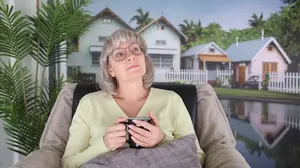
I'm Susan, creator of Live Better Sober, and in January 2028 I'll celebrate 30 years alcohol-free.
Everything on this site comes from my own experience.
I hope that by sharing what I've learned, I can help you break the nightly drinking habit, rediscover yourself, and live better sober, too.
I'm Susan, creator of Live Better Sober, and in January 2028 I'll celebrate 30 years alcohol-free.
Everything on this site comes from my own experience.
I hope that by sharing what I've learned, I can help you break the nightly drinking habit, rediscover yourself, and live better sober, too.
Stay Connected with Live Better Sober
Get new articles, personal stories, podcasts, and practical ideas to help make sober evenings easier.
No lectures. No labels. Just useful support from someone who's been there.


NEWSLETTER
HOME ABOUT CONTACT DISCLAIMER PRIVACY TERMS
FOLLOW US ON:



|
|
|
|
|
SEARCH THIS SITE
LIVE BETTER SOBER IS BASED ON SUSAN GAST'S PERSONAL EXPERIENCE WITH QUITTING ALCOHOL AND LONG-TERM SOBRIETY.
ALL CONTENT COPYRIGHT © 2026 LIVE BETTER SOBER BY SUSAN GAST • ALL RIGHTS RESERVED REGARDLESS OF LINKS OR ATTRIBUTIONS.
POWERED BY SBI! (SOLO BUILD IT!)
