- HOME
- Susan's Stories
- Real Me
The Drunk Version Wasn't the Real Me After All


Written by Susan — Quit drinking at 37 • Sober since 1998 • Sharing what actually works
Written by Susan — Quit drinking at 37 • Sober since 1998 • Sharing what actually works
For years, I believed the drunk version of me was the real me.
After a few drinks, I seemed more confident, more outgoing, and less worried about what other people thought. I talked more. I laughed more. I took chances I probably wouldn't have taken sober. At the time, I thought alcohol was revealing my true personality.
After nearly thirty years of sobriety, I can see how wrong I was.
The drunk version wasn't the real me at all.
In many ways, alcohol was hiding the very qualities I was searching for. The real Susan wasn't found in a bottle, a bar, or a drunken conversation. She was there all along, waiting for alcohol to get out of the way.
🎙️ Want to hear the podcast hosts’ take?
The podcast conversation explores this topic from another perspective.
Jump to the podcast episode.
I Thought Alcohol Brought Out the Real Me
After taking my first sip of cider at age 17, I loved how it made me feel. Operative word: feel.
It was like a magic potion. Suddenly, the world seemed lighter, my self-consciousness disappeared, and I felt like a very young Wonder Woman.
That first drink was consumed on my first date with my first husband-to-be.
Looking back, I've no idea why I was trying so hard to impress people. That's where low self-esteem comes into play. But at age 17, what do you really know about life?
What was I expecting of myself at such a young age? To have everything figured out?
Apparently so.
The trouble is, real life doesn't work that way.
For years, I believed alcohol was bringing out "the real me." In retrospect, I can see how wrong I was.
The truth is, I was far too young to know who "the real me" even was.
The Problem Wasn't What I Said — It Was What I Lost
While you may think alcohol is "bringing out the best in you," sadly, for me at least, it often brought out the worst in me.
What does that mean exactly?
Read between the lines when I say it lowered my inhibitions.
I wanted so badly to fit in. I wanted my boyfriend to like me. I wanted people to accept me. As a result, I sometimes went further than I should have. Looking back, some of those decisions are among the regrets I carry to this day.
I'd hear myself saying outrageous things, using language I normally wouldn't use, acting tougher than I really felt, and trying far too hard to impress people.
(Cringe.)
And the embarrassing moments? They could fill a book all by themselves.
The strange thing is that those moments eventually became useful.
If and when you decide to quit drinking, don't be surprised if memories of your own embarrassing moments come flooding back. As uncomfortable as they are, they can become powerful reminders of why you don't want to return to your old habits.
In my course, I talk about something called somatic markers—memories that carry an emotional charge. Those cringe-worthy moments from the past can become some of your strongest somatic markers, helping you stay on the sober path when temptation strikes.
The sad truth is that you can't go back and change the past.
You can only do better going forward.
Thankfully, that's enough.
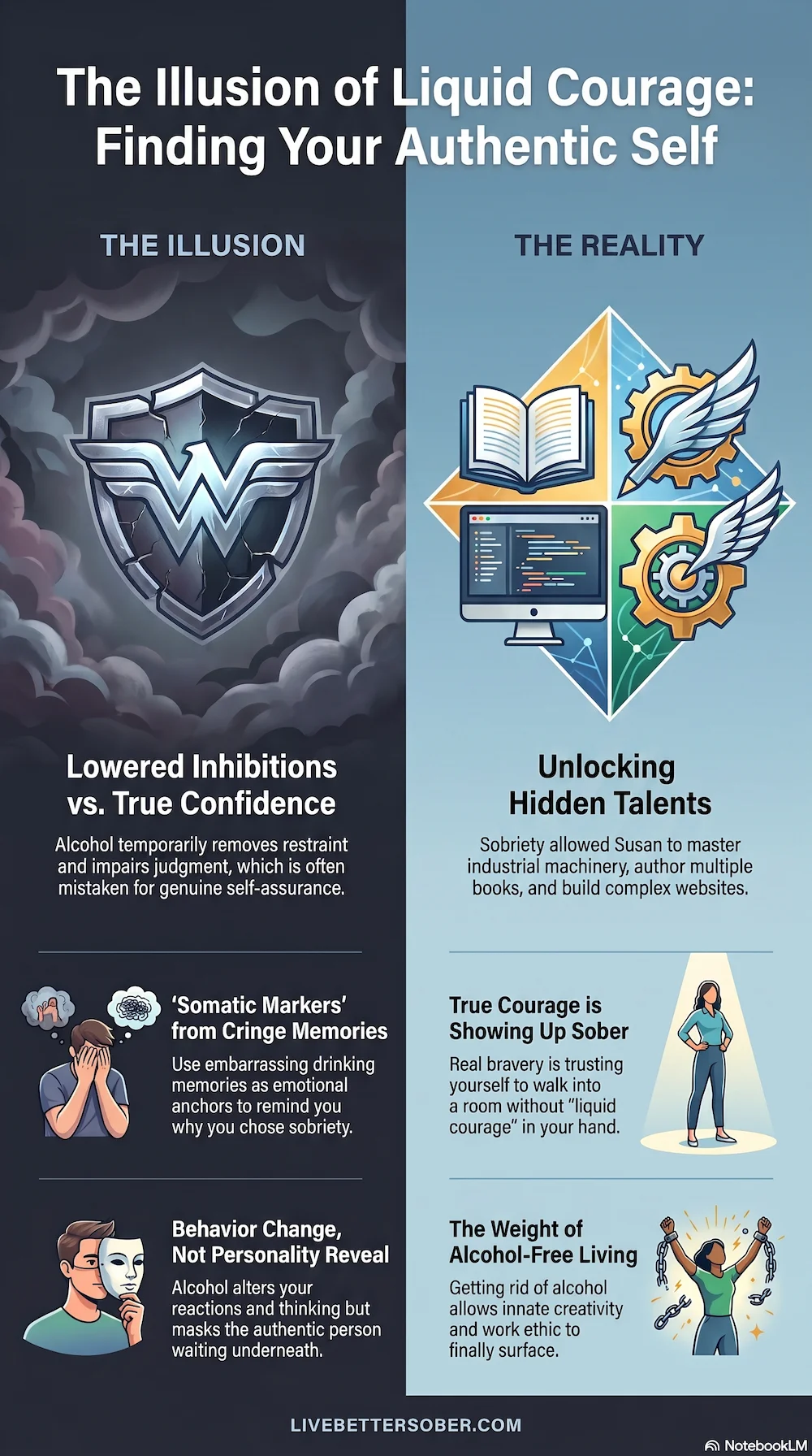
Alcohol Was Changing My Behavior, Not My Personality
In hindsight, I can plainly see that alcohol was changing my behavior, not my personality.
Alcohol wasn't revealing who Susan really was. It was temporarily removing restraint. My judgment was often way off, and I confused lowered inhibitions with confidence.
Over time, drinking became something I convinced myself I needed.
How so?
When I first arrived in Florida, I was only 20 years old. I didn't know a soul. My parents hadn't arrived yet because they were busy selling the farms back in England.
Back on the farm I'd milked cows, raised sheep, tended goats, and looked after rabbits. Suddenly, I found myself alone in a new country, far from everything familiar.
I knew there was a Holiday Inn down the road from our condominium, and I desperately wanted to go and check it out.
The problem?
I didn't think I could do it sober.
So I drank a couple of beers first and then walked down to the hotel bar.
Looking back, that's a perfect example of how alcohol changes your thinking.
My brain had already started linking alcohol to confidence. I believed I needed those beers before I could walk into a room full of strangers.
But here's the question I ask myself today:
If you think you need alcohol before doing something, should you really be doing it at all?
More often than not, the answer is no.
That's why "liquid courage"—sometimes called Dutch courage—isn't true courage at all.
True courage is showing up sober.
True courage is trusting yourself enough to walk into the room without a drink in your hand.
And you might be surprised by how well you handle yourself when you do.
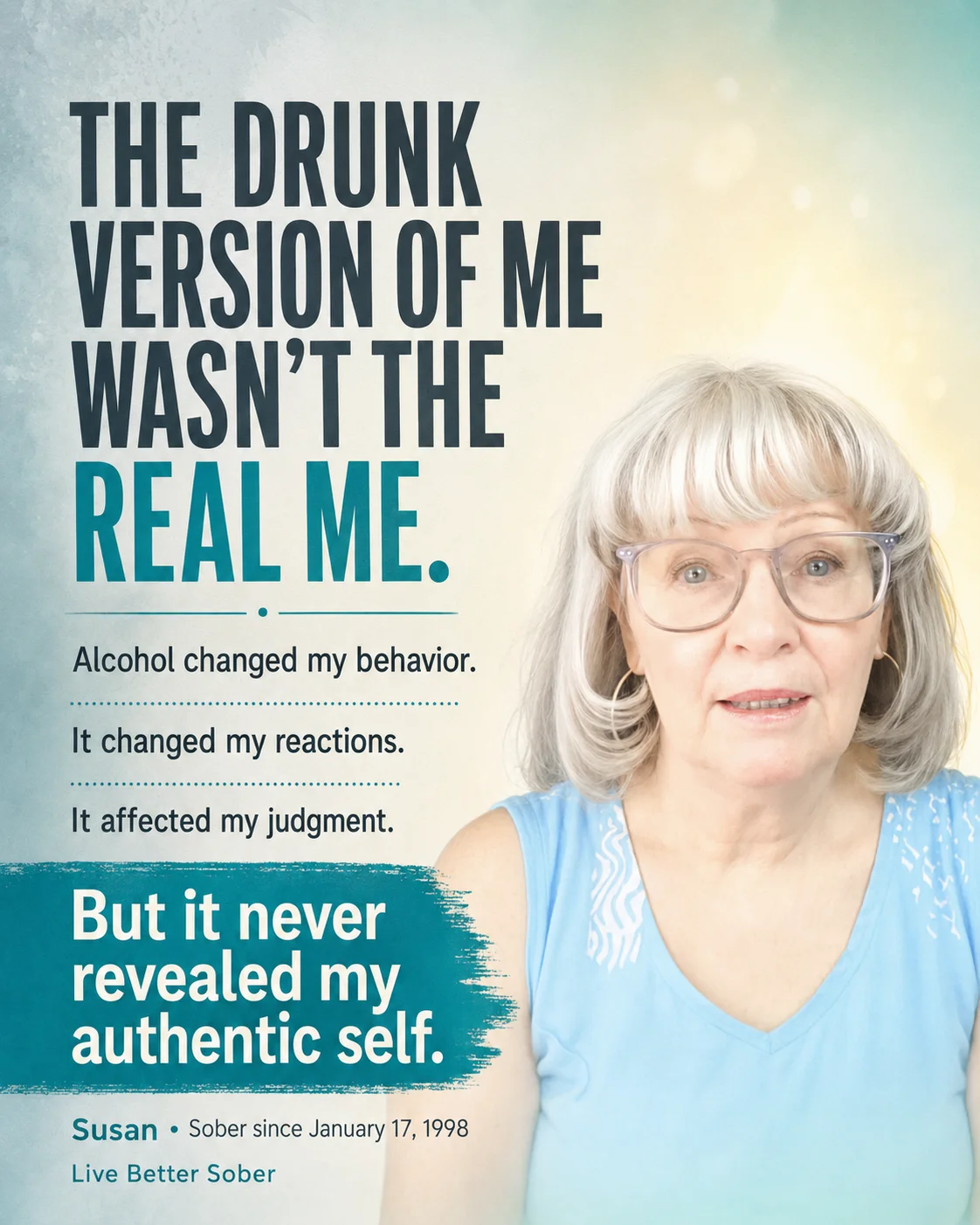
The Real Susan Showed Up After I Quit Drinking
Do you know, after a couple of months of sobriety, I felt like a weight had been lifted.
It wasn't easy.
But boy, oh boy, was it ever the right thing for me to do.
Sober Susan got to work in her brother's machine shop, running a lathe and milling machine, helping make parts for automation machinery.
Drunk Susan could never have done that.
Ten years later, Sober Susan caught the computer bug.
Out of that came books. Lots of books.
Puzzle books, romance books (under a pen name!), how-to books, journals, planners, and all sorts of publishing projects I could never have imagined back when I was drinking.
Then came websites.
Creating websites is a bit of a sickness with me, if I'm honest. I absolutely love the creativity involved. Building something from nothing, writing content, helping people, solving problems—it never gets old.
Later came online courses, including food dehydrating courses and, eventually, the sobriety work you're reading right now.
The point is this:
All of that was inside me all along.
- The creativity was there.
- The work ethic was there.
- The ability to learn new skills was there.
- The confidence was there.
Getting rid of the alcohol allowed those things to surface.
My confidence in my own abilities grew enormously over the years, and it became clear that the real Susan was never hiding inside a glass of alcohol.
She was there all along, patiently waiting for the opportunity to emerge.
What I Believe Today
If I could go back and knock that first glass of alcohol out of my young hand, I probably would.
Then again, if I had, I might never have gained the insight I have today about what alcohol can do to a person's thinking, confidence, and self-image.
What I learned is that the drunk version of me wasn't the real me at all.
Far from it.
As you get older and wiser, you gradually discover who you really are. The real you has been there since birth, but along the way life distracts you.
When you're young, you spend a lot of time wanting to fit in.
At the very same time, you want to be different.
It's a strange contradiction, isn't it?
Wanting to fit in while also wanting to stand out.
Looking back, I can see how much energy I spent trying to be what I thought other people wanted me to be.
Today, I believe alcohol often suppresses your true personality rather than revealing it.
- It changes your behavior.
- It changes your reactions.
- It affects your judgment.
But it doesn't reveal your authentic self.
There is nothing particularly earth-shattering about that conclusion.
Still, quitting drinking opened up an entirely new world for me.
And for that, I will always be grateful.
People only change their behavior when it finally makes sense to them.
For me, that day was January 17, 1998.
I woke up feeling as sick as a dog. (Poor dog—I love dogs and have nothing against them!)
This particular "sick dog" was dealing with vomiting, diarrhea, the MOAH (Mother Of All Headaches), and stomach cramps so bad I thought I'd eaten the beer cans.
That was my personal rock bottom.
Your rock bottom may look completely different. It doesn't have to be dramatic. Sometimes it's simply reaching the point where you're tired of making the same promise every morning and breaking it every night.
Whatever form it takes, lasting change usually begins when you realize that drinking is no longer working for you.
If you find yourself cringing at things you've said or done after a few drinks, you're not alone.
Those moments don't define you.
In fact, they can become some of your greatest teachers.
They can help you reconnect with the person you've always been underneath the habit.
Perhaps, like me, you'll discover that the drunk version of you was never the real you at all.
Want the Podcast Version Of This Page?
Want to go deeper? The podcast version of this page explores these ideas in a more conversational and reflective way. You can listen to it below.
Continue Reading Susan's Story
If this story resonated with you, you may enjoy reading more about my own journey from nightly drinking to lasting sobriety. Each story shares a different lesson, challenge, or turning point that helped me build the alcohol-free life I have today.
→ Browse all of Susan's Stories
Ready for More Support?
Explore Live Better Sober: Quit Drinking — Break the Alcohol Habit, a practical, shame-free 66-day course designed to help you recognize and interrupt the pattern behind your evening drinking.
➡️ Learn more about the course here: Break the Nightly Drinking Habit
Susan's Stories
I Drank Because I Was Shy - Looking Back After 30 Years
I drank because I was shy—or so I thought. Looking back, I can see there were many reasons alcohol became my confidence crutch.
Why I Stopped Drinking at 37 - The Wake-Up Call I Needed
Why I stopped drinking at 37 began with a frightening wake-up call that finally convinced me I never wanted alcohol in my life again.
Drinking Alone Meant Nobody Saw It Getting Worse
Drinking alone felt safer because nobody saw it. Looking back, Susan realized privacy gave her nightly drinking habit room to quietly grow.
Drinking Culture in Sports: Then and Now
Alcohol has long been part of sports culture, from British pubs to American tailgates. Here's how I see it now.
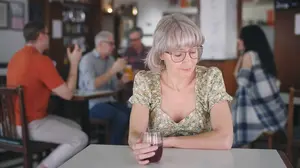
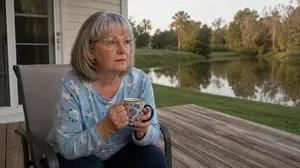
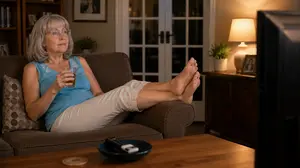

I'm Susan, creator of Live Better Sober, and in January 2028 I'll celebrate 30 years alcohol-free.
Everything on this site comes from my own experience.
I hope that by sharing what I've learned, I can help you break the nightly drinking habit, rediscover yourself, and live better sober, too.
I'm Susan, creator of Live Better Sober, and in January 2028 I'll celebrate 30 years alcohol-free.
Everything on this site comes from my own experience.
I hope that by sharing what I've learned, I can help you break the nightly drinking habit, rediscover yourself, and live better sober, too.
Stay Connected with Live Better Sober
Get new articles, personal stories, podcasts, and practical ideas to help make sober evenings easier.
No lectures. No labels. Just useful support from someone who's been there.


NEWSLETTER
HOME ABOUT CONTACT DISCLAIMER PRIVACY TERMS
FOLLOW US ON:



|
|
|
|
|
SEARCH THIS SITE
LIVE BETTER SOBER IS BASED ON SUSAN GAST'S PERSONAL EXPERIENCE WITH QUITTING ALCOHOL AND LONG-TERM SOBRIETY.
ALL CONTENT COPYRIGHT © 2026 LIVE BETTER SOBER BY SUSAN GAST • ALL RIGHTS RESERVED REGARDLESS OF LINKS OR ATTRIBUTIONS.
POWERED BY SBI! (SOLO BUILD IT!)
