- HOME
- Susan's Stories
- I Drank Because I Was Shy
I Drank Because I Was Shy - Looking Back After 30 Years
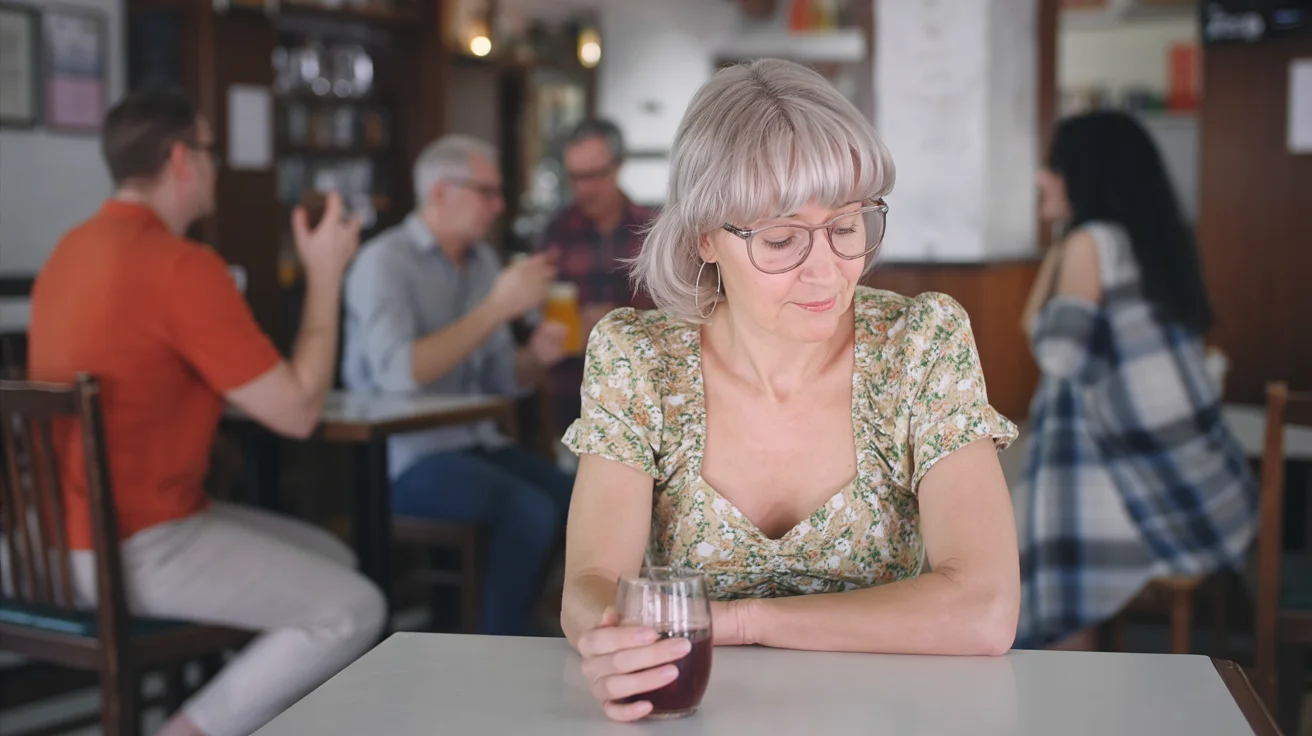

Written by Susan — Quit drinking at 37 • Sober since 1998 • Sharing what actually works
Written by Susan — Quit drinking at 37 • Sober since 1998 • Sharing what actually works
Looking back, I thought I drank because I was shy, but after nearly thirty years of sobriety, I can see the story started much earlier.
I think it began in childhood.
I was a shy child growing up in northern England.
For much of my younger life, I felt like the quiet one standing on the sidelines, watching everyone else seem more comfortable in the world than I was.
I grew up during a time when children were expected to be "seen and not heard." Whether that was right or wrong isn't the point. It's simply the environment I grew up in, and it shaped me. I learned to keep my opinions to myself, avoid drawing attention, and worry far too much about what other people thought of me.
By the time I reached my teenage years, I lacked confidence and felt uncomfortable in many social situations. Then alcohol entered the picture.
For the first time, I felt different.
Suddenly, I wasn't overthinking every conversation. I wasn't worrying so much about saying the wrong thing. I felt more relaxed, more outgoing, and more comfortable around other people.
At least, that's what I thought was happening.
After nearly thirty years of sobriety, I can see that alcohol didn't really give me confidence. It simply covered up the insecurity that had been there for years. But at the time, I didn't know the difference.
I Was Shy Long Before I Took My First Drink
I don't believe alcohol created my confidence problems. They were already there long before I ever took my first drink.
Growing up, I was naturally shy and introverted. My father was the exact opposite. He was confident, outgoing, and seemed comfortable talking to anyone. I admired him enormously and often wished I could be more like him.
My older brother was also very bright. In my eyes, he always seemed smarter than I was. He later became a Senior Mechanical Engineer, so there was certainly some truth to that impression. From where I stand now, I'm sure I wasn't giving myself enough credit, but that's how I felt at the time.
Meanwhile, I often felt like the quiet one in the family.
As a shy child, that suited me perfectly. I learned to stay quiet, keep my thoughts to myself, and avoid drawing attention.

One memory has stayed with me all these years. When I was about eight years old, I was the shortest child in my class. The teacher asked me to stand on my desk and announced that this was about the size of a pygmy.
The class laughed.
I was mortified.
Today, I don't believe the teacher meant any harm. It was a different era, and she was simply making a point rather than trying to embarrass me. But shy children experience things differently. Being singled out in front of the whole class felt awful at the time. Looking back now, I can smile about it, but eight-year-old Susan certainly wasn't smiling.
Experiences like that don't automatically lead someone to alcohol years later. However, they can shape how you see yourself. By the time I reached my teenage years, I was still carrying a lot of self-consciousness and uncertainty about who I was.
I didn't feel confident.
I didn't feel particularly interesting.
And I certainly didn't feel comfortable in social situations.
Then, at seventeen, alcohol entered the picture.
When Alcohol Seemed to Solve the Problem
When I had my first experiences with alcohol as a teenager, something changed.
At least, it felt like it did.
After a few drinks, I stopped worrying so much about what other people thought of me. I found it easier to talk to people. I wasn't analyzing every conversation in my head. I wasn't constantly wondering whether I was saying the right thing or making a fool of myself.
For the first time, I felt more relaxed around other people.
I can see why alcohol appealed to me so quickly.
It seemed to solve a problem I had been carrying around for years. Back then, I genuinely believed I drank because I was shy.
I wasn't drinking because I loved the taste. I wasn't sitting there appreciating fine wines or developing a sophisticated palate. I was drinking because alcohol changed the way I felt.
Or at least I thought it did.
- It made me feel more confident.
- It made me feel less awkward.
- It made me feel less self-conscious.
Most importantly, it made me feel more comfortable in my own skin.
That was incredibly powerful for a shy young woman who spent far too much time worrying about what other people thought of her.
The trouble was that the confidence never lasted.
The next day, I was still the same person.
The same insecurities were still there.
The same self-doubt was still there.
The same shyness was still there.
The alcohol hadn't fixed anything. It had simply covered it up for a few hours.
Of course, I didn't understand that at seventeen.
All I knew was that alcohol seemed to help.
And once you believe something helps, it's very easy to keep going back to it.
Moving to America Didn't Change Who I Was
When I was twenty years old, I moved from England to the United States.
And that sounds incredibly brave.
At the time, it didn't feel brave at all. It was an adventure, a chance to leave "the old me" behind.
I had recently gone through a divorce. My parents were still in England. I boarded a plane on my own, landed at Miami Airport, and began a completely new chapter of my life in Florida.
Most people looking at that situation would probably describe it as courageous.
I didn't see it that way.
I was still the same shy, uncertain young woman I had always been.
At the time, it seemed obvious that I drank because I was shy and wanted to feel more comfortable around other people.
One thing I've learned over the years is that moving to another country doesn't automatically change how you feel about yourself!
You can move to a new town, a new state, or even a new country, but you still take yourself with you.
The shy girl who left England was the same shy girl who arrived in America.
The difference was that now I was trying to build a life in a country where I knew no one!
- I wanted friends.
- I wanted connection.
- I wanted to fit in.
And like many young people, I also wanted someone to notice me.
Not attention in the dramatic sense.
I simply wanted to feel seen.
I wanted to feel like I belonged somewhere.
Alcohol still seemed to provide the answer.
My Liquid Courage Was Waiting at the Holiday Inn
Not far from the condominium where I was living was a Holiday Inn with a bar.
I can still picture it all these years later.
What stands out to me now is not the bar itself.
It's the fact that I would never have walked there sober. The thought wouldn't even have crossed my mind. Walking into a bar alone, introducing myself to strangers, and trying to start conversations felt impossible without alcohol.
So I solved the problem the way I always had. I started drinking before I left. By the time I arrived, I already felt more confident.
Or at least I thought I did.
Alcohol became my liquid courage. It gave me permission to do things that felt terrifying when I was sober. It made me feel more outgoing. More relaxed. More willing to take chances.
After thinking about it, I can also see something else. The alcohol wasn't changing who I was. It was changing what I was willing to do.
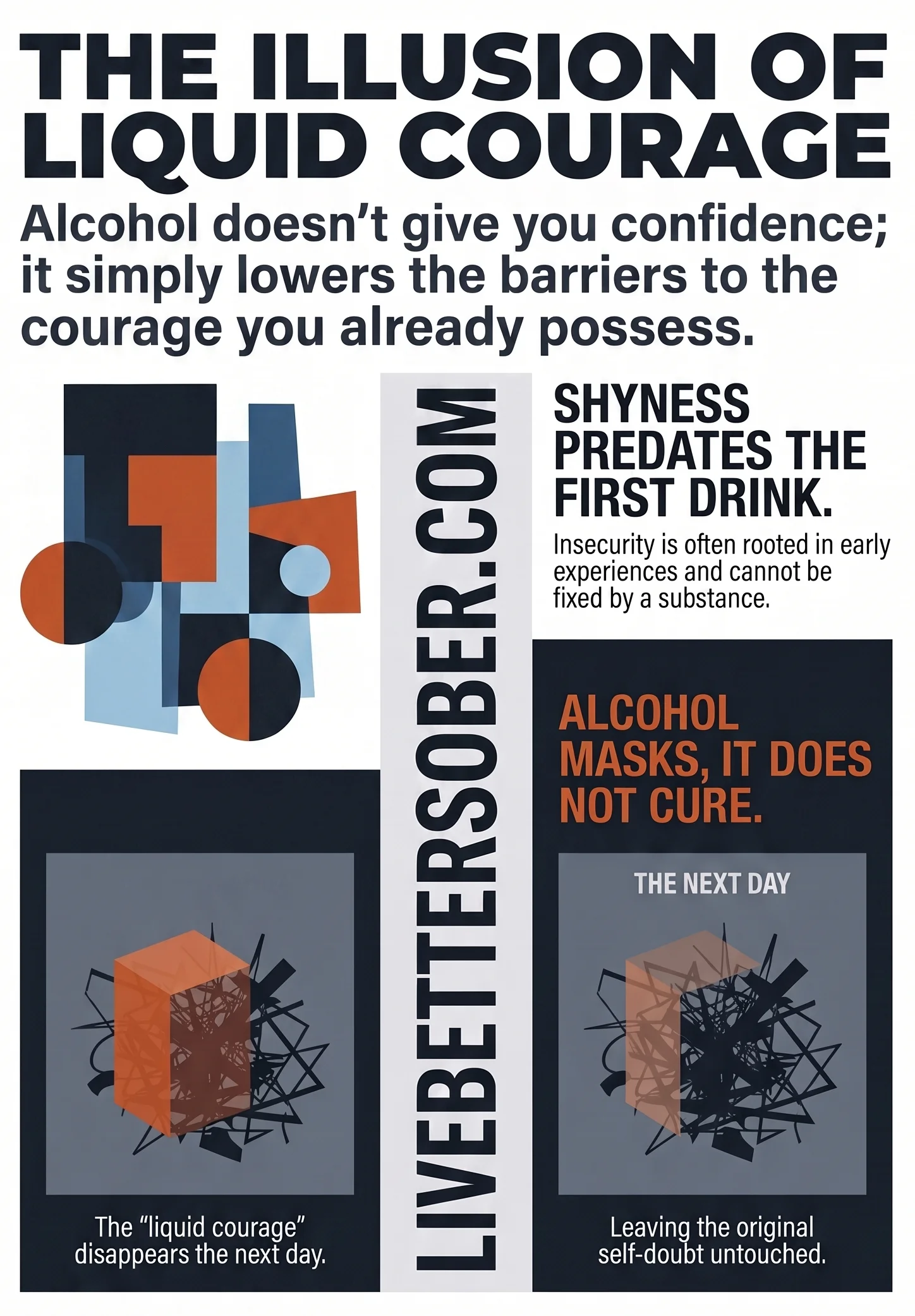
There's a difference.
The confidence wasn't actually coming from the drink. The confidence was already there. The drink simply lowered the barriers that had been holding me back.
The problem was that alcohol doesn't selectively lower barriers.
Unfortunately, it also lowered a few other barriers.
When I think back to some of the things I said and did during those years, I still shake my head. There were embarrassing moments. Moments that still make me cringe a little when I remember them.
At the time, I thought I was becoming more confident.
In reality, I was often becoming less like myself.
That's one reason I feel so strongly today that the drunk version of you isn't the real you.
I know from experience.
The Confidence I Was Looking For Was Inside Me All Along
The funny thing is that when I was younger, I believed confidence was something other people were born with.
My father certainly seemed to have it. He could talk to anyone. He ran a successful business, wrote a book, and always appeared comfortable in his own skin. I admired that enormously.
Meanwhile, I spent years believing I lacked whatever it was that made people confident.
That's one reason alcohol appealed to me so much.
For a few hours, it seemed to give me what I thought I was missing.
After nearly thirty years of sobriety, I can see something I couldn't see back then.
The confidence wasn't in the alcohol.
It wasn't waiting for me at the Holiday Inn.
It wasn't hidden in a bottle of wine, a pint of cider, or a glass of whiskey.
The confidence I was looking for was inside me all along.
The proof is that I'm sitting right here, writing these words.
Today, I don't need alcohol to walk into a room.
I don't need alcohol to greet my neighbors.
I don't need alcohol to record videos for Live Better Sober.
I don't need alcohol to strike up a conversation with a stranger.
Some of that has come with age. When you're young, it's easy to believe everyone is watching you, judging you, or thinking about you. As you get older, you gradually realize that most people are far too busy worrying about themselves to spend much time worrying about you.
That realization alone is incredibly freeing.
But sobriety played a role too.
When I stopped drinking a few days before my thirty-eighth birthday, I didn't suddenly become confident overnight. It took time. I had to learn how to handle life without the crutch I had relied on for years.
What surprised me was that I could do it.
The things I thought required alcohol didn't actually require alcohol at all.
- I could socialize.
- I could meet people.
- I could build a life.
- I could start businesses.
- I could write books.
- I could move forward without the thing I had once believed I needed.
In many ways, I eventually became more like the confident person I had admired in my father all those years earlier. Imagine that!
The difference is that I got there without alcohol.
That's one reason I smile when I hear people say they need alcohol to be more outgoing, more confident, or more comfortable around other people.
I understand exactly why they feel that way.
I used to believe it too.
But if there's one thing I have learned after thirty years, it's this:
Alcohol never gave me confidence. It simply delayed my discovery that I already had it.
In Hindsight, Shyness Was Only Part of the Story
For years, I told myself I drank because I was shy. And to be fair, there was some truth in that.
Alcohol made social situations feel easier. It made me feel less awkward and less self-conscious. It gave me the illusion that I was more confident than I really was.
After nearly thirty years of sobriety, I can see that shyness was only part of the story.
The truth is that I wanted to feel comfortable in my own skin. I wanted to feel accepted. I wanted to fit in. I wanted to stop worrying so much about what other people thought of me.
Like many people, I was searching for confidence, connection, and a sense of belonging.
Alcohol seemed to provide those things. At least temporarily.
What I eventually discovered was that the things I was looking for couldn't be found in a bottle. They had to be built. Confidence came from experience. Self-respect came from keeping promises to myself. Comfort came from accepting who I was instead of trying to become someone else. And belonging came from forming genuine relationships rather than alcohol-fueled ones.
Today, when I look back at the shy young woman who arrived in America alone at twenty years old, I feel something I never expected.
I feel compassion for her.
For years, I focused on the mistakes she made.
The embarrassing moments.
The poor decisions.
The things I wished I could take back.
Now I see something different.
I see a young woman who was doing the best she could with what she knew at the time. A young woman who was searching for confidence in all the wrong places. A young woman who hadn't yet realized how much courage she already possessed.
After all, it takes courage to leave your home country.
It takes courage to start over.
It takes courage to keep going when you're unsure of yourself.
The irony is that I had been looking for courage in alcohol while demonstrating real courage all along.
I just couldn't see it yet.
Final Thoughts
If you're reading this because you think you drink because you're shy, I understand.
I thought the same thing for many years.
Maybe shyness is part of your story too.
Maybe alcohol feels like a shortcut to confidence, conversation, or connection.
Today, I can tell you this:
The confidence you're looking for isn't in the alcohol.
It's in you.
The sooner you discover that, the sooner you can stop borrowing confidence from a bottle and start building the real thing for yourself.
If you've ever wondered what finally made me stop drinking after twenty years, the answer wasn't confidence, shyness, or self-improvement.
It was a frightening wake-up call three days before my 38th birthday that changed the course of my life.
→ Read Next: Why I Stopped Drinking at 37 - The Wake-Up Call I Needed
Continue Reading Susan's Story
If this story resonated with you, you may enjoy reading more about my own journey from nightly drinking to lasting sobriety. Each story shares a different lesson, challenge, or turning point that helped me build the alcohol-free life I have today.
→ Browse all of Susan's Stories
Ready for More Support?
Explore Live Better Sober: Quit Drinking — Break the Alcohol Habit, a practical, shame-free 66-day course designed to help you recognize and interrupt the pattern behind your evening drinking.
➡️ Learn more about the course here: Break the Nightly Drinking Habit
Susan's Stories
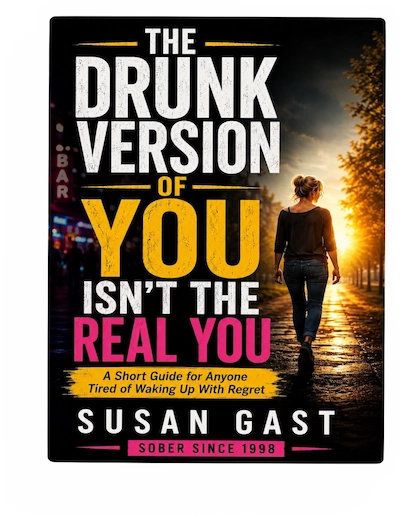
Why I Stopped Drinking at 37 - The Wake-Up Call I Needed
Why I stopped drinking at 37 began with a frightening wake-up call that finally convinced me I never wanted alcohol in my life again.
The Drunk Version Wasn't the Real Me After All
Drunk version wasn't the real me. Looking back, I can see alcohol often hid my true personality instead of revealing it.
Drinking Alone Meant Nobody Saw It Getting Worse
Drinking alone felt safer because nobody saw it. Looking back, Susan realized privacy gave her nightly drinking habit room to quietly grow.
Drinking Culture in Sports: Then and Now
Alcohol has long been part of sports culture, from British pubs to American tailgates. Here's how I see it now.




I'm Susan, creator of Live Better Sober, and in January 2028 I'll celebrate 30 years alcohol-free.
Everything on this site comes from my own experience.
I hope that by sharing what I've learned, I can help you break the nightly drinking habit, rediscover yourself, and live better sober, too.
I'm Susan, creator of Live Better Sober, and in January 2028 I'll celebrate 30 years alcohol-free.
Everything on this site comes from my own experience.
I hope that by sharing what I've learned, I can help you break the nightly drinking habit, rediscover yourself, and live better sober, too.
Stay Connected with Live Better Sober
Get new articles, personal stories, podcasts, and practical ideas to help make sober evenings easier.
No lectures. No labels. Just useful support from someone who's been there.


NEWSLETTER
HOME ABOUT CONTACT DISCLAIMER PRIVACY TERMS
FOLLOW US ON:



|
|
|
|
|
SEARCH THIS SITE
LIVE BETTER SOBER IS BASED ON SUSAN GAST'S PERSONAL EXPERIENCE WITH QUITTING ALCOHOL
AND LONG-TERM SOBRIETY.
ALL CONTENT COPYRIGHT © 2026 LIVE BETTER SOBER BY SUSAN GAST • ALL RIGHTS RESERVED REGARDLESS OF LINKS OR ATTRIBUTIONS.
POWERED BY SBI! (SOLO BUILD IT!)
