- HOME
- Susan Unscripted Videos
- Drunk Version
The Drunk Version of You Isn’t the Real You


Written by Susan — Quit drinking at 37 • Sober since 1998 • Sharing what actually works
Written by Susan — Quit drinking at 37 • Sober since 1998 • Sharing what actually works
The drunk version of you isn’t the real you, even though after enough years of drinking it can start feeling like alcohol has somehow become part of your personality, emotions, routines, and identity itself.
📖 Want the Full Story?
This video shares the key message, but there's much more behind it.
If you'd like to read the full personal story behind this video, including what was happening in my life at the time and what I eventually learned, read:
✅ Quick Answer: Why the drunk version of you isn't the real you
Alcohol
can slowly change emotional reactions, behavior, thinking patterns, and
personality over time. Many people eventually realize the calmer,
clearer, more emotionally stable version underneath the drinking was the
real version of themselves all along.
The Drunk Version of You Isn’t the Real You
One thing I slowly began realizing after quitting drinking was just how much alcohol had started affecting my emotional state, personality, reactions, and daily thinking patterns.
And honestly, I do not think people always notice those changes happening gradually.
Because alcohol slowly becomes normalized.
- The routines normalize.
- The behavior normalizes.
- The emotional swings normalize.
And eventually people can start thinking:
“This is just who I am.”
But sometimes it is not.
Sometimes it is the alcohol.
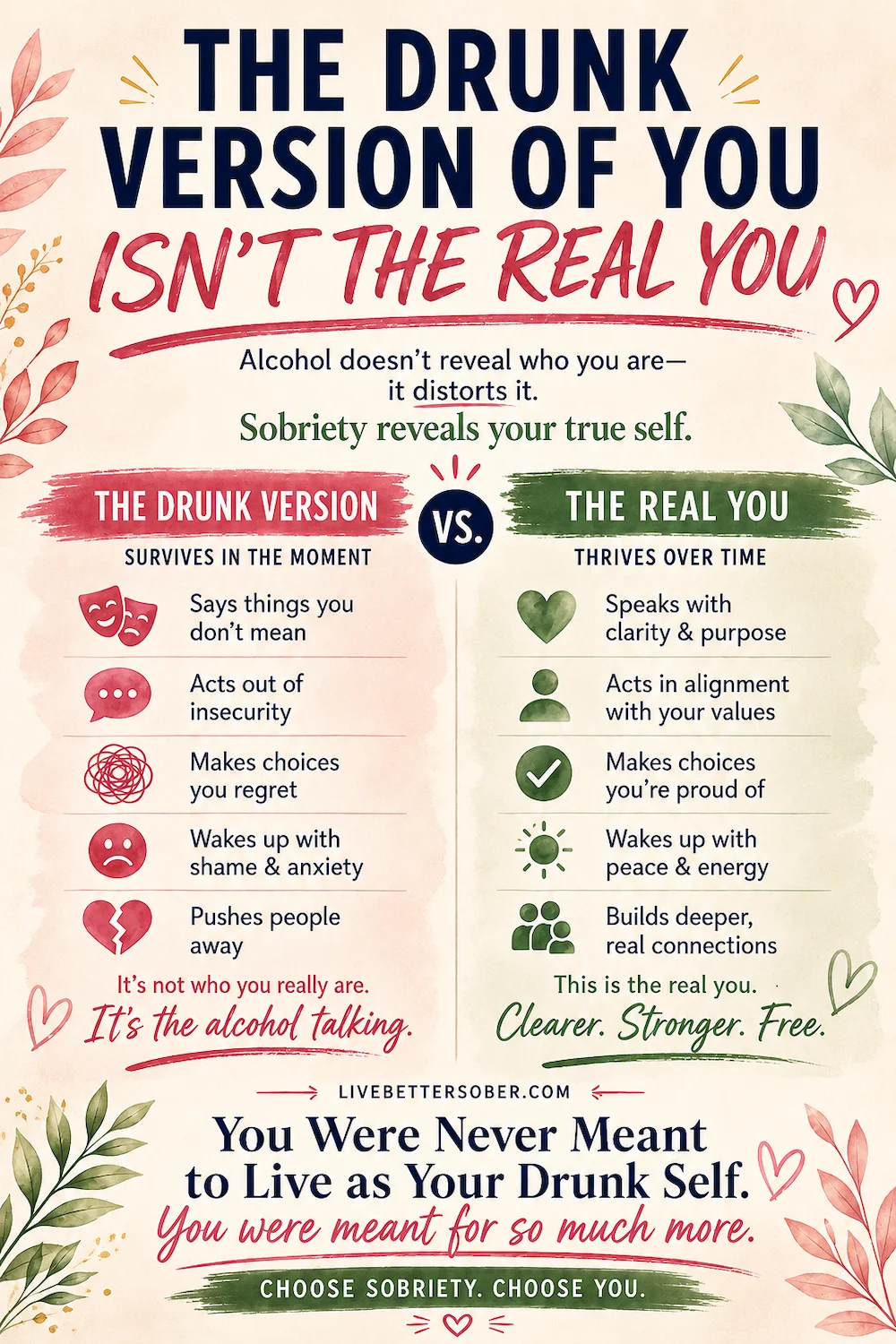
Alcohol Can Quietly Change Emotional Behavior
I think this topic matters because alcohol does not just affect the body physically.
It affects:
- emotions
- patience
- stress tolerance
- thinking patterns
- emotional reactions
- self-control
- confidence
- relationships
And after enough repetition, those altered emotional states can start feeling familiar.
That familiarity can become dangerous because people stop separating:
-
themselves
from - the alcohol-driven version of themselves.
The Real You Often Starts Returning Slowly
One thing that surprised me after quitting drinking was how much calmer I gradually became emotionally.
Not overnight.
Slowly.
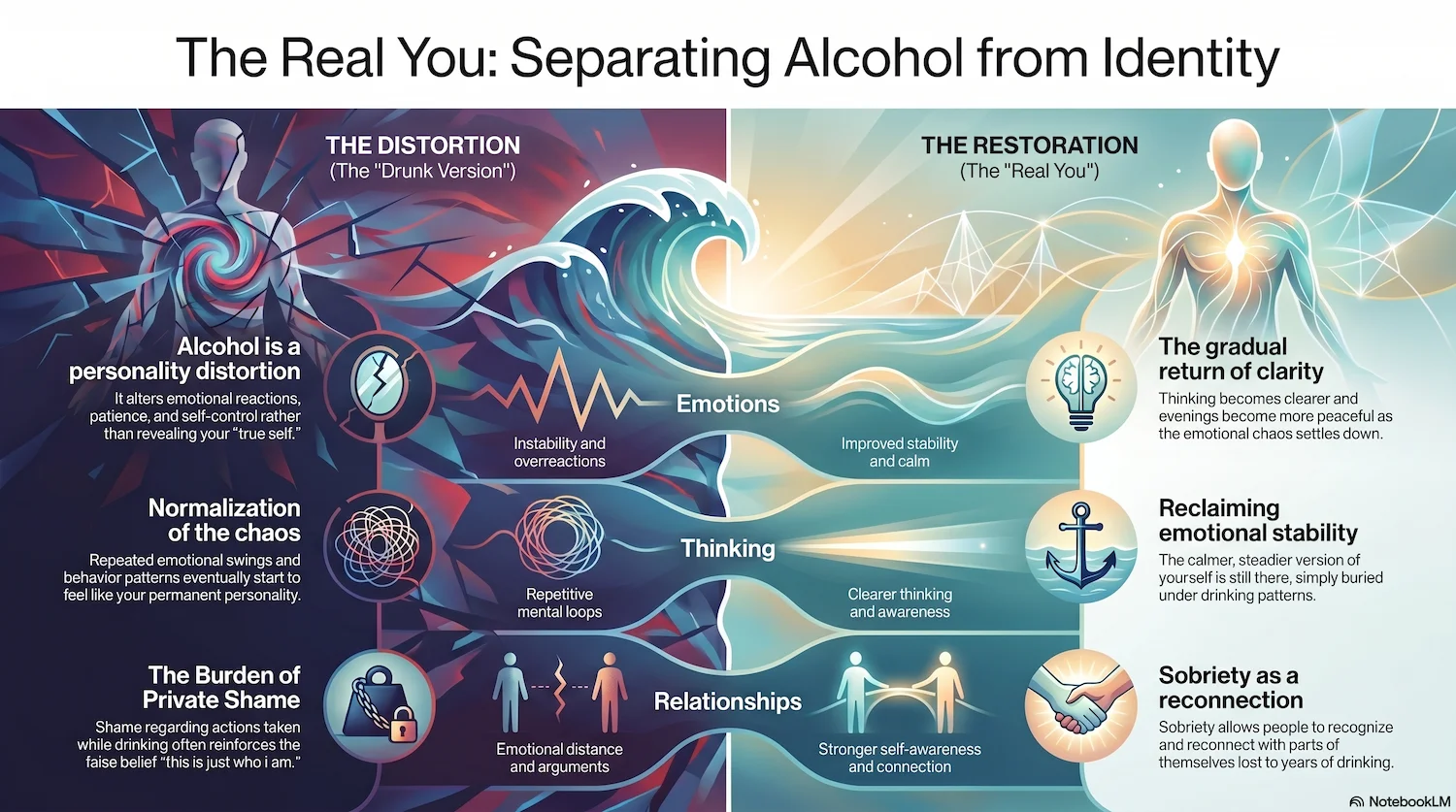
The constant emotional chaos started settling down.
- My thinking became clearer.
- My reactions became calmer.
- My evenings became more peaceful.
And honestly, I started recognizing parts of myself again that had slowly become buried underneath years of nightly drinking patterns.
That was a huge realization for me.
Why People Sometimes Feel Shame After Drinking
I think many people carry private shame around things they said, did, or became while drinking.
And that shame can become incredibly heavy emotionally over time.
Especially when people start feeling:
“That’s just who I am now.”
But I honestly do not believe alcohol shows your “true self.”
I think long-term alcohol use often distorts emotions, reactions, judgment, and emotional stability instead.
That distinction matters enormously.
Because people need hope that the calmer version underneath still exists.
The Calm Version of You Is Still There
I do think that many people are still underneath the drinking pattern they became trapped inside and is yearning to be visible again.
The calmer version.
The clearer version.
The emotionally steadier version.
Sometimes alcohol simply buried that person gradually over time.
And when sobriety begins restoring emotional clarity again, people often start reconnecting with themselves in ways they never expected.
Why I Made This Video
I wanted to make this video because I think many people quietly stop recognizing themselves after years of drinking.
And that can become emotionally painful.
I think people sometimes start believing the emotional chaos, regret, anxiety, irritability, or instability is simply their permanent personality now.
But for me, sobriety slowly revealed that much of that emotional turbulence had been heavily amplified by alcohol itself.
And realizing that gave me enormous hope.
→ Back to: Susan Unscripted Videos on Live Better Sober
→ Watch Next: When The Desire Not to Drink Is Stronger
Related Podcast
This podcast also touches on the topic discussed on this page and offers additional perspective. You can listen to it below.
Continue Reading Susan's Story
If this story resonated with you, you may enjoy reading more about my own journey from nightly drinking to lasting sobriety. Each story shares a different lesson, challenge, or turning point that helped me build the alcohol-free life I have today.
→ Browse all of Susan's Stories
Ready for More Support?
Explore Live Better Sober: Quit Drinking — Break the Alcohol Habit, a practical, shame-free 66-day course designed to help you recognize and interrupt the pattern behind your evening drinking.
➡️ Learn more about the course here: Break the Nightly Drinking Habit
Questions People Quietly Ask Themselves
Does alcohol really change personality?
Does alcohol really change personality?
Long-term drinking can affect emotions, thinking patterns, reactions, stress tolerance, and behavior over time.
Why do I feel ashamed of how I acted while drinking?
Why do I feel ashamed of how I acted while drinking?
Alcohol lowers inhibition and affects emotional regulation, which can lead people to behave very differently from their sober selves.
Can people emotionally recover after quitting drinking?
Can people emotionally recover after quitting drinking?
Yes. Many people gradually notice improved emotional stability, clearer thinking, calmer reactions, and stronger self-awareness over time.
More Susan Unscripted Videos
Susan Unscripted Videos on Live Better Sober
Susan Unscripted videos — honest reflections about quitting drinking, habit loops, emotional clarity, and sober life.
The Real Reason I Quit Drinking
The real reason I quit drinking was exhaustion, fear, and finally realizing I could not keep living that way.
Why I Kept Wanting to Go Back to Drinking
Why I kept wanting to go back to drinking had less to do with alcohol itself and more to do with familiarity.
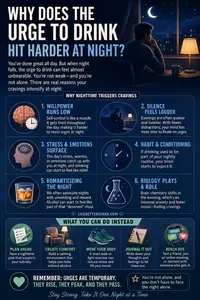
Why Does the Urge to Drink Hit Harder at Night?
Why does the urge to drink hit harder at night? Susan explains the emotional routines behind evening cravings.
You Can’t Put a Price on Sobriety
You can’t put a price on sobriety once you experience the peace, clarity, and freedom alcohol no longer controls.
Did I Inherit the Alcoholic Gene?
Did I inherit the alcoholic gene? Susan reflects on genetics, family drinking patterns, and learned behavior.
What Life Really Feels Like After Quitting Drinking
What life really feels like after quitting drinking may surprise you — especially the emotional relief.
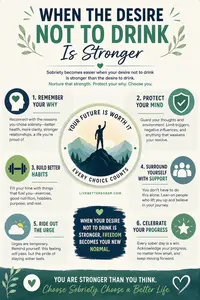
When the Desire Not to Drink Is Stronger
When the desire not to drink is stronger than the desire to drink, real change can finally begin.
What if This Time Actually Works?
What if this time actually works? Susan explores fear, relapse, emotional exhaustion, and quitting drinking with The Somatic Marker Method.
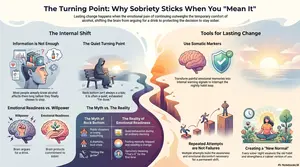
Why Quitting Drinking Only Works When You Mean It
Why quitting drinking only works when you mean it often begins after another morning promise turns into another disappointing evening.


I'm Susan, creator of Live Better Sober, and in January 2028 I'll celebrate 30 years alcohol-free.
Everything on this site comes from my own experience.
I hope that by sharing what I've learned, I can help you break the nightly drinking habit, rediscover yourself, and live better sober, too.
I'm Susan, creator of Live Better Sober, and in January 2028 I'll celebrate 30 years alcohol-free.
Everything on this site comes from my own experience.
I hope that by sharing what I've learned, I can help you break the nightly drinking habit, rediscover yourself, and live better sober, too.
Stay Connected with Live Better Sober
Get new articles, personal stories, podcasts, and practical ideas to help make sober evenings easier.
No lectures. No labels. Just useful support from someone who's been there.


NEWSLETTER
HOME ABOUT CONTACT DISCLAIMER PRIVACY TERMS
FOLLOW US ON:



|
|
|
|
|
SEARCH THIS SITE
LIVE BETTER SOBER IS BASED ON SUSAN GAST'S PERSONAL EXPERIENCE WITH QUITTING ALCOHOL AND LONG-TERM SOBRIETY.
ALL CONTENT COPYRIGHT © 2026 LIVE BETTER SOBER BY SUSAN GAST • ALL RIGHTS RESERVED REGARDLESS OF LINKS OR ATTRIBUTIONS.
POWERED BY SBI! (SOLO BUILD IT!)
