- HOME
- Susan Unscripted Videos
- Quitting When You Mean It
Why Quitting Drinking Only Works When You Mean It


Written by Susan — Quit drinking at 37 • Sober since 1998 • Sharing what actually works
Written by Susan — Quit drinking at 37 • Sober since 1998 • Sharing what actually works
Why quitting drinking only works when you mean it has very little to do with willpower alone. People often try to stop drinking multiple times before something finally shifts internally.
Many nightly drinkers already know they want to stop.
They promise themselves in the morning that tonight will be different — only to find themselves drinking again by evening after stress, habit, exhaustion, or emotional bargaining slowly take over.
After enough repeated attempts, people often start believing they simply “lack willpower,” when the deeper issue is usually far more emotional and conditioned than that.
That turning point does not always happen after a dramatic crisis either. Sometimes it happens in ordinary moments — during another exhausted morning, another disappointing evening, or when you suddenly realize you truly cannot keep repeating the same cycle anymore.
✅ Quick Answer: Why quitting drinking only works when you mean it...
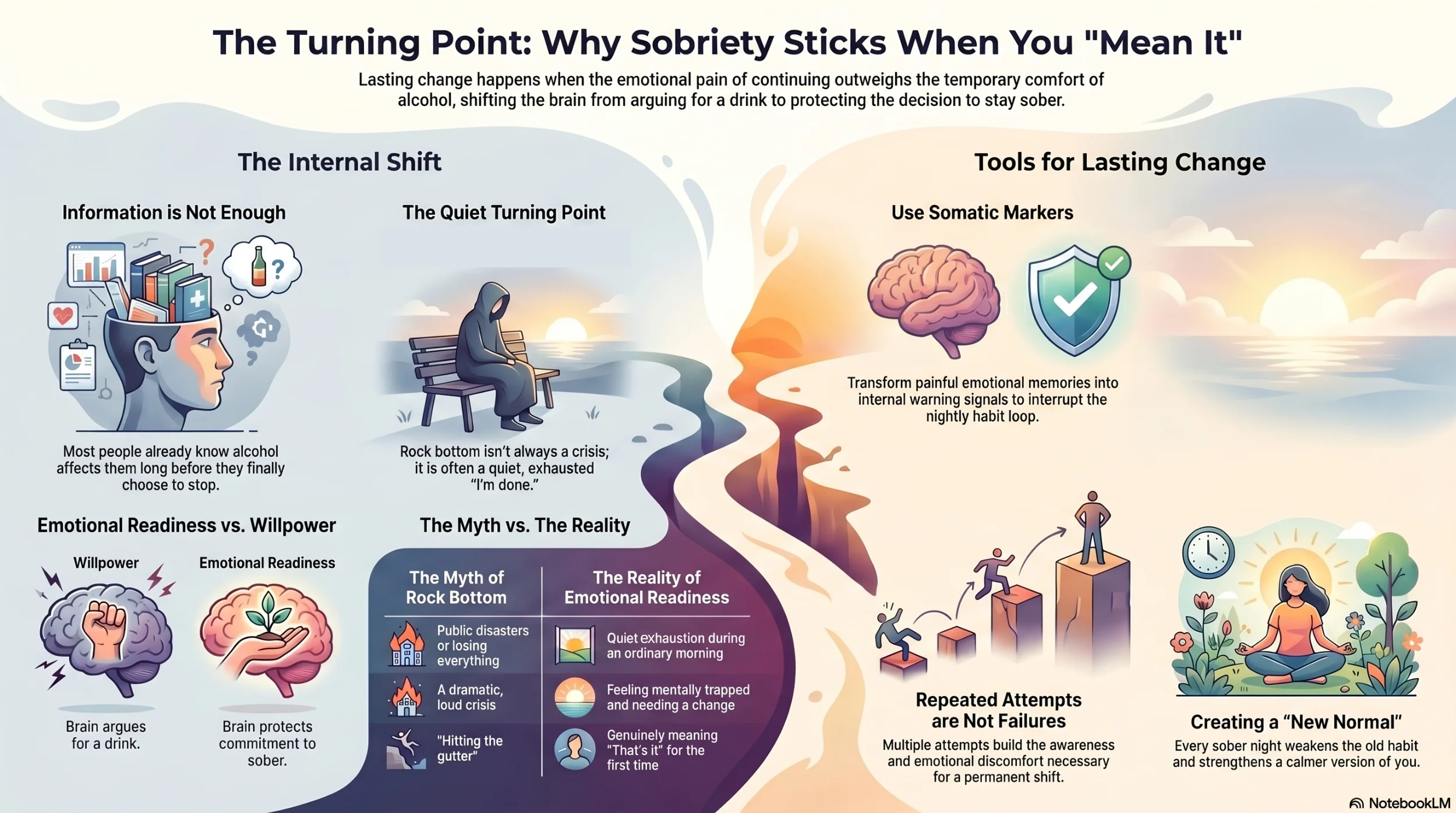
Quitting drinking usually becomes more successful when the emotional pain of continuing finally becomes stronger than the temporary comfort alcohol provides. Real change often begins when someone reaches a deeply personal decision to change.
Quitting Drinking Is Usually Not About Information
Most people already know alcohol is affecting them long before they finally stop drinking.
They already know:
- they sleep badly
- they feel anxious
- they regret things
- they keep making promises to themselves
- they are mentally exhausted from the cycle
The problem is rarely a lack of information.
The problem is that part of the brain still believes alcohol is helping somehow.
For many nightly drinkers, alcohol became:
- relief
- transition
- reward
- comfort
- escape
- emotional shutdown
And until the emotional attachment weakens enough, stopping can feel frightening — instead of freeing.
For some people, the turning point is not dramatic at all.
For me, it was waking up feeling incredibly ill after another night of drinking and realizing I really could not keep putting myself through the same cycle anymore.
I remember feeling physically awful, emotionally exhausted, and frightened by how trapped the pattern had started to feel.
That was the point where something inside me finally shifted.
Why Emotional Readiness Changes Everything
There is usually a point where something shifts internally.
Not perfectly.
Not magically.
But honestly.
You stop negotiating with yourself and silently think:
“That’s it.”
This is why some people can listen to hundreds of podcasts, read dozens of books, or attempt sobriety multiple times before something finally sticks.
Because eventually, the emotional cost becomes too heavy to ignore.
And that realization looks different for everyone.
Why Quitting Drinking Only Works When You Mean It
This does not mean people should wait helplessly for “rock bottom.”
It simply means genuine internal commitment matters.
Because after the emotional turning point happens, your brain starts becoming more willing to protect the decision... instead of constantly arguing against it.
That does NOT make sobriety easy overnight.
But it changes the direction.
And that is incredibly important.
This is also why gradual, day-by-day repetition matters so much during early sobriety.
Real change often happens through small repeated decisions over time — allowing the brain, nervous system, and nightly routines to slowly begin adapting in a calmer and more stable way.
What To Do When You Reach The “That’s It” Moment
If you have reached the point where you finally feel emotionally done with the cycle, try not to overwhelm yourself by thinking about “forever” immediately.
Instead, focus on protecting the decision you already made.
A few calm things can help:
- remove or reduce obvious drinking triggers for the evening
- plan a different nighttime routine ahead of time
- keep reminders nearby of why you wanted to stop
- expect emotional bargaining thoughts to happen
- focus on getting through tonight — not the rest of your life
Most importantly, remember that difficult thoughts do not automatically mean you made the wrong decision.
Very often, they are simply part of the brain adjusting to change after a long nightly habit.
During early sobriety, emotional discomfort can sometimes temporarily feel more intense as the nervous system adjusts to functioning without the familiar nightly alcohol routine.
The Hardest Part Usually Comes Later
Many people think the hardest part is deciding to quit.
Often it is not.
The harder part comes during ordinary evenings when the brain suddenly says:
“Just tonight.”
“One drink won’t matter.”
“You’ve had a stressful day.”
“You can start again tomorrow.”
This is where many people slip back into the automatic nightly habit.
And this is exactly why emotional memory matters so much.
The Somatic Marker Method Helps Interrupt The Habit Loop
The Somatic Marker Method grew out of years of personal sobriety experience and observing the repeated emotional patterns many nightly drinkers quietly struggle with.
It is based on the idea that emotional memories can become powerful internal warning signals.
Instead of romanticizing alcohol, you begin reconnecting to:
- the regret
- the anxiety
- the exhaustion
- the fear
- the disappointment
- the emotional burnout
Those emotional memories become somatic markers.
And over time, those markers can become stronger than the temporary craving itself.
That is why repeated attempts are not always failures.
Sometimes they are signs that something inside you is slowly changing.
Real Change Happens One Day At A Time
Nobody becomes emotionally stronger overnight.
But every sober evening teaches the brain something important.
Every difficult night you get through helps weaken the old habit loop a little more.
And eventually:
- the cravings calm down
- the bargaining loses strength
- the evenings feel lighter
- the constant mental battle starts fading
That calmer version of you slowly becomes the new normal.
Why I Made This Video
I made this video because I think many people secretly believe they are “failing” simply because they have tried to quit drinking before and did not stick with it permanently the first time.
But I honestly do not think repeated attempts always mean failure.
Sometimes, they are part of the process of finally seeing the pattern clearly.
I also wanted to explain that no course, book, podcast, or recovery program can truly work unless someone reaches the point where they honestly want life to change for themselves.
That turning point is deeply personal.
For some people it is dramatic.
For others, it happens gradually over time.
And once that emotional shift happens, support and structure suddenly start becoming much more meaningful and effective.
That is a huge part of why I created The Somatic Marker Method and why I built Live Better Sober around calm daily reinforcement instead of shame, labels, or pressure.
→ Back to: Susan Unscripted Videos on Live Better Sober
Ready for More Support?
Explore Live Better Sober: Quit Drinking — Break the Alcohol Habit, a practical, shame-free 66-day course designed to help you recognize and interrupt the pattern behind your evening drinking.
➡️ Learn more about the course here: Break the Nightly Drinking Habit
Frequently Asked Questions About Emotional Readiness and Quitting Drinking
Does someone need to hit rock bottom before quitting drinking?
Does someone need to hit rock bottom before quitting drinking?
No. Rock bottom does not always mean losing everything. For many people, it is simply the point they emotionally realize they genuinely cannot continue living the same way anymore.
Why do some sobriety attempts fail before one finally works?
Why do some sobriety attempts fail before one finally works?
Often because emotional readiness changes over time. Repeated attempts can slowly build awareness, emotional discomfort, and stronger somatic markers that eventually support lasting change.
What is The Somatic Marker Method?
What is The Somatic Marker Method?
The Somatic Marker Method is a framework used by Live Better Sober that focuses on using emotional memory and personal emotional experiences to interrupt the nightly drinking habit before the first drink happens.
More Susan Unscripted Videos
Susan Unscripted Videos on Live Better Sober
Susan Unscripted videos — honest reflections about quitting drinking, habit loops, emotional clarity, and sober life.
The Real Reason I Quit Drinking
The real reason I quit drinking was exhaustion, fear, and finally realizing I could not keep living that way.
Why I Kept Wanting to Go Back to Drinking
Why I kept wanting to go back to drinking had less to do with alcohol itself and more to do with familiarity.
Why Does the Urge to Drink Hit Harder at Night?
Why does the urge to drink hit harder at night? Susan explains the emotional routines behind evening cravings.
You Can’t Put a Price on Sobriety
You can’t put a price on sobriety once you experience the peace, clarity, and freedom alcohol no longer controls.
Did I Inherit the Alcoholic Gene?
Did I inherit the alcoholic gene? Susan reflects on genetics, family drinking patterns, and learned behavior.
What Life Really Feels Like After Quitting Drinking
What life really feels like after quitting drinking may surprise you — especially the emotional relief.
The Drunk Version of You Isn’t the Real You
The drunk version of you isn’t the real you. Susan reflects on alcohol, personality changes, regret, and emotional clarity.
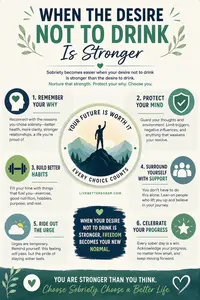
When the Desire Not to Drink Is Stronger
When the desire not to drink is stronger than the desire to drink, real change can finally begin.
What if This Time Actually Works?
What if this time actually works? Susan explores fear, relapse, emotional exhaustion, and quitting drinking with The Somatic Marker Method.



I'm Susan, creator of Live Better Sober, and in January 2028 I'll celebrate 30 years alcohol-free.
Everything on this site comes from my own experience.
I hope that by sharing what I've learned, I can help you break the nightly drinking habit, rediscover yourself, and live better sober, too.
I'm Susan, creator of Live Better Sober, and in January 2028 I'll celebrate 30 years alcohol-free.
Everything on this site comes from my own experience.
I hope that by sharing what I've learned, I can help you break the nightly drinking habit, rediscover yourself, and live better sober, too.
Stay Connected with Live Better Sober
Get new articles, personal stories, podcasts, and practical ideas to help make sober evenings easier.
No lectures. No labels. Just useful support from someone who's been there.


NEWSLETTER
HOME ABOUT CONTACT DISCLAIMER PRIVACY TERMS
FOLLOW US ON:



|
|
|
|
|
SEARCH THIS SITE
LIVE BETTER SOBER IS BASED ON SUSAN GAST'S PERSONAL EXPERIENCE WITH QUITTING ALCOHOL AND LONG-TERM SOBRIETY.
ALL CONTENT COPYRIGHT © 2026 LIVE BETTER SOBER BY SUSAN GAST • ALL RIGHTS RESERVED REGARDLESS OF LINKS OR ATTRIBUTIONS.
POWERED BY SBI! (SOLO BUILD IT!)
