- HOME
- Living Comfortably Sober
- Identity Without Alcohol
Who Am I Without Alcohol? Why Identity Feels Different


Written by Susan — Quit drinking at 37 • Sober since 1998 • Sharing what actually works
Written by Susan — Quit drinking at 37 • Sober since 1998 • Sharing what actually works
Asking “who am I without alcohol?” can feel surprisingly emotional after years of nightly drinking. Plenty of people assume they’re only giving up a habit, but alcohol often becomes tied to routines, comfort, identity, coping, and even personality. So when drinking stops, it’s common to feel uncertain about who you are without it.
✅ Quick Answer: Why does identity feel different without alcohol?
Alcohol can quietly become attached to relaxation, confidence, routines, and emotional coping over time. When it disappears, it's common to go through a temporary period of identity adjustment before rediscovering who they are naturally without alcohol involved.
Alcohol Quietly Becomes Part of Identity
Most people do not wake up one morning and consciously decide:
“I want alcohol to become part of my personality.”
It usually happens slowly.
Over time, alcohol can become connected to:
- evening routines
- social situations
- stress relief
- relaxation
- celebrations
- comfort
- confidence
- emotional escape
For nightly drinkers, identity often becomes connected to the transition between daytime responsibilities and evening relief.
The drink can start feeling less important than the ritual itself.
That's why some people miss the routine even more than the alcohol in the beginning.
And eventually, people stop imagining evenings, weekends, vacations, or difficult emotions without it.
That’s why quitting can feel bigger than simply removing a drink.
Sometimes it feels like removing part of the structure of your life.
It's important to understand that this does not mean alcohol was your identity.
More often, alcohol became attached to routines, emotions, and coping patterns that repeated often enough to feel like part of who you were.
Losing a habit can feel unsettling.
But feeling unsettled is not the same as losing yourself.
Who Am I Without Alcohol When Everything Feels Different?
This question often shows up during quiet moments.
Maybe while:
- sitting at home at night
- going to dinner sober
- feeling emotions more clearly
- realizing old routines no longer fit
- noticing how much time alcohol used to occupy mentally
And honestly, this stage can feel uncomfortable.
Because alcohol sometimes acts like emotional background noise.
When that noise disappears, people suddenly hear themselves more clearly.
That can feel peaceful eventually.
At first, though, it can feel unfamiliar.
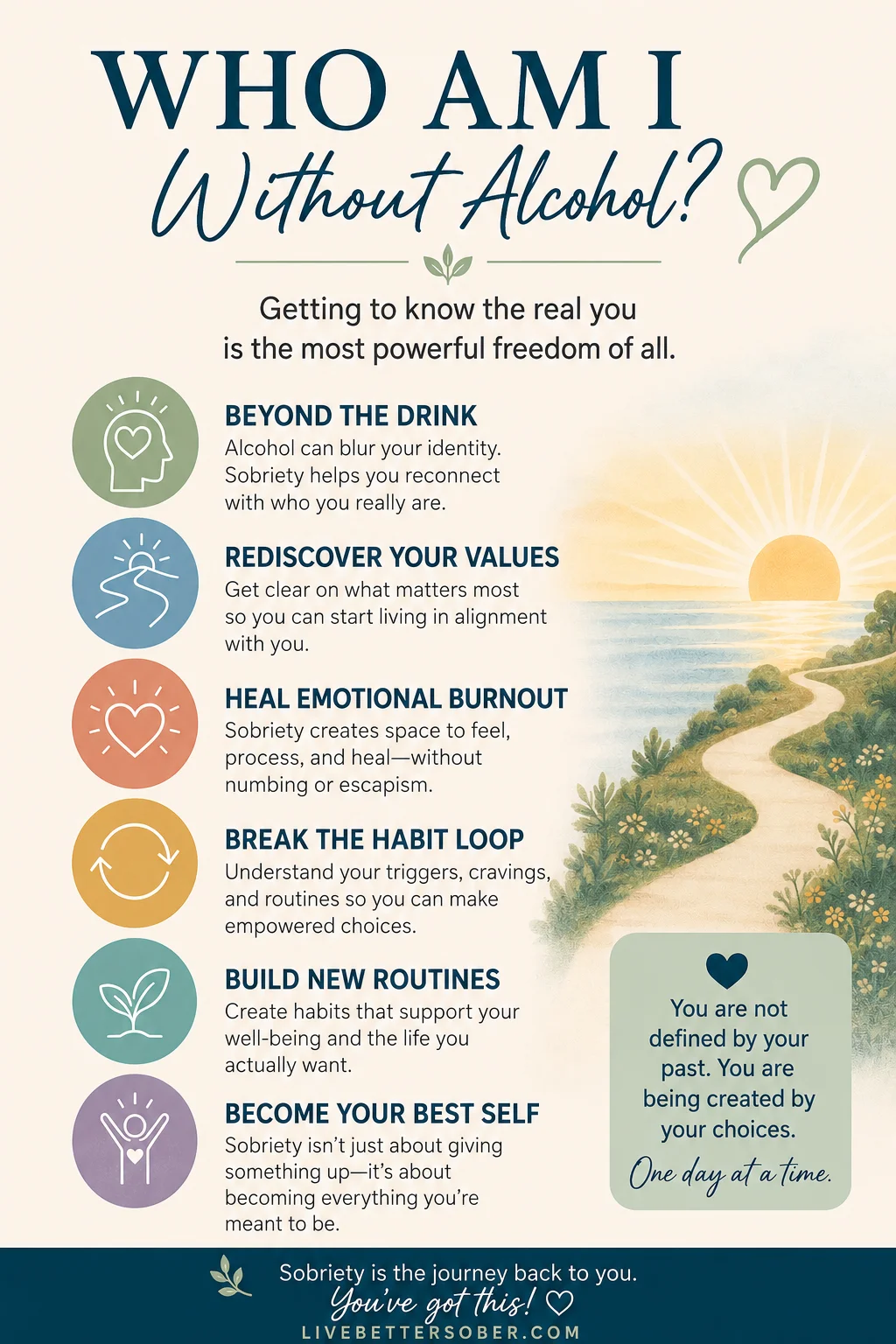
You May Feel Emotionally Exposed for a While
This is something many people experience but rarely talk about openly.
Without alcohol, emotions can temporarily feel:
- sharper
- louder
- harder to avoid
- more noticeable
You may notice emotions you have not paid attention to in years.
You might suddenly notice loneliness during a quiet evening.
You might feel sadness during a television commercial that previously wouldn't have affected you.
You might find yourself reflecting on relationships, goals, regrets, or dreams that alcohol helped push into the background.
None of this means something is wrong.
It simply means emotional background noise is becoming easier to hear.
Not because emotions suddenly appeared out of nowhere.
But because alcohol was helping numb, delay, soften, or interrupt them.
That emotional exposure is usually temporary.
Your nervous system is adjusting to experiencing life more directly again.
This Is Not a Character Flaw
One fear that quietly shows up for many people is this:
"If I keep returning to alcohol, maybe there's something wrong with me."
But repeating a nightly drinking habit usually says far more about learned patterns than personal weakness.
The brain learns associations.
Stress becomes linked to relief.
Evenings become linked to drinking.
Certain emotions become linked to escape.
After enough repetition, those patterns can start running automatically.
That does not mean you are weak.
It does not mean you are broken.
And it does not mean alcohol became your true identity.
It means your brain learned a habit that can also be unlearned.
Rediscovering Parts of Yourself Again
This is where things slowly begin changing.
Not overnight.
Not perfectly.
But gradually.
If you're wondering how to reconnect with yourself, look for small signs rather than dramatic breakthroughs.
You may begin noticing:
- curiosity returning
- enjoying simple activities again
- making plans for the future
- feeling more present during conversations
- discovering they actually like quiet evenings
These small changes often appear long before confidence fully returns.
Over time, people begin reconnecting with things they forgot they enjoyed:
- hobbies
- reading
- cooking
- music
- creativity
- walking
- decorating
- gardening
- quiet evenings
- real rest
Some people realize they spent years surviving emotionally rather than truly living.
And as alcohol fades into the background, other parts of life slowly start becoming visible again.
That process can eventually start feeling exciting.
Self-Respect Starts Returning Quietly
One of the most powerful changes is often internal.
Without nightly drinking, people sometimes begin noticing:
- they trust themselves more
- mornings feel calmer
- anxiety decreases
- promises to themselves matter again
- they feel emotionally safer
- they stop waking up with guilt or regret
These are not dramatic movie-style transformations.
They are quieter than that.
But often far more meaningful.
Real confidence starts growing from keeping promises to yourself instead of escaping yourself.
That can create profound changes over time.
Who Am I Without Alcohol?
If you keep asking yourself “who am I without alcohol?” the answer is probably not:
“a completely different person.”
More often, people slowly discover they are still themselves — just without the constant emotional interference alcohol was creating.
That version of you may initially feel unfamiliar.
But unfamiliar does not mean wrong.
Sometimes it simply means you are meeting yourself more honestly for the first time in a long time.
Identity shifts can feel uncomfortable at first because alcohol often becomes woven into routines, emotions, habits, and self-image without people fully realizing it.
But over time, countless people discover something unexpected:
they did not lose themselves by removing alcohol.
They slowly started finding themselves again.
→ Back to: How to Socialize Without Drinking
→ Read Next: Can You Actually Enjoy Life Without Alcohol?
Continue Exploring Living Comfortably Sober
Life without alcohol isn't about missing out. It's about creating evenings, weekends, and everyday moments that feel genuinely satisfying. Explore practical ideas and encouragement to help you build a life that feels comfortable, peaceful, and worth protecting.
→ Browse all Living Comfortably Sober articles
Ready for More Support?
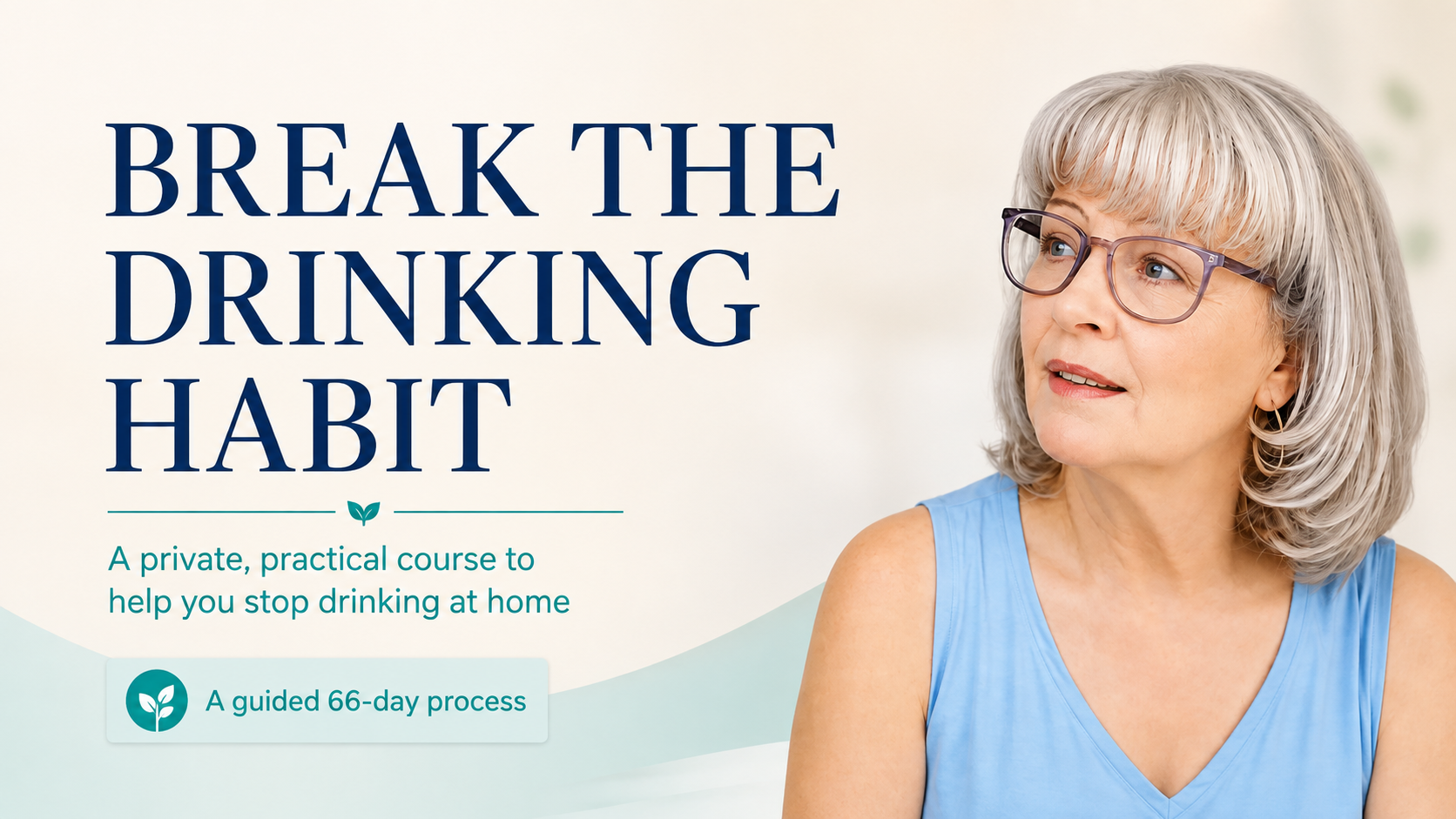
Explore Live Better Sober: Quit Drinking — Break the Alcohol Habit, a practical, shame-free 66-day course designed to help you recognize and interrupt the pattern behind your evening drinking.
➡️ Learn more about the course here: Break the Nightly Drinking Habit
Why Does Identity Change After Quitting Alcohol?
Is it normal to feel emotionally different without alcohol?
Is it normal to feel emotionally different without alcohol?
Yes. Many people feel emotionally exposed or unfamiliar with themselves at first because alcohol was part of their coping and routine for so long.
Why do I feel like I don’t know myself anymore?
Why do I feel like I don’t know myself anymore?
Identity shifts are common during major habit changes. Your routines, emotions, and coping patterns are adjusting at the same time.
Does confidence return after quitting drinking?
Does confidence return after quitting drinking?
For many people, yes. Confidence often grows slowly through emotional stability, clearer thinking, and rebuilding self-trust.
Living Comfortably Sober
Life After Quitting Drinking — What Changes Over Time?
Life after quitting drinking can bring calmer evenings, better sleep, clearer thinking, and more peace.
What Happens Emotionally When You Stop Drinking
What happens emotionally when you stop drinking often includes relief, clarity, and emotional stability.
What if Life Feels Boring Without Alcohol? It's Normal
Life feels boring without alcohol for many people at first. It's not a lack of willpower or a sign something is wrong—it's part of the transition process.
How to Socialize Without Drinking — Confidently
How to socialize without drinking and build genuine confidence while navigating parties, dinners, and events sober.
Enjoy Life Without Alcohol - Real Enjoyment Can Return
Can you enjoy life without alcohol? Yes. Many people discover more peace, confidence, emotional stability, and real enjoyment than they expected.





I'm Susan, creator of Live Better Sober, and in January 2028 I'll celebrate 30 years alcohol-free.
Everything on this site comes from my own experience.
I hope that by sharing what I've learned, I can help you break the nightly drinking habit, rediscover yourself, and live better sober, too.
I'm Susan, creator of Live Better Sober, and in January 2028 I'll celebrate 30 years alcohol-free.
Everything on this site comes from my own experience.
I hope that by sharing what I've learned, I can help you break the nightly drinking habit, rediscover yourself, and live better sober, too.
Stay Connected with Live Better Sober
Get new articles, personal stories, podcasts, and practical ideas to help make sober evenings easier.
No lectures. No labels. Just useful support from someone who's been there.


NEWSLETTER
HOME ABOUT CONTACT DISCLAIMER PRIVACY TERMS
FOLLOW US ON:



|
|
|
|
|
SEARCH THIS SITE
LIVE BETTER SOBER IS BASED ON SUSAN GAST'S PERSONAL EXPERIENCE WITH QUITTING ALCOHOL AND LONG-TERM SOBRIETY.
ALL CONTENT COPYRIGHT © 2026 LIVE BETTER SOBER BY SUSAN GAST • ALL RIGHTS RESERVED REGARDLESS OF LINKS OR ATTRIBUTIONS.
POWERED BY SBI! (SOLO BUILD IT!)
