- HOME
- Living Comfortably Sober
- Life Without Alcohol
What if Life Feels Boring Without Alcohol? It's Normal

Written by Susan — Quit drinking at 37 • Sober since 1998 • Sharing what actually works
Written by Susan — Quit drinking at 37 • Sober since 1998 • Sharing what actually works
If life feels boring without alcohol, you're definitely not alone. In fact, this is one of the most common fears people have when they stop drinking at night. Evenings can suddenly feel quieter, slower, and emotionally unfamiliar. The routines that once felt comforting — pouring a drink, relaxing on the couch, “switching off” after work — are suddenly missing, and that can leave a strange emptiness at first.
Some people become genuinely frightened when this happens. They wonder if life will always feel dull, whether they've given up their only way to relax, or whether they've made a mistake trying to stop drinking. Those fears are understandable, but they are usually not an accurate picture of what lies ahead.
✅ Quick Answer: Life feels boring without alcohol... does it?
Yes — life can feel boring without alcohol in the beginning because your brain and routines are adjusting to a completely different reward system. But that feeling is usually temporary. Over time, most people find that real enjoyment, peace, and emotional stability slowly return in a more genuine way.
One of the biggest misunderstandings about drinking is that alcohol creates happiness.
Most of the time, it actually creates relief.
That nightly drink often becomes:
- the transition from work to home
- the reward after stress
- the signal that responsibilities are over
- the permission to relax
For some nightly drinkers, the pattern becomes almost automatic. They promise themselves in the morning they won't drink tonight, then find themselves standing in the kitchen around 5, 6, or 7 p.m. feeling pulled back toward the same routine again.
So when alcohol disappears, it can initially feel like something important is missing.
Not because life truly became empty overnight — but because the brain got used to alcohol being attached to comfort, anticipation, and emotional shutdown.
That’s why evenings may suddenly feel oddly quiet.
Not peaceful yet.
Just… flat.
And honestly, that can feel unsettling at first.
Life Feels Boring Without Alcohol Because the Brain Is Adjusting
This is the part most drinkers never hear about.
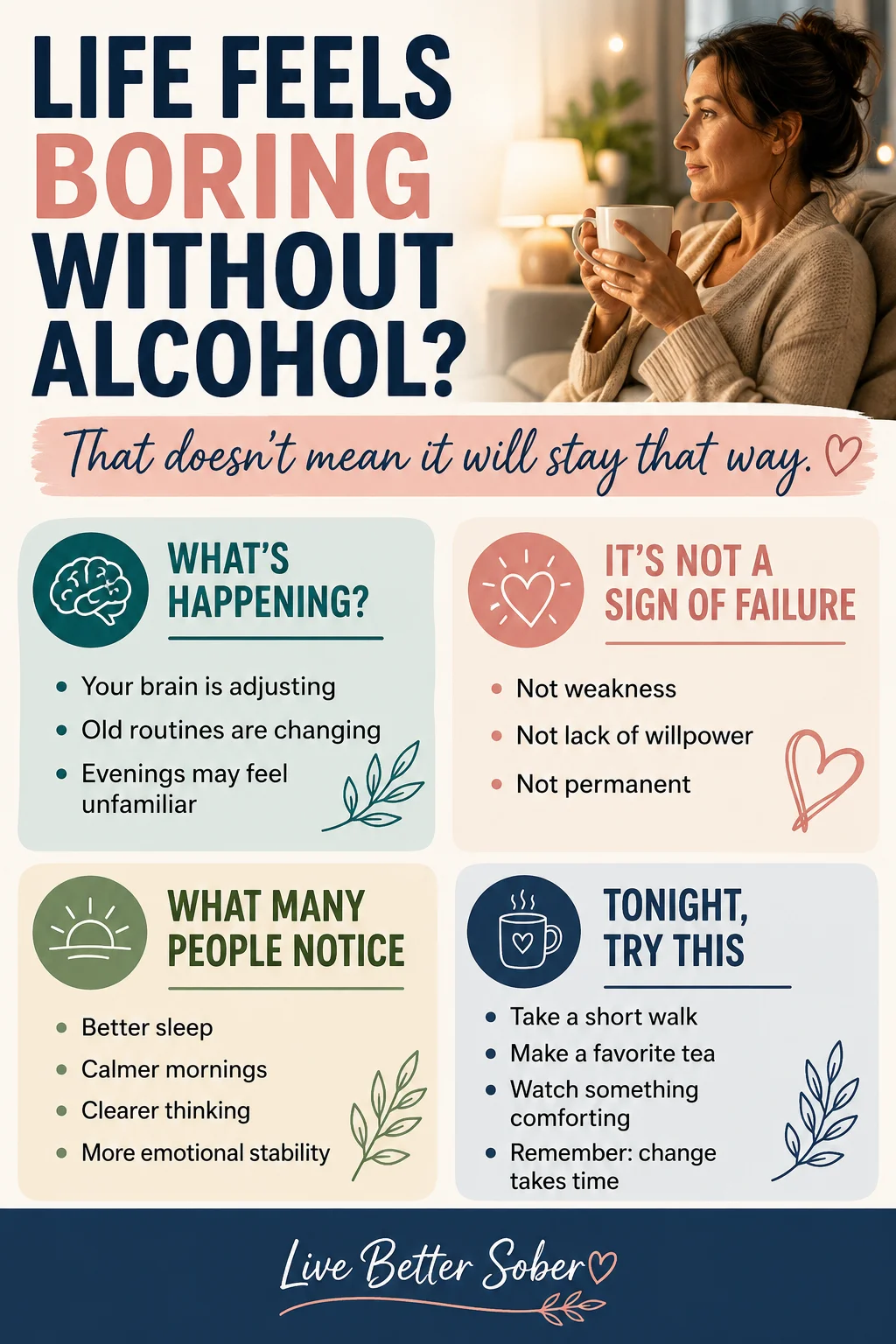
When nightly drinking becomes routine, the brain starts depending on alcohol for dopamine stimulation and emotional reward. Over time, ordinary activities may stop feeling as enjoyable without it.
Simple things like:
- watching TV
- cooking dinner
- sitting outside
- listening to music
- relaxing at night
can temporarily feel less interesting.
That does NOT mean you've ruined your ability to enjoy life forever.
It means your nervous system is re-calibrating.
Your brain has to relearn how to experience pleasure naturally again without needing alcohol attached to it.
During this period, the brain's reward system can temporarily feel muted. Activities that once seemed enjoyable may not produce the same anticipation or satisfaction right away. As the nervous system adjusts, those natural reward pathways gradually begin waking up again.
That process takes time.
And during that re-learning period, it's common to think:
“This is it now. Life will just feel dull forever.”
But that’s rarely true.
Why Life Can Feel Flat After Quitting Alcohol
Alcohol Quietly Becomes Part of the Evening Ritual
For many nightly drinkers, alcohol is not just about intoxication.
It becomes part of the emotional structure of the evening.
When that ritual disappears, the evening can temporarily feel emotionally unfinished.
That’s normal.
The Problem Is Not Actually “Boredom”
This is important.
What often gets labeled as boredom is actually:
- emotional discomfort
- restlessness
- over-stimulation withdrawal
- lack of routine
- unprocessed stress
- silence they are no longer used to
Alcohol can keep people constantly stimulated or emotionally numbed.
Without it, there is suddenly space.
And space can feel uncomfortable before it starts feeling peaceful.
That’s a huge distinction.
Because boredom sounds hopeless.
Adjustment sounds manageable.
Small Enjoyments Slowly Start Returning
This part happens gradually.
Usually more slowly than people expect.
At first, evenings may feel awkward and repetitive.
But over time, small changes often begin to appear:
- better sleep
- calmer mornings
- clearer thinking
- enjoying coffee (or tea!) again
- laughing naturally
- remembering movies
- feeling physically safer and calmer at night
Simple pleasures slowly become pleasurable again.
Not in a dramatic Hollywood transformation way.
Just quietly.
Steadily.
Real life starts feeling more manageable again.
And honestly, many eventually realize alcohol was not making life exciting — it was mostly interrupting discomfort temporarily.
That’s a very different thing.
What if Life Feels Boring Without Alcohol?
If life feels boring without alcohol right now, try not to panic and assume this is your permanent future.
The early weeks of change can feel emotionally strange because your routines, reward system, and nightly habits are all shifting at once.
But boredom is not the final destination.
Very often, it’s simply the space between an old habit and a new life that has not fully formed yet.
This is also one reason I teach The Somatic Marker Method inside my Break the Nightly Drinking Habit course. During difficult evenings, learning how to reconnect with the real emotional and physical consequences of the habit can help you move through temporary boredom without romanticizing alcohol.
That middle stage can feel uncomfortable.
But it does pass.
A lot of people worry that giving up alcohol means giving up fun, relaxation, comfort, or enjoyment forever. But quite often, what actually happens is something quieter and more meaningful — life becomes steadier, calmer, clearer, and emotionally safer over time.
And eventually, alcohol stops feeling like the thing that made life enjoyable… and starts feeling like the thing that was keeping real peace just out of reach.
What To Do Tonight If Everything Feels Flat
If life feels boring without alcohol tonight, try not to treat boredom as an emergency.
Instead:
- take a short walk
- make a favorite tea or coffee
- watch something comforting rather than stimulating
- work on a hobby for ten minutes
- remind yourself that temporary change feels different from permanent reality
The goal isn't to create excitement.
The goal is simply to get through tonight without automatically reaching for alcohol.
Over time, those evenings begin to feel more natural.
→ Read Next: How to Socialize Without Drinking?
Continue Exploring Living Comfortably Sober
Life without alcohol isn't about missing out. It's about creating evenings, weekends, and everyday moments that feel genuinely satisfying. Explore practical ideas and encouragement to help you build a life that feels comfortable, peaceful, and worth protecting.
→ Browse all Living Comfortably Sober articles
Ready for More Support?
Explore Live Better Sober: Quit Drinking — Break the Alcohol Habit, a practical, shame-free 66-day course designed to help you recognize and interrupt the pattern behind your evening drinking.
➡️ Learn more about the course here: Break the Nightly Drinking Habit
Does Life Without Alcohol Eventually Feel Normal?
Is it normal for life to feel boring without alcohol?
Is it normal for life to feel boring without alcohol?
Yes. A lot of people experience emotional flatness or boredom at first because their brain and routines are adjusting to life without alcohol.
How long does boredom last after quitting drinking?
How long does boredom last after quitting drinking?
It varies from person to person, but most people notice gradual emotional improvement over weeks and months as their nervous system re-calibrates.
Does life actually become enjoyable again without alcohol?
Does life actually become enjoyable again without alcohol?
For many people, yes. Enjoyment often returns more naturally and steadily over time, especially once sleep, anxiety, and emotional stability improve.
Living Comfortably Sober
Life After Quitting Drinking — What Changes Over Time?
Life after quitting drinking can bring calmer evenings, better sleep, clearer thinking, and more peace.
What Happens Emotionally When You Stop Drinking
What happens emotionally when you stop drinking often includes relief, clarity, and emotional stability.
How to Socialize Without Drinking — Confidently
How to socialize without drinking and build genuine confidence while navigating parties, dinners, and events sober.
Who Am I Without Alcohol? Why Identity Feels Different
Who am I without alcohol? Here's why identity shifts after nightly drinking stops.
Enjoy Life Without Alcohol - Real Enjoyment Can Return
Can you enjoy life without alcohol? Yes. Many people discover more peace, confidence, emotional stability, and real enjoyment than they expected.



I'm Susan, creator of Live Better Sober, and in January 2028 I'll celebrate 30 years alcohol-free.
Everything on this site comes from my own experience.
I hope that by sharing what I've learned, I can help you break the nightly drinking habit, rediscover yourself, and live better sober, too.
I'm Susan, creator of Live Better Sober, and in January 2028 I'll celebrate 30 years alcohol-free.
Everything on this site comes from my own experience.
I hope that by sharing what I've learned, I can help you break the nightly drinking habit, rediscover yourself, and live better sober, too.
Stay Connected with Live Better Sober
Get new articles, personal stories, podcasts, and practical ideas to help make sober evenings easier.
No lectures. No labels. Just useful support from someone who's been there.


NEWSLETTER
HOME ABOUT CONTACT DISCLAIMER PRIVACY TERMS
FOLLOW US ON:



|
|
|
|
|
SEARCH THIS SITE
LIVE BETTER SOBER IS BASED ON SUSAN GAST'S PERSONAL EXPERIENCE WITH QUITTING ALCOHOL AND LONG-TERM SOBRIETY.
ALL CONTENT COPYRIGHT © 2026 LIVE BETTER SOBER BY SUSAN GAST • ALL RIGHTS RESERVED REGARDLESS OF LINKS OR ATTRIBUTIONS.
POWERED BY SBI! (SOLO BUILD IT!)
