- HOME
- Living Comfortably Sober
- Socializing Sober
How to Socialize Without Drinking — Confidently
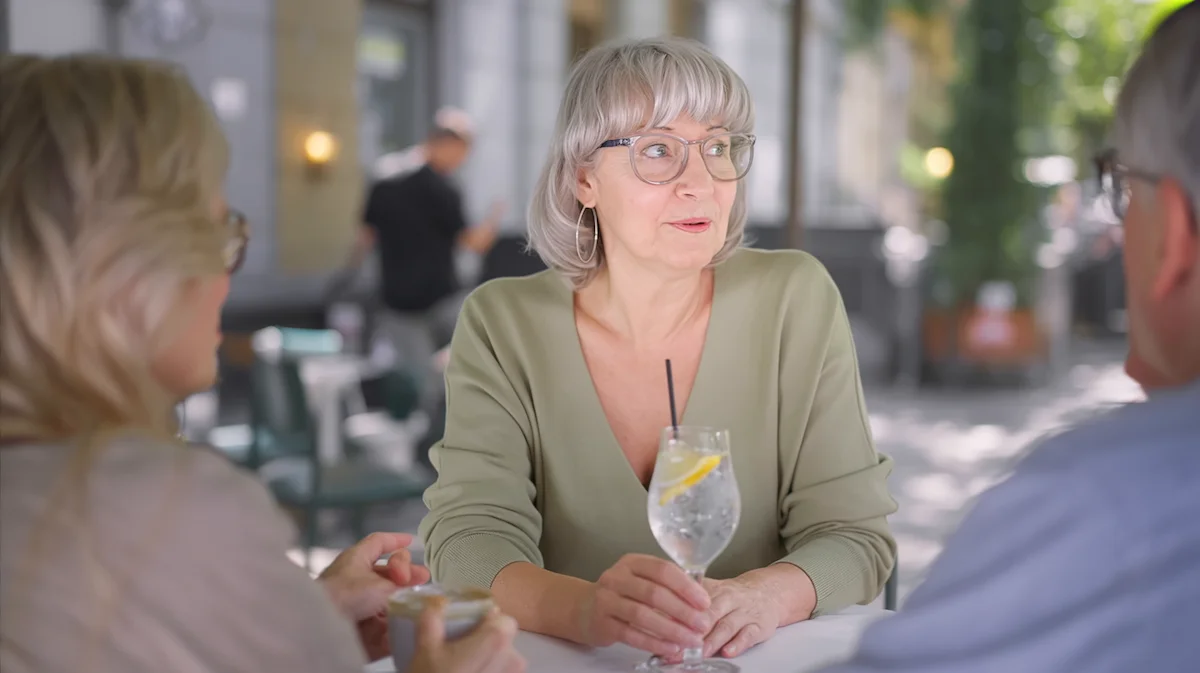

Written by Susan — Quit drinking at 37 • Sober since 1998 • Sharing what actually works
Written by Susan — Quit drinking at 37 • Sober since 1998 • Sharing what actually works
Learning how to socialize without drinking can feel intimidating in the beginning, especially if alcohol has been part of your social life for years. It's common to worry you'll feel uncomfortable, boring, anxious, or out of place at dinners, parties, weddings, or even casual get-togethers. And honestly, in the beginning, social situations can feel different without that familiar drink in your hand.
✅ Quick Answer: Can you socialize without drinking?
Yes, you absolutely can socialize without drinking, although it may feel uncomfortable during the adjustment period. Most eventually regain social comfort as they learn that social connection, conversation, and enjoyment are still possible without alcohol.
Why Social Situations Feel So Different Without Alcohol
For many adults, alcohol quietly becomes attached to social comfort.
Not always because someone wants to get drunk.
But because drinking often becomes:
- a social ritual
- a temporary sense of ease
- a way to relax
- something to do with your hands
- a way to ease social discomfort
Gradually, the brain starts linking alcohol with:
- connection
- fun
- belonging
- confidence
- relaxation
So when alcohol suddenly disappears from social situations, people can feel strangely exposed.
That’s normal.
You are not “bad at socializing.”
You are adjusting to socializing differently.
How to Socialize Without Drinking When Everyone Else Is Drinking
This is one of the biggest fears people have.
You walk into a restaurant, party, barbecue, or event and suddenly become hyper-aware of alcohol everywhere.
Different situations may bring up different pressure points.
At a dinner, it might be the wine list or the server asking what everyone wants to drink.
At a wedding, it might be champagne, toasts, cocktail hour, and the feeling that “everyone else is celebrating properly.”
At a work event, it might be networking nerves, small talk, or not wanting to stand out.
On vacation, it might be the old belief that relaxing means drinking.
At a party or barbecue, it may be nothing more than the sight of coolers, bottles, and people walking around with drinks in their hands.
This does not mean you are failing. It means your brain is recognizing familiar cues. For a long time, social situations may have been paired with alcohol, so your mind expects the old pattern to continue.
One practical way to make this easier is to decide before you arrive what you will drink instead, how long you plan to stay, and what you will say if someone asks why you are not drinking.
Initially, it can honestly feel like:
“Wait… is THIS what socializing really looks like?”
You may become aware of:
- how often drinks get refilled
- how much adult conversation revolves around alcohol
- how uncomfortable some people seem socially
And surprisingly, some discover they were never as relaxed socially as they thought they were.
Alcohol was lowering inhibition temporarily.
That realization can feel uncomfortable in the beginning — but also quite freeing later on.
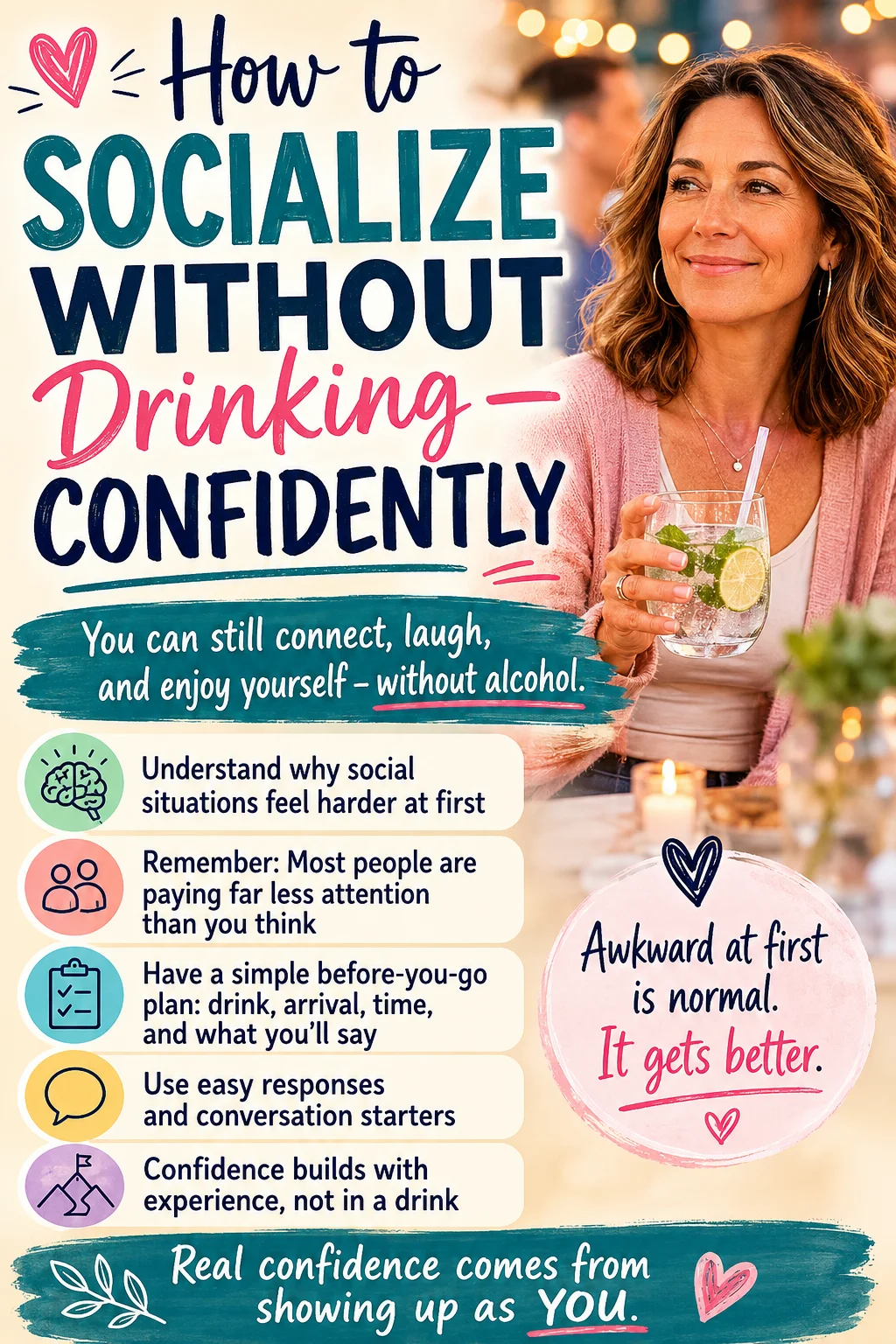
Most People Are Paying Far Less Attention Than You Think
This matters because anxiety tends to create a spotlight effect.
Many people assume:
- everyone notices they are not drinking
- everyone is judging them
- everyone wants an explanation
In reality?
Most people are far more focused on themselves.
Some may not even register it.
Others may briefly ask:
“Not drinking tonight?”
And that’s usually the end of it.
A Simple Before-You-Go Plan
Before the event, it helps to decide four things:
1. What you will drink:
Removes the awkward “what do I order?” moment
2. When you will arrive:
Helps you feel more in control
3. How long you will stay:
Gives your brain an exit plan
4. What you will say if asked:
Prevents over-explaining
You can keep it very simple:
“I’ll have sparkling water with lime.”
“I’m staying for dinner, then heading home.”
“I’m taking a break from alcohol for a while.”
You can also shift attention away from the drink by becoming more conversation-focused. Ask simple questions. Listen carefully. Notice what people are saying instead of worrying about how you are being perceived.
Good sober conversation starters can be as ordinary as:
“What have you been working on lately?”
“How do you know the host?”
“Have you been anywhere interesting recently?”
“What are you looking forward to this year?”
You do not have to become the most fascinating person in the room. Sometimes confidence begins with being present, calm, and genuinely interested.
You do NOT owe everyone your life story.
Some Social Situations May Feel Less Fun at First
This is the honest part many people avoid talking about.
Some gatherings genuinely may feel less exciting during the first few sober events.
Especially if alcohol used to be:
- the emotional highlight
- the entertainment itself
- the stress relief
- the social lubricant
Early on, you may feel like everyone else got the instruction manual for socializing except you.
That feeling is incredibly common.
But something interesting often happens over time:
You begin noticing which connections genuinely feel real.
Some conversations become more meaningful.
Some friendships become stronger.
And some situations that once seemed “fun” may suddenly feel exhausting, repetitive, or shallow without alcohol involved.
That can become clarifying.
What Actually Changes After the First Few Events
The first sober social event may feel clumsy. You may become hyper-aware of every drink, every toast, every refill, and every moment when you would normally reach for alcohol.
By the fifth event, people often begin to realize something important: the discomfort does not last forever. They have proof that they can show up, talk, laugh, leave, and wake up the next morning without regret.
Several months later, social ease often feels different. It is usually quieter, steadier, and more real. Instead of thinking, “How will I get through this without drinking?” the thought may become, “I know how to do this now.”
This is where The Somatic Marker Method connects beautifully. Each sober event gives your brain a new emotional marker: I handled that. I got through it. I did not need alcohol to belong.
Eventually, those new markers can become stronger than the old ones.
You Learn That Self-Assurance Was Never Inside the Drink
Alcohol can temporarily reduce anxiety and inhibition.
But it does not create genuine self-trust.
Real self-trust usually comes from:
- experience
- comfort
- self-respect
- emotional safety
- repetition
- learning you can handle situations sober
That sense of self-trust builds slowly.
And yes — uncomfortable moments may happen along the way.
But awkward moments happen to everyone anyway.
The difference now is that you actually remember them.
And honestly?
Most embarrassing moments are forgotten by everyone else within minutes.
How to Socialize Without Drinking?
Learning how to socialize without drinking is often less about becoming a completely different person and more about becoming comfortable without using alcohol as emotional support.
That adjustment can feel strange while you're adapting.
But over time, many discover:
- they laugh naturally again
- conversations become more genuine
- anxiety gradually decreases
- they stop obsessing about drinking altogether
And slowly, social situations stop feeling like something to survive and start feeling normal again.
In the early stages, socializing without alcohol can feel like learning how to walk in shoes that don’t quite fit yet. Everything feels more noticeable. More exposed. More awkward.
But over time, something powerful starts happening — you realize you can still connect, laugh, relax, and enjoy yourself without needing alcohol to get there first.
And that realization builds genuine self-belief.
→ Back to: What if Life Feels Boring Without Alcohol?
→ Read Next: Who Am I Without Alcohol Every Night?
Continue Exploring Living Comfortably Sober
Life without alcohol isn't about missing out. It's about creating evenings, weekends, and everyday moments that feel genuinely satisfying. Explore practical ideas and encouragement to help you build a life that feels comfortable, peaceful, and worth protecting.
→ Browse all Living Comfortably Sober articles
Ready for More Support?
Explore Live Better Sober: Quit Drinking — Break the Alcohol Habit, a practical, shame-free 66-day course designed to help you recognize and interrupt the pattern behind your evening drinking.
➡️ Learn more about the course here: Break the Nightly Drinking Habit
FAQs: What Makes Socializing Without Alcohol Easier?
Is it awkward to socialize without drinking in the beginning?
Is it awkward to socialize without drinking in the beginning?
Yes, it can feel awkward initially because many people have become accustomed to relying on alcohol for social comfort or confidence.
What should I say if people ask why I’m not drinking?
What should I say if people ask why I’m not drinking?
Simple answers usually work best, such as “I’m taking a break” or “I feel better without it.”
Does social anxiety improve without alcohol?
Does social anxiety improve without alcohol?
Often, yes. While alcohol may temporarily reduce anxiety, long-term emotional confidence often improves without relying on drinking.
Living Comfortably Sober
Life After Quitting Drinking — What Changes Over Time?
Life after quitting drinking can bring calmer evenings, better sleep, clearer thinking, and more peace.
What Happens Emotionally When You Stop Drinking
What happens emotionally when you stop drinking often includes relief, clarity, and emotional stability.
What if Life Feels Boring Without Alcohol? It's Normal
Life feels boring without alcohol for many people at first. It's not a lack of willpower or a sign something is wrong—it's part of the transition process.
Who Am I Without Alcohol? Why Identity Feels Different
Who am I without alcohol? Here's why identity shifts after nightly drinking stops.
Enjoy Life Without Alcohol - Real Enjoyment Can Return
Can you enjoy life without alcohol? Yes. Many people discover more peace, confidence, emotional stability, and real enjoyment than they expected.




I'm Susan, creator of Live Better Sober, and in January 2028 I'll celebrate 30 years alcohol-free.
Everything on this site comes from my own experience.
I hope that by sharing what I've learned, I can help you break the nightly drinking habit, rediscover yourself, and live better sober, too.
I'm Susan, creator of Live Better Sober, and in January 2028 I'll celebrate 30 years alcohol-free.
Everything on this site comes from my own experience.
I hope that by sharing what I've learned, I can help you break the nightly drinking habit, rediscover yourself, and live better sober, too.
Stay Connected with Live Better Sober
Get new articles, personal stories, podcasts, and practical ideas to help make sober evenings easier.
No lectures. No labels. Just useful support from someone who's been there.


NEWSLETTER
HOME ABOUT CONTACT DISCLAIMER PRIVACY TERMS
FOLLOW US ON:



|
|
|
|
|
SEARCH THIS SITE
LIVE BETTER SOBER IS BASED ON SUSAN GAST'S PERSONAL EXPERIENCE WITH QUITTING ALCOHOL AND LONG-TERM SOBRIETY.
ALL CONTENT COPYRIGHT © 2026 LIVE BETTER SOBER BY SUSAN GAST • ALL RIGHTS RESERVED REGARDLESS OF LINKS OR ATTRIBUTIONS.
POWERED BY SBI! (SOLO BUILD IT!)
