- HOME
- The Live Better Sober Approach
- Somatic Marker Method
- Recover After a Slip
How to Recover After a Slip Without Spiraling


Written by Susan — Quit drinking at 37 • Sober since 1998 • Sharing what actually works
Written by Susan — Quit drinking at 37 • Sober since 1998 • Sharing what actually works
How to recover after a slip without spiraling begins with separating what happened last night from what you are telling yourself it means. Drinking again may leave you disappointed, anxious, or physically unwell, but it does not erase every sober choice you made before it.
Instead of using the experience as evidence that you have failed, you can capture its raw physical and emotional reality and use that information to help you make a different choice next time.
✅ Quick Answer: How do you recover after a drinking slip without spiraling?
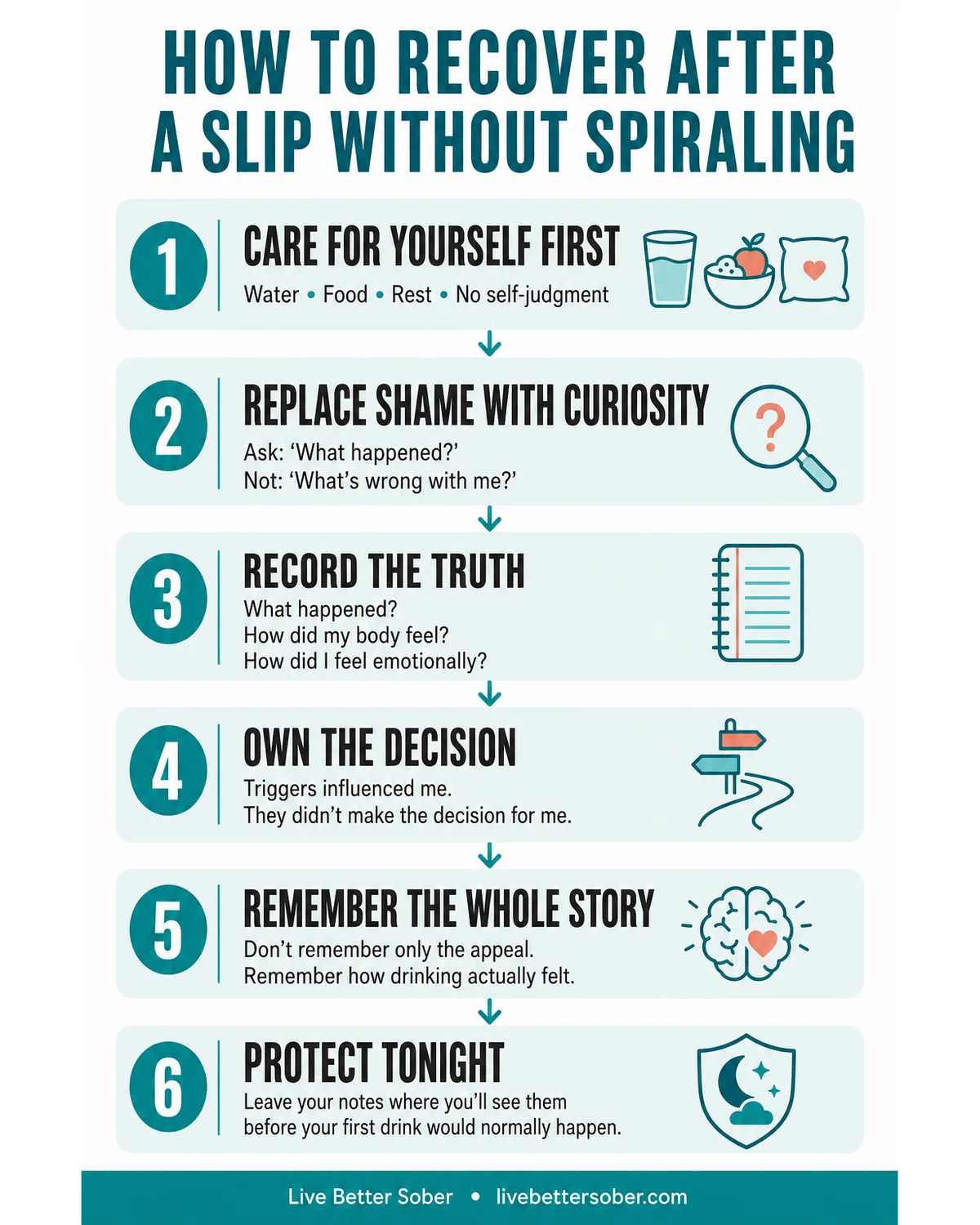
Start by caring for yourself physically and refusing to turn one night into a judgment about your character or your future. When you feel steadier, write down what happened before you drank, how drinking actually felt, and how you feel now. This creates an honest somatic marker you can use when alcohol sounds appealing again.
You Drank Last Night—Now What?
You woke up knowing you drank last night, and now the regret, anxiety, embarrassment, or physical discomfort has arrived. Your mind may already be racing ahead, telling you that you’ve ruined everything or proved that you cannot change. But a slip is something that happened. It is not who you are, and it does not erase the progress you made before it.
During the early days of sobriety, the habit of not drinking is still young. Your brain has not had enough time or repetition to make that new response feel familiar or automatic. The old drinking habit has had far more practice, so it can still take over when you feel tired, stressed, lonely, or caught off guard.
For now, take care of what your body needs. Drink some water, eat something if you can, and give yourself time to feel steadier. You do not need to analyze every moment while you are still feeling physically and emotionally raw. There will be time to look at what happened and learn from it. Right now, your first job is simply to recover your footing — not decide what this slip says about your entire future.
Why Shame Makes a Drinking Slip Harder to Learn From
The question “What happened?” leaves room for curiosity. You can look back and notice what you were feeling, what triggered the urge, and what made drinking seem like the best option at that moment.
Shame changes the question to “What is wrong with me?” Now you are no longer examining a drinking slip. You are judging yourself. Instead of gathering useful information, you may want to hide what happened, numb how you feel, abandon the progress you have made, or drink again because you have already decided there is no point in trying.
Taking responsibility means being honest about the choice you made and staying willing to learn from it. Punishing yourself does neither. It keeps your attention fixed on how badly you feel about yourself rather than on what the experience could teach you.
How Somatic Markers After a Slip Help You Learn
A somatic marker begins with honest observation. You need to notice what drinking actually felt like — physically and emotionally — without shame distorting the memory or shutting down your curiosity. The more clearly you can see what happened, the more useful that experience can become the next time the urge to drink appears.
In simple terms, a somatic marker is the memory of how an experience felt in both your body and your emotions. After a drinking slip, that may include nausea, a pounding head, poor sleep, anxiety, disappointment, embarrassment, or the uncomfortable feeling that you lost control of the evening.
Later, when your brain starts presenting alcohol as relaxing, rewarding, or harmless, that honest memory can provide the rest of the story. Instead of remembering only the good side of drinking, you can also remember where that decision actually led. This helps you evaluate the choice more honestly before you make it again.
You are not trying to frighten yourself, exaggerate what happened, or dwell on the experience. You are simply allowing the physical and emotional truth of drinking to remain part of your decision-making. I explain this process more fully in my Somatic Marker Method overview, but after a slip, its purpose is straightforward: use what happened last night to help protect tonight.
Record the Truth Before Time Softens Last Night
The sooner you make a note of what happened and how you feel now, the more accurate your memory is likely to be. As the hours and days pass, the physical and emotional consequences become harder to remember, while the appeal remains.
While the experience is still clear, write down what drinking actually gave you — not what you hoped it would give you.
- Did it help you relax as expected, or did it leave you anxious and disappointed?
- Did you enjoy the evening, or did you lose control of it?
- How did you sleep?
- How does your body feel now?
- What emotions came with waking up and realizing you had drunk again?
Keep your account honest and factual. You do not need to exaggerate what happened, call yourself names, or turn it into evidence that you have failed. Simply record the full experience before time edits out the uncomfortable parts and leaves you remembering only the promise of the first drink.
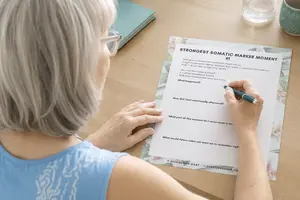
You can use My Somatic Marker Moments Workbook to capture what happened while the details are still fresh. Recording the experience gives you something truthful to return to when alcohol begins to sound appealing again.
The sooner you make a note of what happened and how you feel now, the more accurate your memory is likely to be. As the hours and days pass, the physical and emotional consequences become harder to remember, while the appeal remains.
While the experience is still clear, write down what drinking actually gave you — not what you hoped it would give you.
- Did it help you relax as expected, or did it leave you anxious and disappointed?
- Did you enjoy the evening, or did you lose control of it?
- How did you sleep?
- How does your body feel now?
- What emotions came with waking up and realizing you had drunk again?
Keep your account honest and factual. You do not need to exaggerate what happened, call yourself names, or turn it into evidence that you have failed. Simply record the full experience before time edits out the uncomfortable parts and leaves you remembering only the promise of the first drink.
You can use My Somatic Marker Moments Workbook below to capture what happened while the details are still fresh. Recording the experience gives you something truthful to return to when alcohol begins to sound appealing again.
Look for the Decision Point, Not Someone to Blame
A stressful day, an argument, loneliness, exhaustion, or seeing alcohol within easy reach may have influenced your decision to drink. Those circumstances matter, and understanding them can help you. But they did not make the final decision for you.
It can feel easier to blame your partner, your boss, the terrible day you had, or the bottle sitting in the cupboard. Blame may briefly protect you from feeling guilt and regret, but it also hands your power to someone or something else.
If you blame external circumstances for the slip, it can begin to feel as though nothing you do could prevent another one.
Accepting responsibility does not mean attacking yourself or pretending the urge was easy to resist. It means acknowledging that somewhere between wanting a drink and taking the first sip, you made a decision.
That may feel uncomfortable to admit, but it is also good news. If there was a decision last night, there can be a different decision next time.
You cannot change the choice you made, but you can own it without shame. That puts the power back where it belongs — with you, at the moment when the first drink becomes a decision.
✅ Practical Action: Let last night have a voice tonight
Open your My Somatic Marker Moments Workbook — or use a simple piece of paper — and complete these three sentences:
- Last night, my body felt...
- Emotionally, I felt...
- Tonight, I will help myself by...
Leave your answers somewhere you will see them before you would normally have your first drink.
You are not trying to make yourself feel worse. You are making sure last night’s honest experience gets a voice before you make tonight’s decision.
Continue Exploring The Live Better Sober Approach
Every woman finds her own path, but understanding why your nightly drinking habit developed can make that path much easier. Explore the ideas behind the Live Better Sober approach, including habit loops, Somatic Marker Moments, and building lasting change without shame.
→ Browse all Live Better Sober Approach articles
Ready for More Support?
Explore Break the Nightly Drinking Habit, a practical, shame-free 66-day course designed to help you recognize and interrupt the pattern behind your evening drinking.
➡️ Learn more about the course here: Break the Nightly Drinking Habit
Frequently Asked Questions
Does one night of drinking mean I have completely relapsed?
Does one night of drinking mean I have completely relapsed?
Not necessarily. People use the words “slip,” “lapse,” and “relapse” differently, but the label matters less than what you do next. Responding promptly, understanding what led to the drinking, and returning to your plan can help prevent one episode from becoming a longer return to your old pattern.
How do I stop feeling ashamed after drinking again?
How do I stop feeling ashamed after drinking again?
Begin by separating what you did from who you are. “I drank last night” describes what happened; “I’m hopeless” is a painful judgment, not a fact. You can take responsibility for drinking, learn from it, and make a different plan without attacking yourself.
What is a somatic marker after a drinking slip?
What is a somatic marker after a drinking slip?
A somatic marker is the remembered combination of physical sensations and emotions connected with an experience. After a drinking slip, this might include nausea, poor sleep, anxiety, disappointment, or feeling out of control. Remembering those feelings honestly can help you make a more informed choice when drinking sounds appealing again.
Should I write down everything that happened last night?
Should I write down everything that happened last night?
Write down the key moments of last night and suspected triggers in your workbook. It's not a punishing account of events; the purpose is to learn from it – not torment yourself.
What should I do if I want to drink again tonight?
What should I do if I want to drink again tonight?
Read what you recorded while the experience was still fresh, then change one part of the sequence that led to last night’s drinking. Remove easy access to alcohol, eat before your usual drinking time, leave the familiar setting, contact someone you trust, or plan an activity for the most vulnerable part of your evening.
The Live Better Sober Approach
Alternatives to AA — What if Meetings Aren’t for You?
Looking for alternatives to AA? Discover supportive, non-traditional approaches to quitting drinking that don’t rely on meetings or labels.
How to Stop Drinking Without AA
How to stop drinking without AA using practical routines, realistic habit change, and simple nightly strategies that actually stick
Shame-Free Sobriety Approach That Actually Helps
Shame-free sobriety approach means learning from your drinking years without carrying lifelong self-condemnation.
Somatic Marker Method Overview
Somatic Marker Method overview for women using meaningful drinking memories to guide calmer, shame-free choices about alcohol.
How to Identify Your Drinking Triggers
How to identify your drinking triggers by noticing the situations, feelings, and body signals connected to your evening urge to drink.



I’m Susan, creator of Live Better Sober, and in January 2028 I’ll celebrate 30 years alcohol-free.
I created this site to share a calmer, more practical approach for people who want to break the nightly drinking habit and build a better life without alcohol.
I’m Susan, creator of Live Better Sober, and in January 2028 I’ll celebrate 30 years alcohol-free.
I created this site to share a calmer, more practical approach for people who want to break the nightly drinking habit and build a better life without alcohol.
Stay Connected with Live Better Sober
Get new articles, personal stories, podcasts, and practical ideas to help make sober evenings easier.
No lectures. No labels. Just useful support from someone who's been there.


NEWSLETTER
HOME ABOUT CONTACT DISCLAIMER PRIVACY TERMS
FOLLOW US ON:



|
|
|
|
|
SEARCH THIS SITE
LIVE BETTER SOBER IS BASED ON SUSAN GAST'S PERSONAL EXPERIENCE WITH QUITTING ALCOHOL AND LONG-TERM SOBRIETY.
ALL CONTENT COPYRIGHT © 2026 LIVE BETTER SOBER BY SUSAN GAST • ALL RIGHTS RESERVED REGARDLESS OF LINKS OR ATTRIBUTIONS.
POWERED BY SBI! (SOLO BUILD IT!)
