- HOME
- The Live Better Sober Approach
- Shame-Free Sobriety
Shame-Free Sobriety Approach That Actually Helps


Written by Susan — Quit drinking at 37 • Sober since 1998 • Sharing what actually works
Written by Susan — Quit drinking at 37 • Sober since 1998 • Sharing what actually works
Shame-free sobriety approach is a phrase that can be misunderstood.
Some women hear it and think it means forgetting the drinking years, excusing what happened, or pretending embarrassing moments never occurred. That isn't what I mean at all.
Some of my most uncomfortable drinking memories are part of the reason I eventually quit. The problem wasn't the memories themselves. During my drinking years, I was using those morning-after memories as evidence that there was something fundamentally wrong with me.
A shame-free sobriety approach means learning from the past without living there. The memories stay. The lessons stay. What goes is the belief that those moments define who you are forever.
After all, if shame alone could have solved the problem, many of us would have quit years earlier.
✅ Quick Answer: What is a shame-free sobriety approach?
A shame-free sobriety approach does not mean forgetting your drinking years or excusing what happened. It means stopping the practice of using those experiences as proof that you are broken. The memories stay. The lessons stay. The self-condemnation goes.
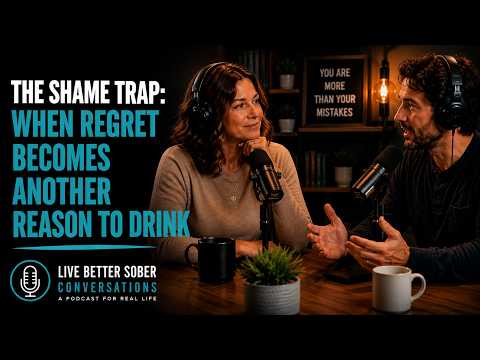
🎙️ Want to hear the podcast hosts’ take?
The podcast conversation explores this topic from another perspective.
Jump to the podcast episode.
What Shame-Free Sobriety Does Not Mean
What I mean by a shame-free sobriety approach is this: It's a way to live your life going forward without living in shame's shadow.
The shame-free part isn't forgetting that I vomited on my mom's carpet. It's remembering it without using it as proof that I'm a terrible person.
Why Drinking To Escape Shame Keeps The Cycle Going
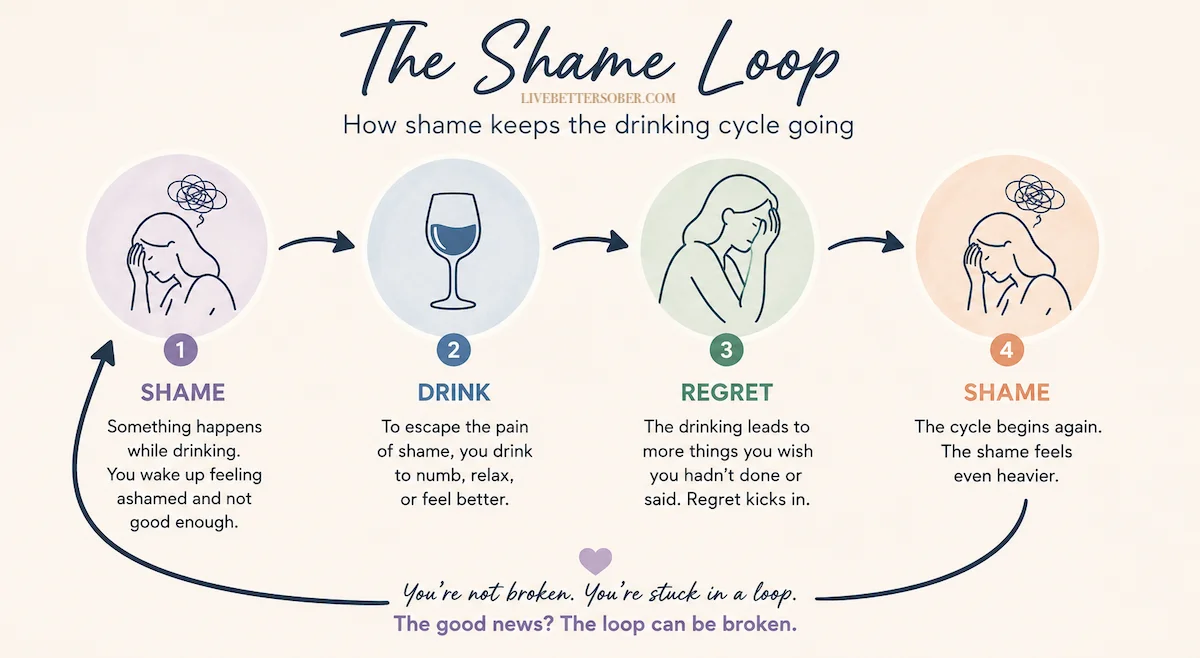
After waking up the morning after the night's drinking, I'd think back to what I either did or said (or both!) and often feel ashamed. I'd think about it during the day, hoping I didn't run into the person...
When I got home from work, the pain from the shame was a big enabler. So what did I do? Yes, you guessed it, I had a drink (or six) to numb myself. And then I'd get on the phone to the UK at 2 am their time and embarrass myself again.
At the time, I thought I was drinking because I enjoyed drinking. Looking back, I can see that some nights I was drinking just as much to escape the embarrassment of the night before.
The Difference Between A Shameful Moment And A Shameful Identity
Let's talk about what shameful moments are and how they are not your true identity.
When we recall past bad drinking outcomes, we do associate pain and shame with them, right? After all, the time I pushed to the front of the queue for an ice cream cone just because I was a foot taller than the kids... not one of my best moments. Or interrupting my boss after being given the raised eyebrow signal to "shut up" but carried on gabbing anyway...
After reliving those moments, I began to wonder if that was the real me. If so, I didn't like it.
What A Shame-Free Sobriety Approach Looks Like
I tried to quit. It lasted nine months, but I was relying on willpower alone back then. It took two more years before I reached "the last straw." (Pun intended).
What worked for me was actually recalling those painful shameful moments — not in self-punishment — but to use as a vivid reminder of why I wanted to quit drinking.
So I took responsibility for my actions by apologizing. To those I hurt, I said "I'm sorry."
I had to be honest with myself. I can't drink anymore. I just can't.
Past Drinking Experiences Are Teachers, Not Life Sentences
My past not-so-nice drinking experiences taught me a lot about myself. They showed a side of me who was a stranger — to my own eyes. I am sitting here shaking my head as I write that — in disbelief at the remembrance of the shenanigans and stuff I did while drunk.
Almost thirty years later, I'm happy to report that the days of "past-me" were not my family's focus. They laugh and say, "you were young." True.
It's good to know my family (and friends) didn't hand out any "life sentences."
Why Self-Punishment Is Not the Answer
To this very day, I still suffer with self-criticism.
Spending 20 years drinking and creating my own self-criticism may have become ingrained, for sure. At the time, I felt sure I deserved the criticism. I'd tell myself over and over:
- You're useless.
- You're drinking again?
- You've gained weight!
- You'll always be a drunk...
It was for sure "autopilot" self-flagellation. It was a weird place to be inasmuch as it was slightly pleasurable to say it to myself. WTH? Yes... that's how off-base I became while drinking.
The upside to quitting drinking? All of the negative self-talk was not true (aside from the gaining weight part, sigh).
What I'm saying is this, don't waste your precious time. The harsh words I told myself didn't prove anything.
Building Self-Trust One Small Promise At A Time
I made the same promise over and over to quit drinking. I managed a couple of days dry, and then I was right back at it. It's a sure-fire way to erode your self-trust when the promises you make are repeatedly broken. In the end, I stopped believing in my promise-keeping ability!
Try this small promise: "Tonight, I am not going to drink." Just tonight. One small step.
The Somatic Marker Method And Shame-Free Change
The use of somatic markers became my bedrock approach to squash the drinking urges.
When that urge to drink arose, I paused. I consciously acknowledged that the thought had occurred.
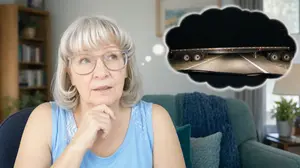
I then brought to mind one of my somatic marker moments... and remembering those old bad incidents actually made me stronger. It reminded me of the outcome, and strengthened my resolve to not drink. Revisiting the unpleasant aftermath was enough to knock the stuffing out of the urge!
I was being honest with myself, without humiliating myself.
You Are Not The Worst Thing You Have Ever Done
It's easy to assume that the things you do drunk are your true identity.
Take comfort in knowing this: it's not the real you. I'm approaching 30 years of sobriety and I know that my past-drinking-Susan is not who I am today. Far from it. I've lived long enough on the other side to know this isn't true.
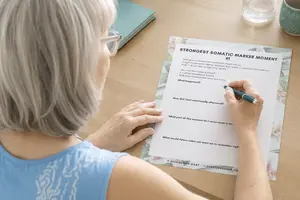
Tonight, write down one drinking memory that still makes you cringe. Then write down one lesson it taught you.
Focus on the lesson, not the label.
Ask yourself whether that memory is acting as a teacher or a life sentence.
Want the Podcast Version of this Page?
Want to go deeper? The podcast version of this page explores these ideas in a more conversational and reflective way. You can listen to it below.
Continue Exploring The Live Better Sober Approach
Every woman finds her own path, but understanding why your nightly drinking habit developed can make that path much easier. Explore the ideas behind the Live Better Sober approach, including habit loops, Somatic Marker Moments, and building lasting change without shame.
→ Browse all Live Better Sober Approach articles
Ready for More Support?
Explore Live Better Sober: Quit Drinking — Break the Alcohol Habit, a practical, shame-free 66-day course designed to help you recognize and interrupt the pattern behind your evening drinking.
➡️ Learn more about the course here: Break the Nightly Drinking Habit
Frequently Asked Questions
Does a shame-free sobriety approach mean I should forget the past?
Does a shame-free sobriety approach mean I should forget the past?
No. The past contains valuable lessons. A shame-free sobriety approach is not about forgetting what happened. It's about stopping the practice of using those experiences as proof that you're broken.
What if I still feel ashamed of things I did while drinking?
What if I still feel ashamed of things I did while drinking?
Many women do. The goal isn't to pretend those feelings don't exist. The goal is to learn from what happened, make amends where appropriate, and stop carrying those moments around as a permanent verdict on your character.
Can shame help motivate someone to quit drinking?
Can shame help motivate someone to quit drinking?
Sometimes a painful experience can be a wake-up call. But living in shame day after day rarely creates lasting change. Most women have already spent years criticizing themselves. What usually helps more is understanding the pattern, learning from it, and building self-trust one step at a time.
How is the Live Better Sober approach different from a shame-based approach?
How is the Live Better Sober approach different from a shame-based approach?
The Live Better Sober approach focuses on understanding the habit rather than attacking the person. The emphasis is on learning, awareness, self-trust, and practical change instead of labels, self-condemnation, or punishment.
Can I be accountable for my drinking without feeling ashamed forever?
Can I be accountable for my drinking without feeling ashamed forever?
Absolutely. Accountability means acknowledging what happened and taking responsibility for your choices. It does not require spending the rest of your life believing those choices define who you are.
The Live Better Sober Approach
Alternatives to AA — What if Meetings Aren’t for You?
Looking for alternatives to AA? Discover supportive, non-traditional approaches to quitting drinking that don’t rely on meetings or labels.
How to Stop Drinking Without AA
How to stop drinking without AA using practical routines, realistic habit change, and simple nightly strategies that actually stick
Somatic Marker Method Overview
Somatic Marker Method overview for women using meaningful drinking memories to guide calmer, shame-free choices about alcohol.
How to Recover After a Slip Without Spiraling
Learn how to recover after a drinking slip without shame, use last night as honest information, and choose one helpful next step.
How to Identify Your Drinking Triggers
How to identify your drinking triggers by noticing the situations, feelings, and body signals connected to your evening urge to drink.

I'm Susan, creator of Live Better Sober, and in January 2028 I'll celebrate 30 years alcohol-free.
Everything on this site comes from my own experience.
I hope that by sharing what I've learned, I can help you break the nightly drinking habit, rediscover yourself, and live better sober, too.
I'm Susan, creator of Live Better Sober, and in January 2028 I'll celebrate 30 years alcohol-free.
Everything on this site comes from my own experience.
I hope that by sharing what I've learned, I can help you break the nightly drinking habit, rediscover yourself, and live better sober, too.
Stay Connected with Live Better Sober
Get new articles, personal stories, podcasts, and practical ideas to help make sober evenings easier.
No lectures. No labels. Just useful support from someone who's been there.


NEWSLETTER
HOME ABOUT CONTACT DISCLAIMER PRIVACY TERMS
FOLLOW US ON:



|
|
|
|
|
SEARCH THIS SITE
LIVE BETTER SOBER IS BASED ON SUSAN GAST'S PERSONAL EXPERIENCE WITH QUITTING ALCOHOL AND LONG-TERM SOBRIETY.
ALL CONTENT COPYRIGHT © 2026 LIVE BETTER SOBER BY SUSAN GAST • ALL RIGHTS RESERVED REGARDLESS OF LINKS OR ATTRIBUTIONS.
POWERED BY SBI! (SOLO BUILD IT!)
