- HOME
- Evening Triggers and Urges
- Alcohol as Reward
Why Drinking Feels Like a Reward After Work


Written by Susan — Quit drinking at 37 • Sober since 1998 • Sharing what actually works
Written by Susan — Quit drinking at 37 • Sober since 1998 • Sharing what actually works
If you’ve ever wondered why drinking feels like a reward after work, you’re not imagining it. For many people, alcohol slowly becomes associated with relief, transition, comfort, and finally being “off duty” after a long day.
Over time, the brain can begin linking the end of work with the expectation of a drink — until the two start feeling emotionally connected.
✅ Quick Answer: Why does drinking feel like a reward after work?
Drinking often feels rewarding after work because the brain gradually connects alcohol with relief, relaxation, emotional release, and the end of stress. After repeating this pattern enough times, the evening drink can begin feeling less like a choice and more like part of the transition out of “work mode.”
🎙️ Want to hear the podcast hosts’ take?
The podcast conversation explores this topic from another perspective.
Jump to the podcast episode.
It’s Usually Not About “Loving Alcohol”
Many people assume that if alcohol feels rewarding, it must mean they simply enjoy drinking too much.
But in reality, what often becomes addictive is not the alcohol itself — it’s what the ritual represents emotionally.
For example:
- “The day is finally over.”
- “I can stop thinking now.”
- “This is my time.”
- “I deserve something for getting through today.”
That emotional meaning matters.
Because eventually, the drink itself becomes tied to relief.
And once the brain starts anticipating relief, the craving can begin long before the first sip.
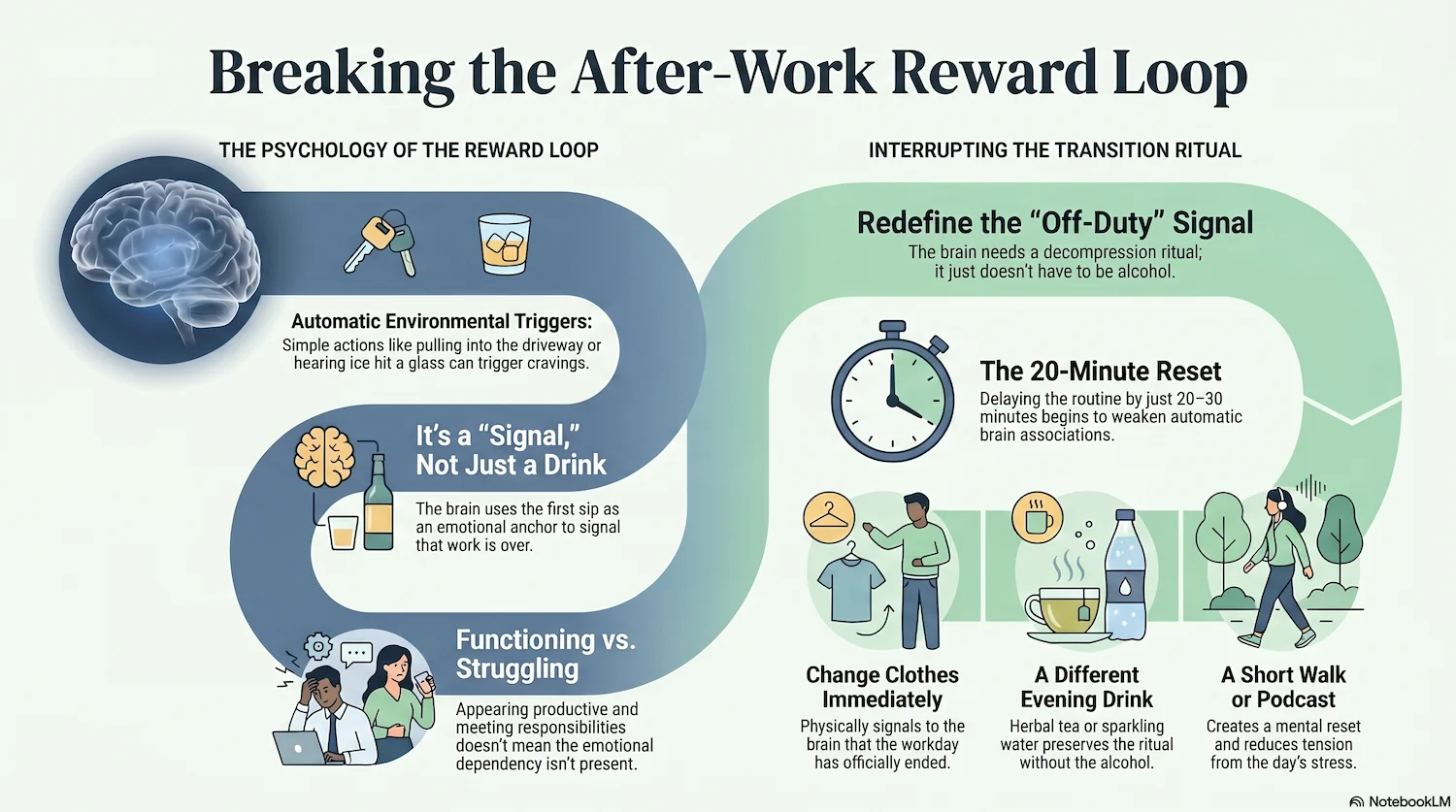
In many cases, the brain eventually starts anticipating emotional shutdown before the drink even happens. Simply driving home, finishing work, or entering the house may begin triggering a sense of release approaching.
The person is not necessarily craving alcohol itself in that moment — they may actually be craving permission to mentally stop, emotionally exhale, and temporarily disconnect from pressure, responsibility, or over-stimulation.
After enough repetition, the brain can start treating the entire evening ritual as a psychological escape valve rather than just a drink.
The Brain Learns Evening Patterns Very Quickly
The human brain loves efficiency and repetition.
When something repeatedly creates a feeling of emotional release, your mind starts building automatic associations around it.
That’s especially true with nightly drinking habits.
Eventually, certain things may begin triggering the urge automatically:
- pulling into the driveway
- changing clothes
- cooking dinner
- sitting in a favorite chair
- hearing the ice hit the glass
- finally being alone
At that point, the desire to drink may no longer feel fully conscious.
It can feel more like:
“This is just what happens now.”
Researchers who study habit formation and addiction often explain that the brain learns to repeat behaviors associated with emotional escape, reward, or comfort. Over time, your nervous system can begin anticipating those feelings before the behavior even starts, strengthening the routine itself.
That’s one reason nightly drinking habits can eventually feel automatic.
According to the National Institute on Alcohol Abuse and Alcoholism (NIAAA), repeated alcohol use can gradually reinforce learned reward patterns and emotional associations connected to drinking.
Why Drinking Feels Like a Reward After Work Can Become So Powerful
The reason this cycle becomes so psychologically strong is because work itself often drains people mentally and emotionally.
By evening, many people feel:
- overstimulated
- emotionally depleted
- decision-fatigued
- mentally restless
- disconnected from themselves
Alcohol can temporarily create:
- relief
- quietness
- emotional numbing
- permission to stop striving
- a feeling of comfort
And when something consistently reduces discomfort, the mind starts classifying it as valuable.
That’s how the reward loop begins.
The Habit Can Start Feeling Automatic
One reason this pattern becomes confusing is because many people are still functioning normally on the outside.
They:
- go to work
- take care of responsibilities
- pay bills
- handle family life
- appear productive
So it becomes easy to think:
“If I’m functioning, this can’t really be a problem.”
But functioning and struggling can exist at the same time.
The real warning sign is often not how much someone drinks.
It’s how emotionally dependent the routine has become.
What Helps Break the After-Work Reward Loop
One of the most effective ways to weaken the after-work drinking habit is to interrupt the transition ritual itself.
Because for many people, the urge is not only about alcohol.
It’s about:
- switching out of work mode
- releasing pressure
- creating emotional separation from the day
- signaling that responsibilities are finally over
That means the brain still needs some kind of decompression ritual.
Just not necessarily alcohol.
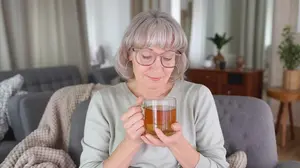
Here are a few alternatives that can help create that same “shift” without reinforcing the drinking routine:
The goal is not perfection.
The goal is teaching the brain that relief and decompression are still possible without automatically reaching for alcohol every evening.
The Shift Usually Begins With Awareness
The good news is that recognizing the cycle is often the beginning of change.
Once people recognize:
- what the drink represents
- what emotional need it fills
- what time of day triggers it
- what feelings come before it
…they can begin separating alcohol from the idea of relief itself.
That’s a major psychological shift.
Because the goal is not simply removing alcohol.
The deeper goal is learning how to transition out of stress without needing the ritual attached to it.
If drinking feels rewarding after work, that does not automatically mean you’re weak, broken, or lacking willpower.
It may simply mean your brain has learned to associate alcohol with emotional relief and the end of pressure.
And like most learned patterns, those associations can eventually be changed.
The important thing is recognizing the loop clearly enough to interrupt it.
→ Explore More Topics About Breaking the Nightly Drinking Habit
Want the Podcast Version of this Page?
Want to go deeper? The podcast version of this page explores these ideas in a more conversational and reflective way. You can listen to it below.
Continue Exploring Evening Triggers and Urges
If your evenings seem to run on autopilot, you're not alone. These articles help you understand the evening triggers, habit loops, and automatic patterns that make nightly drinking feel so difficult to change. Each page offers practical, shame-free strategies to help you interrupt old routines and build healthier evening habits, one day at a time.
→ Browse all Evening Triggers and Urges articles
Ready for More Support?
Explore Live Better Sober: Quit Drinking — Break the Alcohol Habit, a practical, shame-free 66-day course designed to help you recognize and interrupt the pattern behind your evening drinking.
➡️ Learn more about the course here: Break the Nightly Drinking Habit
Common Questions About After-Work Drinking
Is it normal to crave alcohol after work?
Is it normal to crave alcohol after work?
Yes. Many people begin associating alcohol with relaxation and emotional release after stressful days. The pattern can become deeply habitual over time.
Why does alcohol feel more appealing at night?
Why does alcohol feel more appealing at night?
Evenings are often when stress, exhaustion, boredom, and emotional discomfort catch up with people. The brain begins anticipating relief during that transition period.
Does this mean I’m addicted?
Does this mean I’m addicted?
Not necessarily. But if alcohol has become your primary emotional reward, coping mechanism, or transition ritual, it may be worth paying closer attention to the pattern.
Evening Triggers and Urges
What to Do Instead of Drinking at Night
What to do instead of drinking at night when cravings hit? Simple ways to relax, unwind, and break the habit.
What Do I Do When I Feel Like Drinking Again?
What do I do when I feel like drinking again? Simple steps to get through the moment without giving in.
After-Work Drinking Trigger Plan
After-work drinking trigger plan to interrupt the nightly habit loop, protect your evening transition, and build sober momentum.

I'm Susan, creator of Live Better Sober, and in January 2028 I'll celebrate 30 years alcohol-free.
Everything on this site comes from my own experience.
I hope that by sharing what I've learned, I can help you break the nightly drinking habit, rediscover yourself, and live better sober, too.
I'm Susan, creator of Live Better Sober, and in January 2028 I'll celebrate 30 years alcohol-free.
Everything on this site comes from my own experience.
I hope that by sharing what I've learned, I can help you break the nightly drinking habit, rediscover yourself, and live better sober, too.
Stay Connected with Live Better Sober
Get new articles, personal stories, podcasts, and practical ideas to help make sober evenings easier.
No lectures. No labels. Just useful support from someone who's been there.


NEWSLETTER
HOME ABOUT CONTACT DISCLAIMER PRIVACY TERMS
FOLLOW US ON:



|
|
|
|
|
SEARCH THIS SITE
LIVE BETTER SOBER IS BASED ON SUSAN GAST'S PERSONAL EXPERIENCE WITH QUITTING ALCOHOL AND LONG-TERM SOBRIETY.
ALL CONTENT COPYRIGHT © 2026 LIVE BETTER SOBER BY SUSAN GAST • ALL RIGHTS RESERVED REGARDLESS OF LINKS OR ATTRIBUTIONS.
POWERED BY SBI! (SOLO BUILD IT!)
