- HOME
- Starting to Stop
- Delaying Quitting
Why Do I Keep Delaying Quitting Drinking?


Written by Susan — Quit drinking at 37 • Sober since 1998 • Sharing what actually works
Written by Susan — Quit drinking at 37 • Sober since 1998 • Sharing what actually works
Why do I keep delaying quitting drinking even when I know I need to?
You may spend the entire day promising yourself that tonight will be different — replaying the decision in your mind, feeling serious about it, and genuinely wanting to stop.
But then evening arrives… and somehow you end up drinking again anyway.
That emotional contradiction confuses many nightly drinkers because the morning intention feels completely real. Yet by nighttime, the idea of “starting tomorrow instead” suddenly feels easier all over again.
✅ Quick Answer: Why do I keep delaying quitting drinking?
Many people delay quitting drinking because alcohol has become emotionally tied to comfort, relief, routine, and familiarity. Fear of change, internal bargaining, and the brain’s desire to avoid discomfort can make postponing feel emotionally safer than taking action tonight.
This Usually Isn’t Just Procrastination
On the surface, delaying quitting can look like ordinary procrastination.
But underneath the surface, something much deeper is usually happening.
You are not simply putting off a task like:
- cleaning the garage
- answering emails
- starting a diet
You are thinking about changing something that may have become deeply connected to:
- stress relief
- emotional escape
- relaxation
- routine
- identity
- comfort
- reward
That changes the entire emotional equation.
Because now your brain is not just evaluating whether quitting is “good” or “bad.”
It is evaluating:
“Can I actually cope without this?”
And that question feels much heavier because the fear starts pulling in two directions. Part of us fears missing the drinking itself, while another part worries life may no longer feel fun, relaxing, or enjoyable without it.
Why Do I Keep Delaying Quitting Drinking?
The Brain Wants Immediate Relief
Human beings naturally move toward things that reduce discomfort quickly.
And alcohol often becomes associated with immediate mental relief.
For many nightly drinkers, the evening drink represents:
- the transition out of work mode
- shutting the brain off
- quieting anxiety
- reducing loneliness
- numbing stress
- rewarding survival after a hard day
So even when part of you wants to quit long term, another part simply wants comfort right now.
That creates a constant push-pull inside many people.
In the moment, people naturally move toward what feels easier emotionally — even when it creates frustration later.
Bargaining Becomes Part of the Habit
One of the biggest reasons people keep delaying quitting drinking is because bargaining quietly becomes part of the nightly routine itself.
You may notice thoughts like:
- “Just tonight.”
- “I’ll be stricter tomorrow.”
- “This week was stressful.”
- “I’ll quit after the weekend.”
- “I need one more good night first.”
These thoughts temporarily reduce emotional pressure.
That’s why they feel convincing.
But the problem is that bargaining creates the illusion of action without requiring real change yet.
And over time, the pattern teaches you:
“I can calm the guilt simply by postponing.”
That becomes a powerful loop.
Fear of Forever Makes People Freeze
Many people accidentally overwhelm themselves by thinking too far ahead.
The moment the brain hears:
- never again
- forever
- permanently
- lifelong change
…it can trigger resistance almost immediately.
That’s because people often start imagining:
- missing out
- boredom
- social awkwardness
- losing comfort
- losing identity
- emotional emptiness
And suddenly quitting feels enormous.
For many people, the fear is not:
“Can I stop tonight?”
The fear is:
“Can I survive without this forever?”
That fear alone can keep people stuck in postponement for years.
Part of You Still Believes Alcohol Helps
This is important to admit honestly.
If someone keeps returning to drinking, it usually means part of their brain still believes alcohol is providing something valuable.
Even if another part recognizes the downsides.
That “benefit” may be:
- emotional numbing
- relief
- routine
- comfort
- reward
- escape
- familiarity
Until the brain fully recognizes that alcohol is taking more than it gives, the internal conflict often continues.
That’s why building a strong emotional “why” matters so much.
Your reasons for quitting need enough emotional weight to compete against the temporary emotional safety the habit still seems to offer.
Awareness Changes Everything
The good news is that understanding this mechanism can remove a huge amount of shame.
You are not simply “failing” over and over.
You are dealing with:
- emotional conditioning
- habit loops
- avoidance patterns
- comfort-seeking behavior
- fear-based hesitation
And once you start recognizing those behaviors clearly, you stop seeing the delay as proof that change is impossible.
Instead, you begin seeing it as a cycle that can actually be interrupted.
That shift in understanding matters more than you may realize.
Delaying quitting drinking can feel incredibly frustrating because your intentions are often genuine. But the brain naturally resists change when predictability, emotional soothing, and routine are involved. That’s why so many people stay stuck in the “I’ll start tomorrow” cycle for far longer than they expected.
Also, your “why I want to quit” needs to have enough meaningful reasons behind it to help carry you through those difficult moments of hesitation and bargaining.
The good news is that once you understand the psychological mechanics behind the delay, you can start approaching the problem differently — and more effectively.
What Helps Interrupt the Delay Loop?
Delaying quitting drinking often happens automatically because the mind slips into familiar emotional patterns before you fully realize it.
This is not about becoming perfect overnight.
It is about learning how to interrupt the pattern earlier and more gently.
Some things that can help include:
- pausing long enough to notice the bargaining thoughts instead of automatically obeying them
- changing the evening routine before the usual drinking window begins
- eating earlier so you are not mentally depleted and hungry at the same time
- reminding yourself why you wanted to quit before the craving fully builds
- focusing only on getting through tonight instead of thinking about “forever”
For many people, even small interruptions can begin weakening the automatic “I’ll start tomorrow” response over time.
→ Back to: Why Do I Always Say I’ll Quit Drinking Tomorrow?
→ Read Next: How to Stop Putting Off Quitting Drinking
Continue Exploring Starting to Stop
If you're ready to move beyond thinking about change and begin taking action, these articles will help you get started. Explore practical first steps, simple strategies, and gentle guidance to help you stop drinking one decision at a time.
→ Browse all Starting to Stop articles
Ready for More Support?
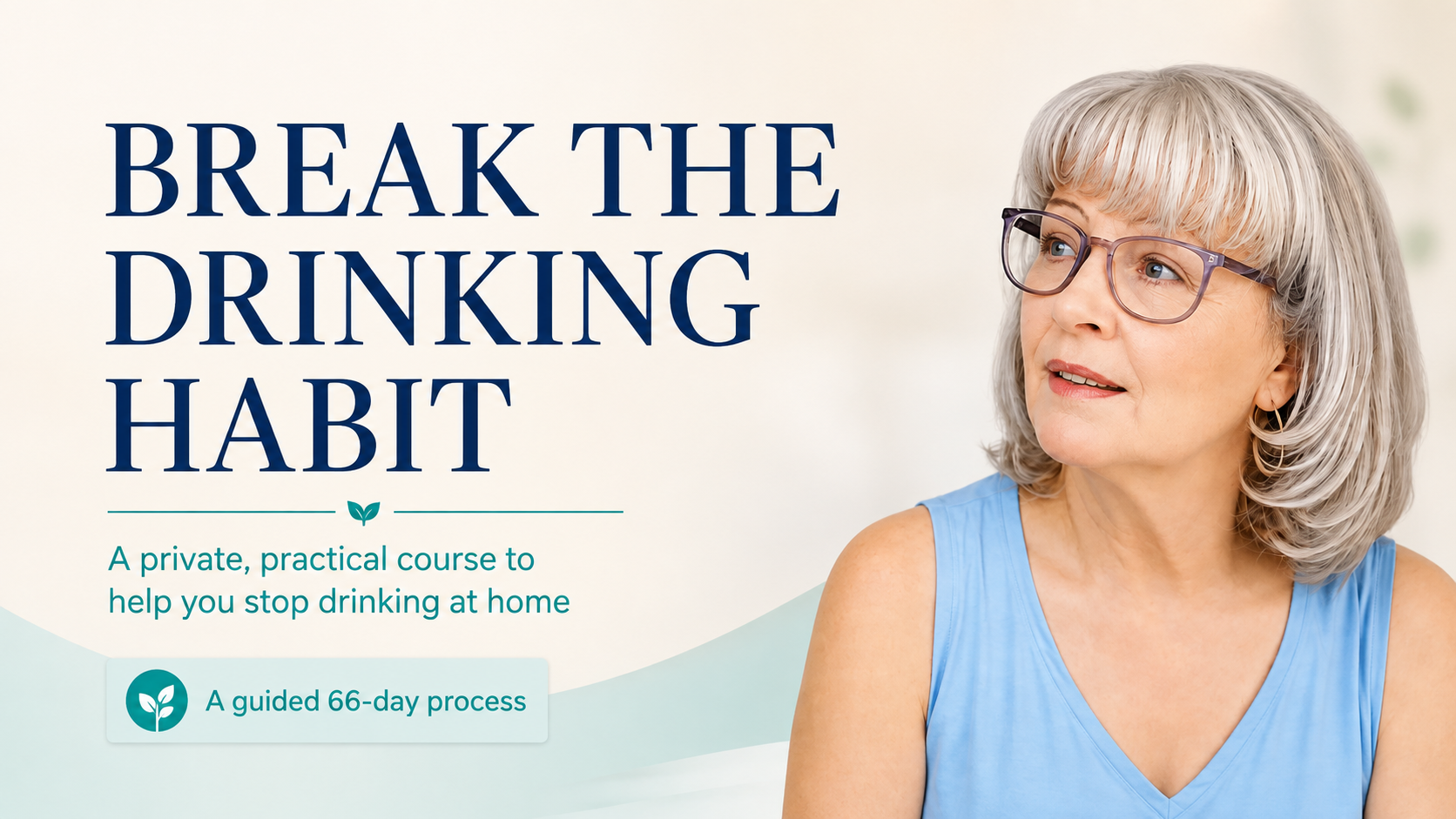
Explore Live Better Sober: Quit Drinking — Break the Alcohol Habit, a practical, shame-free 66-day course designed to help you recognize and interrupt the pattern behind your evening drinking.
➡️ Learn more about the course here: Break the Nightly Drinking Habit
Questions About Delaying Quitting Drinking
Why do I keep putting off quitting drinking?
Why do I keep putting off quitting drinking?
Because alcohol is often emotionally connected to comfort, stress relief, and routine. Most people instinctively avoid changes that feel emotionally uncomfortable, even when part of them genuinely wants it.
Is “one last night” thinking common?
Is “one last night” thinking common?
Very common. Many people repeatedly bargain with themselves before making lasting changes because postponing temporarily relieves the tension.
Why does quitting feel overwhelming?
Why does quitting feel overwhelming?
Many people accidentally think too far ahead and imagine “forever,” which creates fear and resistance. That emotional pressure can make delaying feel safer in the moment.
Starting to Stop
What Happens When You Stop Drinking Every Night
What happens when you stop drinking every night? Discover the real changes in sleep, mood, and energy over time.
Why Do I Always Say I’ll Quit Drinking Tomorrow?
Why do I always say I'll quit drinking tomorrow? Learn why this nightly promise keeps repeating.
How to Stop Putting Off Quitting Drinking
How to stop putting off quitting drinking and break the “I’ll start tomorrow” cycle for good.
What Happens When You Finally Stop Delaying Quitting Drinking
What happens when you finally stop delaying quitting drinking? Discover the emotional shift that follows.
What to Do at 5 PM Instead of Drinking
Learn what to do at 5 pm when the urge to drink hits, with practical strategies to interrupt cravings, build new routines, and get through the danger hour.
Home Setup for Not Drinking at Home
Home setup for not drinking starts with removing triggers, changing routines, and making sober evenings easier to navigate.





I'm Susan, creator of Live Better Sober, and in January 2028 I'll celebrate 30 years alcohol-free.
Everything on this site comes from my own experience.
I hope that by sharing what I've learned, I can help you break the nightly drinking habit, rediscover yourself, and live better sober, too.
I'm Susan, creator of Live Better Sober, and in January 2028 I'll celebrate 30 years alcohol-free.
Everything on this site comes from my own experience.
I hope that by sharing what I've learned, I can help you break the nightly drinking habit, rediscover yourself, and live better sober, too.
Stay Connected with Live Better Sober
Get new articles, personal stories, podcasts, and practical ideas to help make sober evenings easier.
No lectures. No labels. Just useful support from someone who's been there.


NEWSLETTER
HOME ABOUT CONTACT DISCLAIMER PRIVACY TERMS
FOLLOW US ON:



|
|
|
|
|
SEARCH THIS SITE
LIVE BETTER SOBER IS BASED ON SUSAN GAST'S PERSONAL EXPERIENCE WITH QUITTING ALCOHOL AND LONG-TERM SOBRIETY.
ALL CONTENT COPYRIGHT © 2026 LIVE BETTER SOBER BY SUSAN GAST • ALL RIGHTS RESERVED REGARDLESS OF LINKS OR ATTRIBUTIONS.
POWERED BY SBI! (SOLO BUILD IT!)
