- HOME
- Shame and Self-Trust
- Anxiety After Drinking
Anxiety After Drinking — Why It Feels So Bad

Written by Susan — Quit drinking at 37 • Sober since 1998 • Sharing what actually works
Written by Susan — Quit drinking at 37 • Sober since 1998 • Sharing what actually works
Anxiety after drinking can feel absolutely brutal. You wake up feeling shaky, emotionally fragile, uncomfortable in your own skin, and suddenly everything feels overwhelming. Maybe your heart is racing. Maybe your thoughts won’t stop. You might even find yourself replaying conversations from the night before wondering if you embarrassed yourself again. Even small things can suddenly feel huge the morning after drinking.
✅ Quick Answer: Why does anxiety after drinking feel so bad?
Anxiety after drinking happens because alcohol disrupts your nervous system, sleep, hydration, mood regulation, and stress hormones. While alcohol may temporarily help you relax at night, the rebound effect afterward can leave you feeling anxious, emotionally raw, shaky, and overwhelmed the next morning.
🎙️ Want to hear the podcast hosts’ take?
The podcast conversation explores this topic from another perspective.
Jump to the podcast episode.
Anxiety After Drinking Is More Common Than You Think
Many people think they’re the only one experiencing this awful emotional crash after drinking. They assume something is wrong with them personally.
But anxiety after drinking is incredibly common — especially for people who drink regularly in the evenings.
For some people it feels mild:
- irritability
- nervousness
- low mood
For others it can feel intense:
- panic
- dread
- racing thoughts
- emotional overwhelm
- fear and regret
Some people now call this “hangxiety” — a combination of a hangover and anxiety.
Whatever you call it, it feels miserable.
And the worst part is that it often arrives right when you’re already physically exhausted.
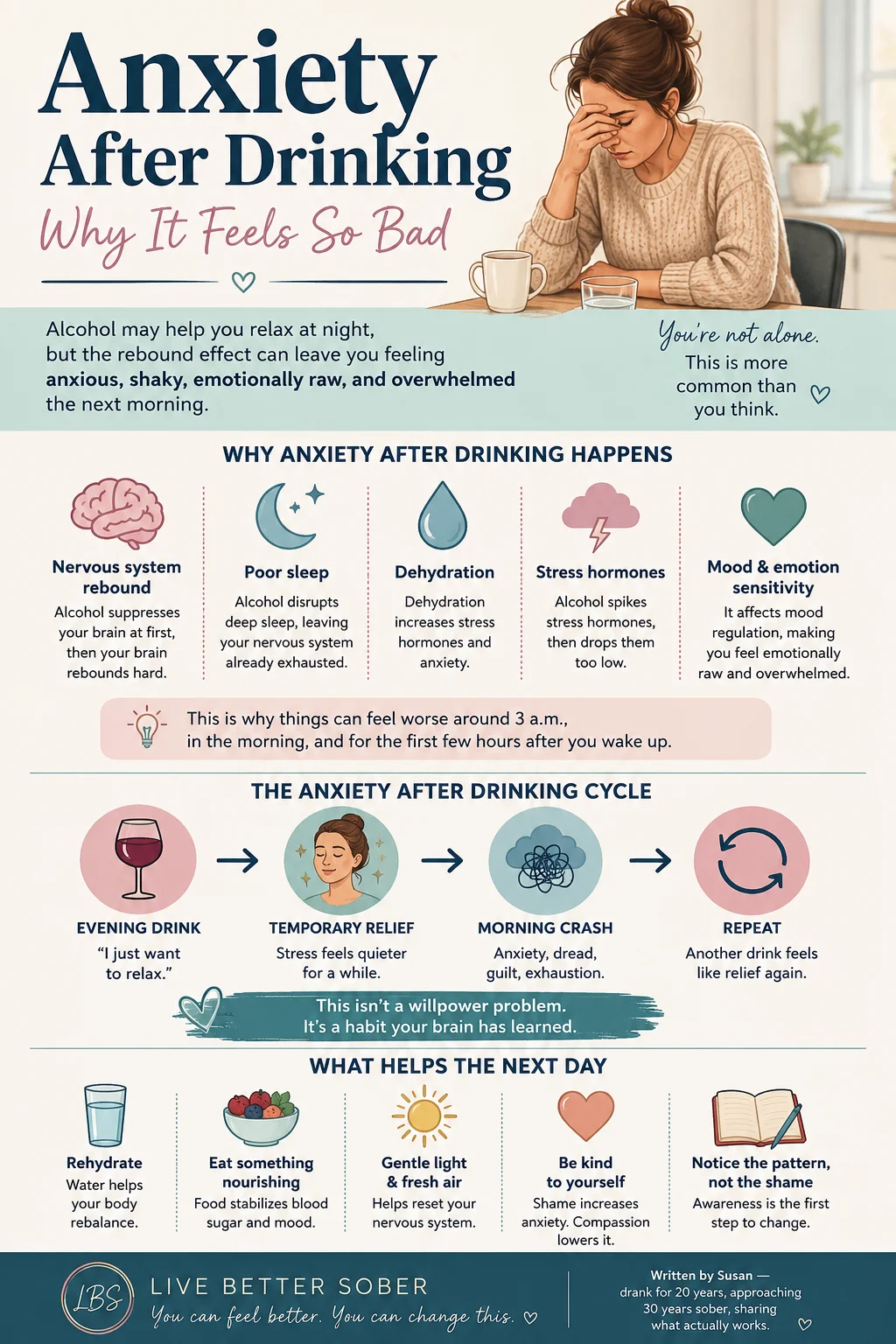
Alcohol Temporarily Calms Your Brain — Then Rebounds Hard
One of the biggest misunderstandings about alcohol is this:
People think alcohol removes anxiety.
What it actually does is temporarily suppress parts of the nervous system.
At first that can feel relaxing:
- shoulders loosen
- thoughts slow down
- stress fades temporarily
- emotions feel softer
But later, your brain tries to re-balance itself.
That rebound can create:
- nervousness
- restlessness
- poor sleep
- racing thoughts
- emotional sensitivity
For many people, the next-day anxiety feels worse around:
- 3 a.m.
- early morning waking
- the first few hours after getting up
And because sleep quality is often terrible after drinking, your nervous system is already running on empty.
Why the Morning After Feels So Emotionally Raw
This part matters.
The morning after drinking often creates a heightened emotional sensitivity.
You may suddenly:
- overthink everything
- fear judgment
- dread checking your phone
- feel embarrassed
- feel disconnected from yourself
Even tiny situations can suddenly feel much bigger than they really are.
That’s because alcohol affects:
- stress hormones
- brain chemistry
- mood regulation
- sleep cycles
So you’re not simply “being dramatic.”
Your body is trying to regain its balance.
This is one reason anxiety after drinking can feel so convincing.
You may wake up feeling certain something is wrong, even when nothing significant has actually changed overnight.
The feelings are real.
But the fearful conclusions your anxious brain is drawing may not be.
How the Cycle Quietly Repeats Itself
This is where many people get trapped.
They drink to relax.
Then they feel awful afterward.
Then they become stressed and anxious again.
Then eventually another drink feels like relief.
That creates a repeating emotional loop.
Why This Isn't a Willpower Problem
Many people wake up anxious after drinking and immediately make it personal.
They assume they lack discipline, self-control, or willpower.
But repeated evening drinking often becomes an automatic habit.
Over time, the brain starts anticipating relief long before the first drink is poured.
The routine itself becomes familiar:
stress → drink → temporary relief
When that pattern repeats hundreds or even thousands of times, it can begin to feel automatic.
That doesn't mean you're weak.
It means your brain has learned a habit that now runs with very little conscious effort.
Understanding that distinction can remove a huge amount of unnecessary shame.
This Does Not Mean Something Is Wrong With You
This is important to understand.
Many people quietly believe:
“What’s wrong with me?”
The anxiety itself often becomes part of the problem.
When you feel emotionally awful, it's easy to assume the feeling means something about who you are.
But anxiety after drinking is usually a reaction happening inside the body — not evidence that you're broken, weak, or failing.
As people get older, these emotional aftereffects often become:
- stronger
- longer-lasting
- more disruptive
Especially with nightly drinking habits.
What once felt like relaxation can slowly start creating greater inner turmoil instead.
That realization can feel scary at first.
But it can also become a wake-up call.
Why It Can Feel So Overwhelming
The hardest part is that the cycle can slowly wear you down over time.
- You may feel weak.
- Embarrassed.
- Ashamed.
- Confused about why this keeps happening.
But many people experience this exact emotional crash after drinking — especially when alcohol becomes part of a nightly routine.
Recognizing the connection is often the first real turning point.
Because once you stop blaming yourself and start recognizing the pattern, you can begin changing it.
One reason these experiences can become so powerful is that the brain remembers emotionally significant events. A particularly bad morning of anxiety, regret, fear, or physical discomfort can leave a lasting impression. Over time, those memories can quietly influence future decisions about drinking, even if you aren't consciously thinking about them. In many cases, lasting change begins when those emotional memories become stronger than the promise of temporary relief.
If anxiety after drinking has started becoming part of your mornings, you are definitely not alone. For many people, this cycle of ups and downs slowly becomes exhausting. And often, the hardest part is realizing the very thing you’re using to relax may actually be contributing to the anxiety itself.
The next step is understanding what happens emotionally afterward — especially the guilt, shame, and regret that can start building over time.
→ Read Next: Guilt After Drinking
What To Do Today
If you're experiencing anxiety after drinking right now, try to keep things simple.
- Drink water and focus on re-hydration.
- Eat something nourishing, even if your appetite feels low.
- Consider taking a good-quality B-complex vitamin if it's something you normally use. Many people find B vitamins helpful for supporting healthy nerve function, especially after periods of regular drinking.
- Avoid making major life decisions while you're feeling highly anxious.
- Remind yourself that alcohol-related anxiety often improves as your body settles back down.
- Focus on getting through today rather than trying to solve everything at once.
Sometimes the most helpful thing you can do is recognize that what you're feeling is temporary.
Want the podcast version of this page?
This podcast also touches on the topic discussed on this page and offers additional perspective. You can listen to it below.
Continue Exploring Shame and Self-Trust
Breaking free from nightly drinking isn't just about changing a habit. It's also about rebuilding trust in yourself. These articles explore how to let go of shame, strengthen self-belief, and move forward with greater confidence and self-compassion.
→ Browse all Shame and Self-Trust articles
Ready for More Support?
Explore Live Better Sober: Quit Drinking — Break the Alcohol Habit, a practical, shame-free 66-day course designed to help you recognize and interrupt the pattern behind your evening drinking.
➡️ Learn more about the course here: Break the Nightly Drinking Habit
Common Questions About Anxiety After Drinking
How long does anxiety after drinking last?
How long does anxiety after drinking last?
For some people it only lasts a few hours. For others it can continue into the next day, especially after heavier drinking or repeated nightly drinking habits.
Can alcohol actually cause anxiety?
Can alcohol actually cause anxiety?
Yes. Alcohol affects brain chemistry, stress hormones, sleep quality, and nervous system regulation, all of which can contribute to anxiety afterward.
Why does anxiety after drinking get worse with age?
Why does anxiety after drinking get worse with age?
Many people notice stronger emotional and physical reactions to alcohol as they get older because the body processes alcohol differently over time.
Why is my anxiety worse at 3 a.m.?
Why is my anxiety worse at 3 a.m.?
Many people notice these feelings feel strongest during the early morning hours.
Alcohol can disrupt normal sleep cycles and affect nervous-system regulation. As alcohol leaves the body, the brain begins trying to restore balance, which can sometimes trigger waking, racing thoughts, nervousness, or feelings of dread.
Why does this happen even when I didn't drink that much?
Why does this happen even when I didn't drink that much?
The amount of alcohol isn't always the only factor.
Stress levels, sleep quality, age, drinking frequency, overall health, and individual sensitivity can all influence how strongly anxiety appears afterward.
For some people, even relatively small amounts of alcohol can trigger noticeable anxiety the next day.
What Is Hangxiety?
What Is Hangxiety?
Hangxiety is the informal term many people use to describe anxiety after drinking. The word combines "hangover" and "anxiety" and refers to the nervousness, dread, racing thoughts, emotional overwhelm, or low mood that can appear after alcohol. While the name is relatively new, the experience itself is very common among people who drink regularly.
Further Reading
Shame and Self-Trust
Guilt After Drinking — Why It Keeps Happening
Guilt after drinking often comes from broken promises, regret, and repeated habit loops. Learn why it happens and why self-trust starts to suffer.
Why You Stop Trusting Yourself After Drinking
Why you stop trusting yourself after drinking often has less to do with alcohol itself and more to do with the promises that keep getting broken.
Hiding Alcohol from Family: What I Was Really Trying to Hide
Hiding alcohol from family wasn't about them seeing me drink. It was a sign that I was avoiding the truth about my drinking in private.
I'm Susan, creator of Live Better Sober, and in January 2028 I'll celebrate 30 years alcohol-free.
Everything on this site comes from my own experience.
I hope that by sharing what I've learned, I can help you break the nightly drinking habit, rediscover yourself, and live better sober, too.
I'm Susan, creator of Live Better Sober, and in January 2028 I'll celebrate 30 years alcohol-free.
Everything on this site comes from my own experience.
I hope that by sharing what I've learned, I can help you break the nightly drinking habit, rediscover yourself, and live better sober, too.
Stay Connected with Live Better Sober
Get new articles, personal stories, podcasts, and practical ideas to help make sober evenings easier.
No lectures. No labels. Just useful support from someone who's been there.


NEWSLETTER
HOME ABOUT CONTACT DISCLAIMER PRIVACY TERMS
FOLLOW US ON:



|
|
|
|
|
SEARCH THIS SITE
LIVE BETTER SOBER IS BASED ON SUSAN GAST'S PERSONAL EXPERIENCE WITH QUITTING ALCOHOL AND LONG-TERM SOBRIETY.
ALL CONTENT COPYRIGHT © 2026 LIVE BETTER SOBER BY SUSAN GAST • ALL RIGHTS RESERVED REGARDLESS OF LINKS OR ATTRIBUTIONS.
POWERED BY SBI! (SOLO BUILD IT!)
