- HOME
- Shame and Self-Trust
- Guilt After Drinking
Guilt After Drinking — Why It Keeps Happening

Written by Susan — Quit drinking at 37 • Sober since 1998 • Sharing what actually works
Written by Susan — Quit drinking at 37 • Sober since 1998 • Sharing what actually works
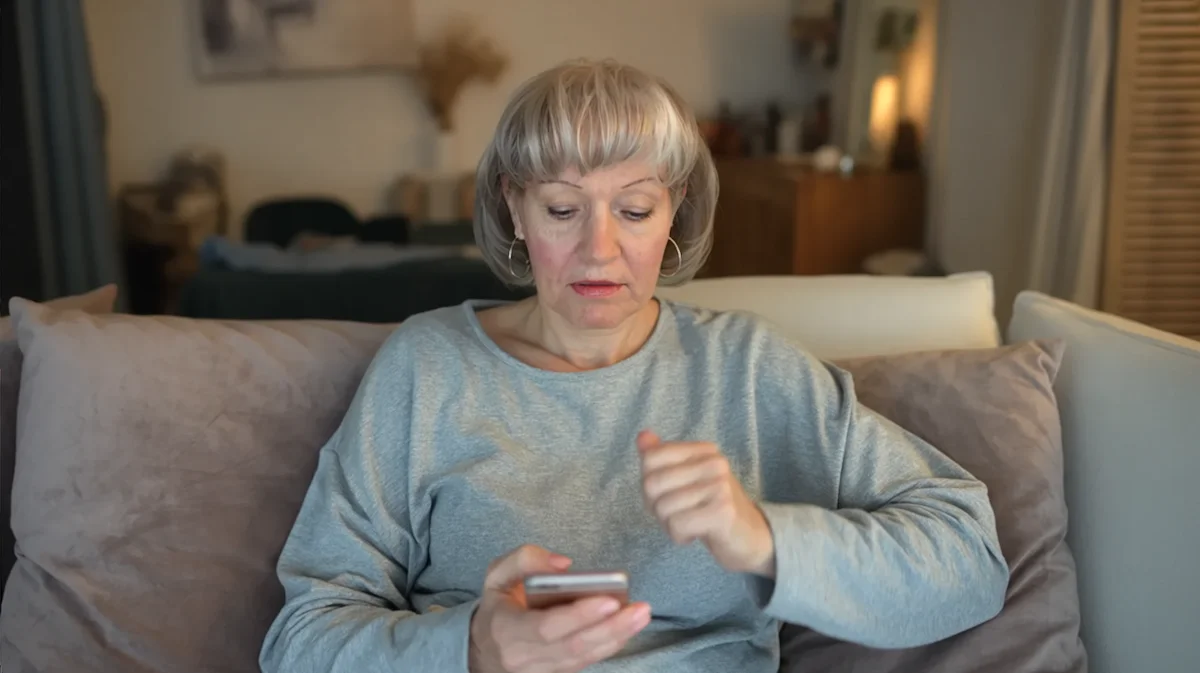
Guilt after drinking can quietly wear a person down over time. Maybe you wake up replaying conversations in your head. Maybe you check your phone feeling nervous about what you said or texted the night before. Or maybe there wasn’t even a major incident at all — just that familiar sinking feeling of disappointment, regret, and “Why did I do it again?”
✅ Quick Answer: Why do I feel guilt after drinking?
Guilt after drinking often comes from acting differently than you intended, breaking promises to yourself, or feeling emotionally out of control afterward. Alcohol lowers inhibitions in the moment, but the emotional aftermath can bring regret, embarrassment, shame, and self-criticism the next day.
The Emotional Fallout Is Often Worse Than the Physical Hangover
For many people, the hardest part is not the headache or exhaustion.
It’s the emotional aftermath.
That heavy feeling can show up as:
- embarrassment
- shame
- anxiety
- regret
- disappointment
- self-criticism
And sometimes the guilt has nothing to do with a dramatic event.
It may simply come from:
- drinking again after promising yourself you wouldn’t
- realizing you drank more than planned
- feeling emotionally flat afterward
- waking up with that familiar dread
Over time, those discouraging crashes can become exhausting.
Guilt and shame often get lumped together, but they are not the same thing.
Guilt focuses on behavior: "I wish I hadn't done that."
Shame focuses on identity: "What does this say about me?"
That distinction matters.
Many people initially experience guilt after drinking, but after enough familiar cycles, the feeling can slowly shift into something deeper. Instead of questioning the behavior, they begin questioning themselves.
And that is often where the pain becomes much heavier.
Researcher Brené Brown often describes the difference this way: guilt says, "I did something bad," while shame says, "I am bad." That distinction matters because repeated drinking guilt can slowly start feeling like a judgment about who you are, not just what happened.
Why Guilt After Drinking Can Become So Intense
Alcohol changes behavior, emotions, judgment, and impulse control.
That’s why people often:
- say things they regret
- overshare emotionally
- argue unnecessarily
- send messages they wouldn’t normally send
- act differently than they intended
Then the next morning arrives — and suddenly everything feels painfully clear.
That contrast can create a deep emotional backlash.
Especially for people who are naturally:
- sensitive
- caring
- reflective
- self-aware
They replay everything.
They look for meaning in every detail.
And they often judge themselves very harshly afterward.
The Brain Loves to Replay the Night Before
One difficult part of this cycle is mental replaying.
The brain begins searching for:
- mistakes
- awkward moments
- signs of embarrassment
- evidence that something went wrong
Sometimes people cannot even remember exactly what happened — which can make the anxiety and guilt even worse.
So the brain fills in the gaps.
That’s why mornings after drinking can feel mentally consuming.
Small moments suddenly feel enormous.
Even neutral interactions can start feeling uncomfortable once guilt takes over.
Why the Cycle Keeps Repeating
This is the frustrating part for many people.
They genuinely mean it when they say:
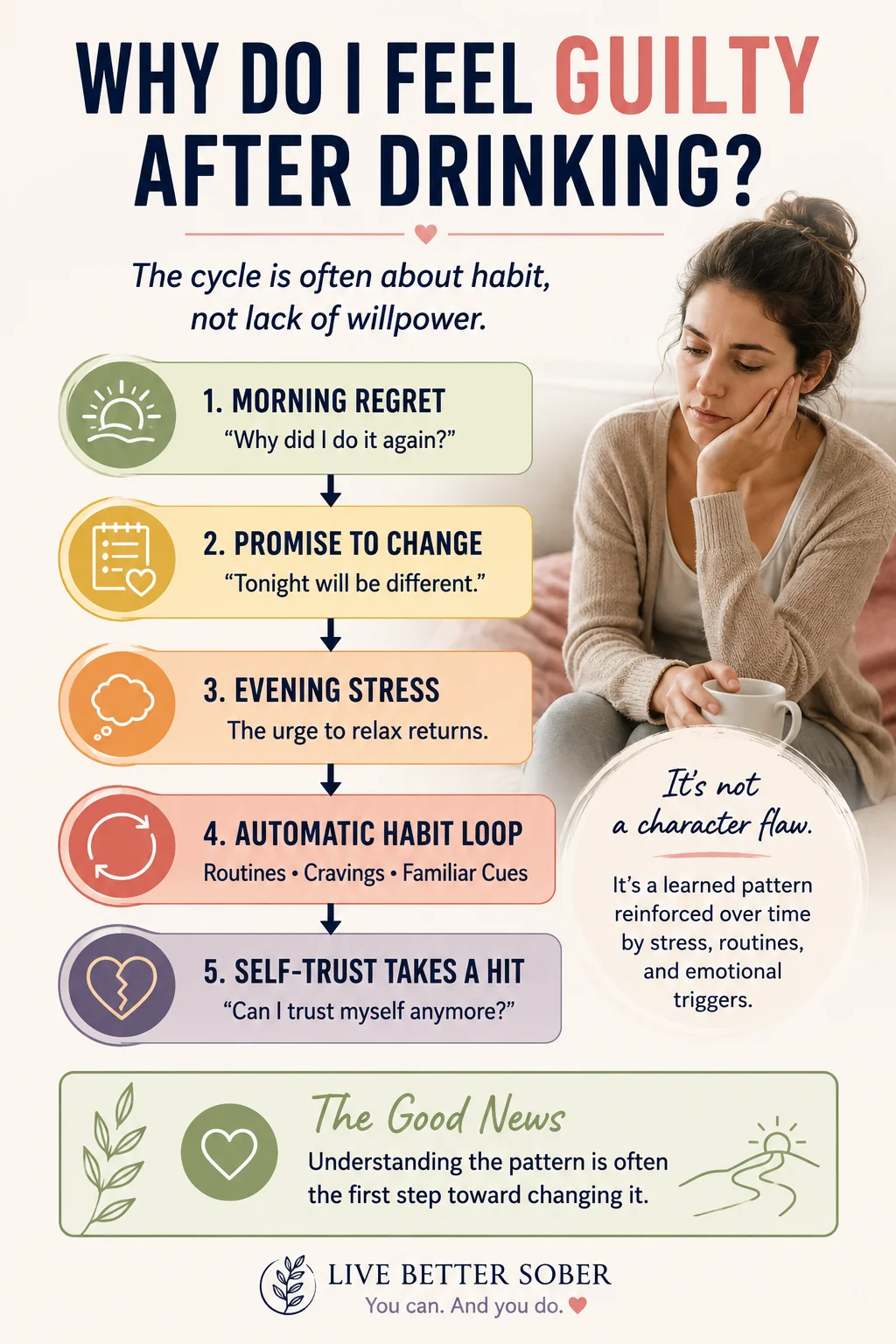
- “Tonight will be different.”
- “I’ll only have one.”
- “I’m not doing this again.”
And they fully believe it in that moment.
But later:
- stress builds
- emotions rise
- routines kick in
- cravings return
- habits take over
Then the pattern quietly takes hold again.
Why Good Intentions Often Lose to Habit
Many people assume drinking night after night means they lack willpower.
But habit loops often operate long before conscious decision-making fully kicks in.
Over time, the brain starts linking certain evening cues with drinking:
- finishing work
- sitting in a favorite chair
- preparing dinner
- feeling stressed or emotionally drained
- reaching a particular time of day
Eventually, those cues can trigger an automatic urge to drink before you have even finished thinking about it.
That is why morning promises can feel completely sincere — and evening decisions can still go in a different direction.
The issue is often not a lack of character.
It's a learned pattern that has been reinforced hundreds or even thousands of times.
This Slowly Damages Self-Trust
One of the most painful parts of repeated drinking guilt is what it does to self-trust.
Not because someone is weak.
But because repeated broken promises hurt emotionally.
After enough cycles, people start wondering:
- “Why can’t I stick to my own decisions?”
- “Why do I keep doing this?”
- “Can I even trust myself anymore?”
Over time, this can gradually affect much more than drinking.
People may begin doubting their own decisions in other areas of life too.
They stop believing their own promises.
They hesitate before committing to goals.
And they begin questioning whether they can follow through on the changes they genuinely want to make.
The damage is not just about alcohol.
It's about slowly losing confidence in your own ability to trust yourself.
You Are Probably Harder on Yourself Than Anyone Else
Many people experiencing this cycle are extremely self-critical.
They:
- overthink
- replay conversations
- judge themselves harshly
- carry embarrassment longer than other people do
Meanwhile, others may barely remember the situation at all.
That does not erase the emotional pain.
But it does show how guilt can become amplified internally.
Recognizing the pattern matters because guilt alone rarely creates lasting change.
Understanding the pattern is what opens the door to change.
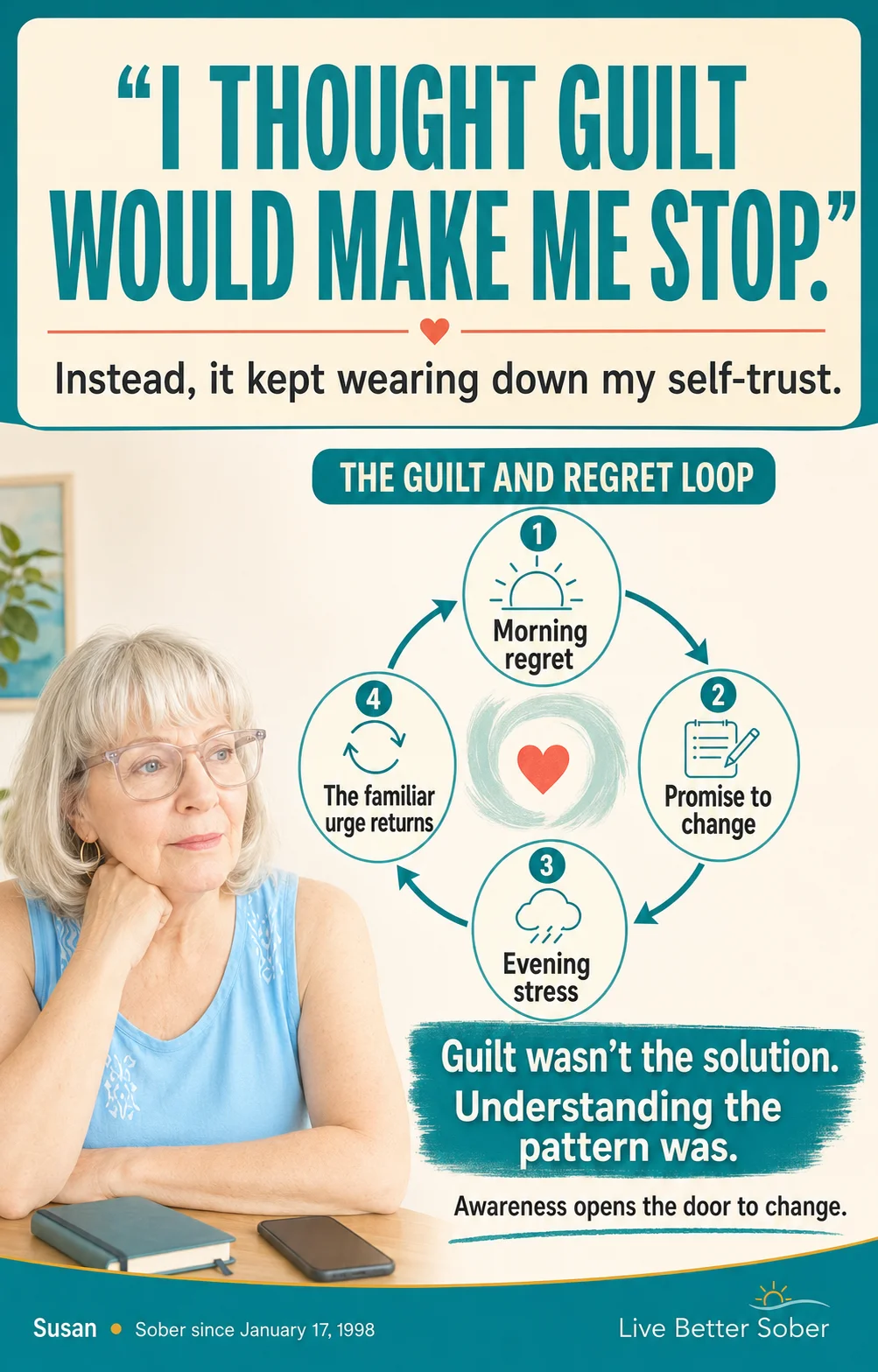
In my own experience, one of the biggest breakthroughs came when I stopped viewing these decisions as isolated moments of weakness and started seeing the automatic patterns underneath them.
That understanding eventually helped shape what I now call The Somatic Marker Method, which I teach in my course.
Because habitual drinking decisions often become automatic long before they feel like conscious choices.
The good news is that lasting change usually begins when people stop focusing on trying harder and start focusing on understanding the pattern itself.
Because once you can clearly see the habit loop operating, you are no longer fighting an invisible opponent.
You are finally working with awareness instead of frustration.
Guilt after drinking can slowly become emotionally exhausting — especially when the same promises, regrets, and disappointments keep repeating.
Over time, many people start realizing the hardest part is not just the drinking itself, but how badly it affects the way they feel about themselves afterward.
And eventually, that starts affecting self-trust too.
→ Back to: Anxiety After Drinking — Why It Feels So Bad
→ Read Next: Why You Stop Trusting Yourself After Drinking
Continue Exploring Shame and Self-Trust
Breaking free from nightly drinking isn't just about changing a habit. It's also about rebuilding trust in yourself. These articles explore how to let go of shame, strengthen self-belief, and move forward with greater confidence and self-compassion.
→ Browse all Shame and Self-Trust articles
Ready for More Support?
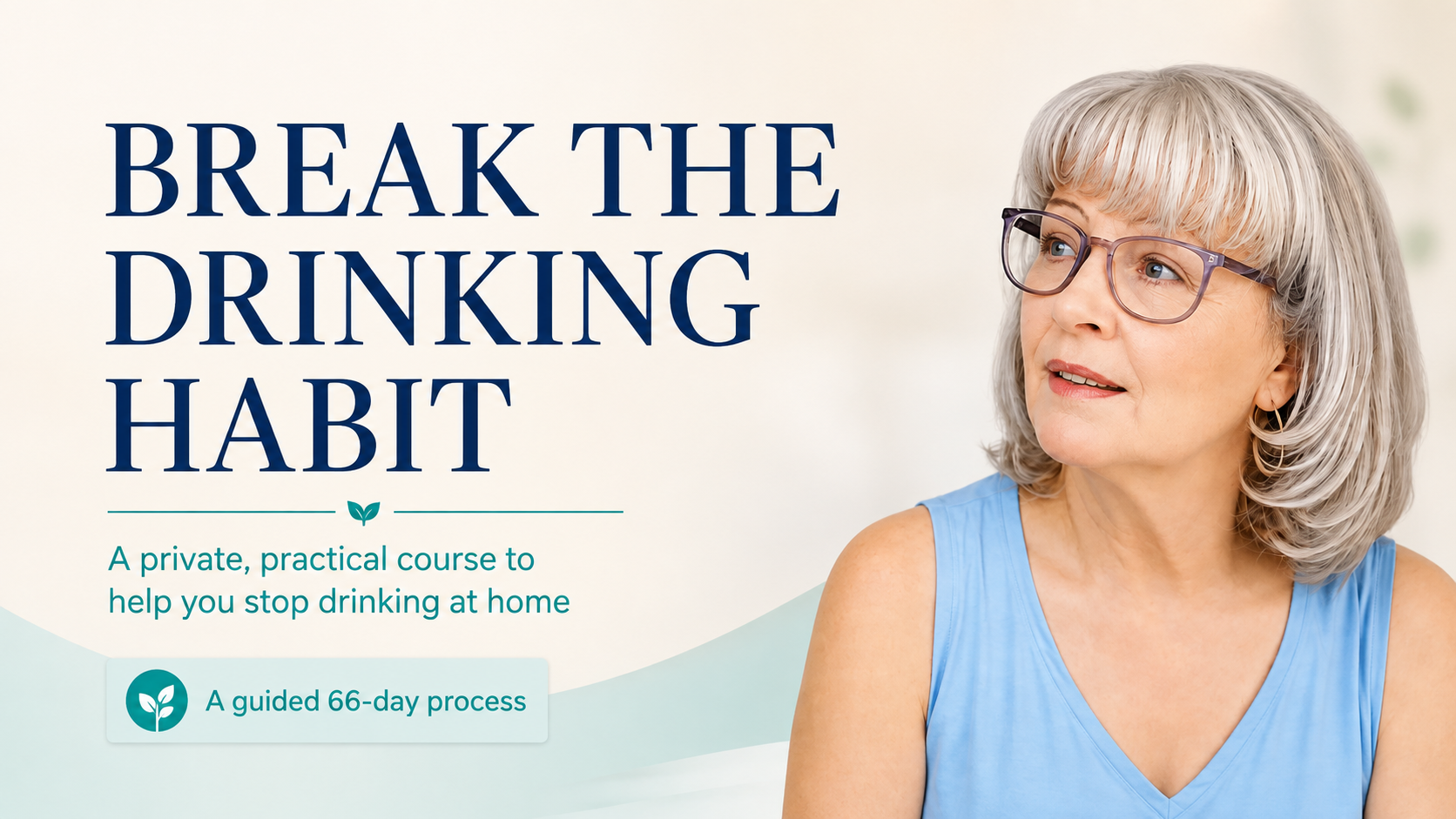
Explore Live Better Sober: Quit Drinking — Break the Alcohol Habit, a practical, shame-free 66-day course designed to help you recognize and interrupt the pattern behind your evening drinking.
➡️ Learn more about the course here: Break the Nightly Drinking Habit
Common Questions About Guilt After Drinking
Why do I obsess over things I said while drinking?
Why do I obsess over things I said while drinking?
Alcohol affects judgment, emotions, and memory. The next day, anxiety and guilt can cause people to replay conversations and over-analyze social interactions.
Is guilt after drinking normal?
Is guilt after drinking normal?
Yes. Many people experience regret, embarrassment, or emotional discomfort after drinking — especially when alcohol becomes part of a repeated cycle.
Why do I keep drinking even when I regret it afterward?
Why do I keep drinking even when I regret it afterward?
Habits, routines, stress relief patterns, emotional triggers, and repetition can all make the cycle difficult to break, even when someone genuinely wants things to change.
Shame and Self-Trust
Anxiety After Drinking — Why It Feels So Bad
Anxiety after drinking can feel overwhelming, shaky, and emotional. Here’s why it happens.
Why You Stop Trusting Yourself After Drinking
Why you stop trusting yourself after drinking often has less to do with alcohol itself and more to do with the promises that keep getting broken.
Hiding Alcohol from Family: What I Was Really Trying to Hide
Hiding alcohol from family wasn't about them seeing me drink. It was a sign that I was avoiding the truth about my drinking in private.


I'm Susan, creator of Live Better Sober, and in January 2028 I'll celebrate 30 years alcohol-free.
Everything on this site comes from my own experience.
I hope that by sharing what I've learned, I can help you break the nightly drinking habit, rediscover yourself, and live better sober, too.
I'm Susan, creator of Live Better Sober, and in January 2028 I'll celebrate 30 years alcohol-free.
Everything on this site comes from my own experience.
I hope that by sharing what I've learned, I can help you break the nightly drinking habit, rediscover yourself, and live better sober, too.
Stay Connected with Live Better Sober
Get new articles, personal stories, podcasts, and practical ideas to help make sober evenings easier.
No lectures. No labels. Just useful support from someone who's been there.


NEWSLETTER
HOME ABOUT CONTACT DISCLAIMER PRIVACY TERMS
FOLLOW US ON:



|
|
|
|
|
SEARCH THIS SITE
LIVE BETTER SOBER IS BASED ON SUSAN GAST'S PERSONAL EXPERIENCE WITH QUITTING ALCOHOL AND LONG-TERM SOBRIETY.
ALL CONTENT COPYRIGHT © 2026 LIVE BETTER SOBER BY SUSAN GAST • ALL RIGHTS RESERVED REGARDLESS OF LINKS OR ATTRIBUTIONS.
POWERED BY SBI! (SOLO BUILD IT!)
