- HOME
- Living Comfortably Sober
- Emotional Recovery
What Happens Emotionally When You Stop Drinking

Written by Susan — Quit drinking at 37 • Sober since 1998 • Sharing what actually works
Written by Susan — Quit drinking at 37 • Sober since 1998 • Sharing what actually works
What happens emotionally when you stop drinking is often very different from what people expect. It's common to worry life will feel boring, stressful, or empty without alcohol. But over time, something else often begins happening instead: the emotional chaos slowly starts settling down. The anxiety eases. The guilt becomes quieter. And they often begin feeling emotionally safer inside their own mind again.
✅ Quick Answer: What happens emotionally when you stop drinking?
What happens emotionally when you stop drinking often includes improved emotional stability, less anxiety, clearer thinking, better sleep, reduced guilt, and a growing sense of peace over time. While emotions can feel intense at first, many eventually notice they feel calmer and more emotionally balanced without alcohol.
Emotional Stability Slowly Starts Returning
One of the biggest surprises for many people is how much steadier life eventually starts feeling.
Not perfect.
Not magically stress-free.
Just steadier.
The emotional roller-coaster slowly becomes less extreme:
- fewer emotional crashes
- less morning dread
- less panic
- less guilt
- fewer regrets
- fewer emotional “what did I do?” moments
Some people realize they had been living in a repeated cycle of:
- temporary relief
- emotional rebound
- regret
- exhaustion
And they had forgotten what emotional steadiness even felt like.
What Happens Emotionally When You Stop Drinking
At first, emotions may actually feel stronger.
That can surprise people.
Without alcohol numbing stress temporarily, emotions can feel:
- uncomfortable
- unfamiliar
- raw
- intense
But over time, the nervous system usually begins stabilizing.
Sleep often improves. Research has consistently shown that alcohol can disrupt normal sleep architecture, which can affect mood, emotional regulation, and stress recovery.
Others also feel genuine relief that they are no longer drinking every single night.
And over time, people often begin noticing:
- they feel more settled overall
- they react differently to stress
- they recover emotionally faster
- they feel more emotionally present
That gradual emotional recovery can feel incredibly freeing.
Why Emotions Can Feel Stronger At First
It's common to worry something is wrong when emotions seem more intense after stopping drinking.
In reality, this can be a normal part of the adjustment process.
Alcohol often acts as a temporary emotional escape. It may briefly dull stress, anxiety, frustration, loneliness, or sadness. When alcohol is removed, those emotions are no longer being pushed into the background.
That doesn't mean you are becoming more emotional.
Often, it means you are finally experiencing feelings that alcohol had been temporarily masking.
At the same time, the brain and nervous system are adjusting to functioning without the nightly cycle of alcohol and recovery.
Over time, the brain can begin linking certain emotions, situations, and evening routines with drinking. These learned emotional associations can make the habit feel far more automatic than most people realize.
Part of emotional recovery is gradually weakening those old associations and building healthier responses in their place.
For many people, this period is temporary.
As sleep improves, stress levels stabilize, and the nervous system begins recovering, emotional reactions often become easier to manage and less overwhelming.
You Stop Waking Up Already Defeated
This is one of the biggest emotional shifts.
Many nightly drinkers wake up already feeling:
- behind
- ashamed
- anxious
- exhausted
- emotionally fragile
Even before the day properly starts.
As the weeks pass, removing alcohol from the nightly routine often removes much of that emotional heaviness too.
People frequently describe:
- lighter mornings
- clearer thinking
- less dread
- more emotional energy
- greater self-respect
Not because life suddenly becomes easy.
But because they are no longer constantly recovering from the emotional aftermath.
Small Moments Start Feeling Better Again
This part is easy to underestimate.
When alcohol is no longer dominating evenings and mornings, many small everyday experiences start feeling enjoyable again.
Things like:
- waking up clear-headed
- peaceful mornings
- reading
- hobbies
- cooking
- walking
- quiet evenings
- restful sleep
Those moments may sound simple.
But emotionally, they can feel enormous after years of chaos, guilt, and emotional exhaustion.
Rebuilding Trust In Yourself
It's easy to underestimate how much nightly drinking affects self-trust.
Each morning promise feels sincere.
Each evening's broken promise feels disappointing.
Over time, that cycle can slowly erode confidence.
Not because someone lacks character or willpower, but because repeated broken agreements with ourselves eventually create doubt.
One alcohol-free evening may seem small.
But every evening you follow through on your intention sends a different message:
"I can trust myself."
That trust is rarely rebuilt overnight.
It grows one decision, one evening, and one promise kept at a time.
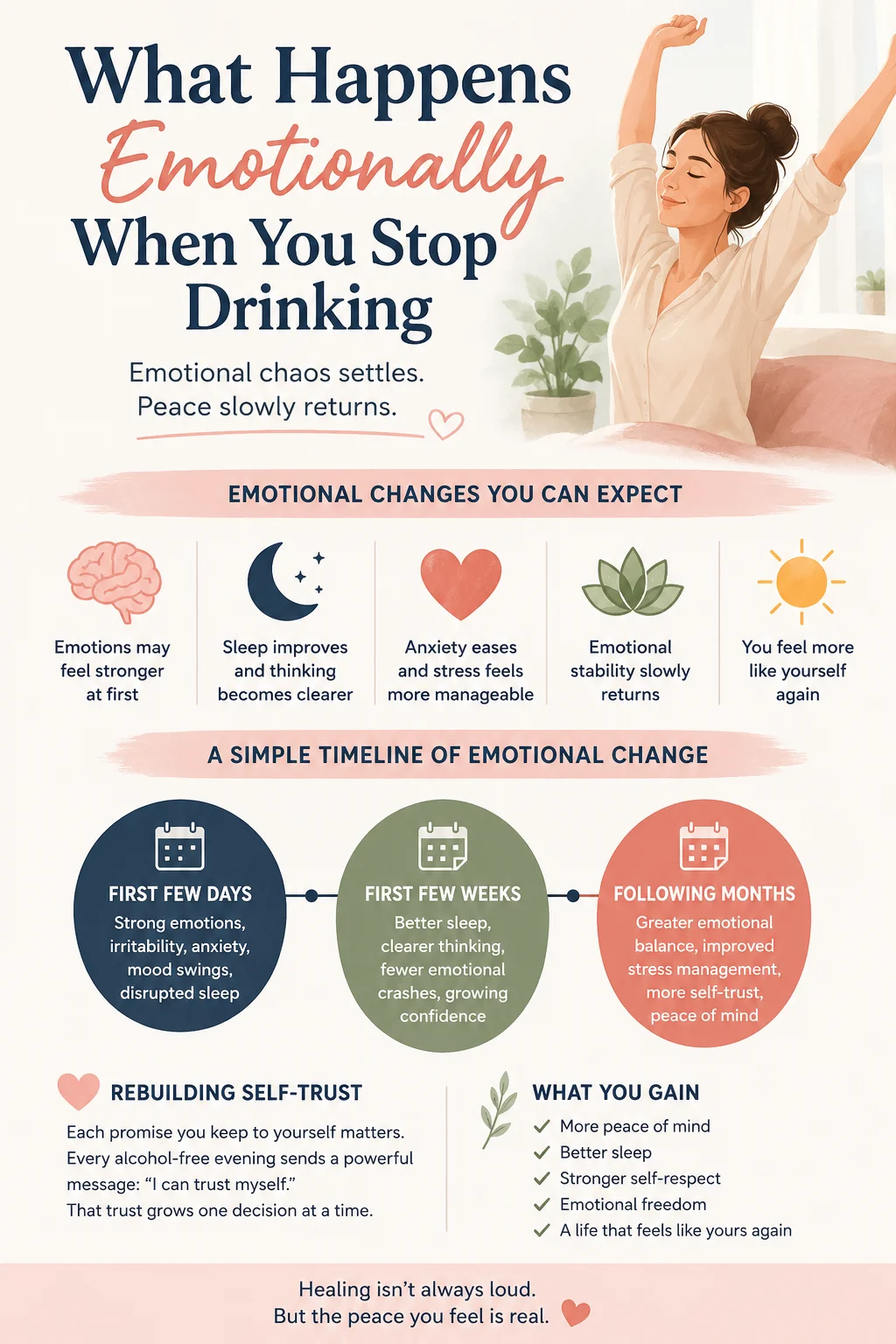
A Simple Timeline Of Emotional Change
Every person's experience is different, but emotional changes often follow a similar pattern.
First Few Days:
Stronger emotions, irritability, anxiety, mood swings, disrupted sleep.
First Few Weeks:
Better sleep, clearer thinking, fewer emotional crashes, growing confidence.
Following Months:
Greater emotional steadiness, improved stress management, more self-trust, and increased peace of mind. For me, the biggest shift was a growing sense of relief and the realization that I could keep going.
The important thing to remember is that emotional recovery is rarely a straight line.
Good days and difficult days can happen side by side.
What matters most is the overall direction of progress.
Recovery Often Feels Quiet, Not Dramatic
This matters because people often expect transformation to feel huge and exciting.
But emotional healing is often much quieter than that.
It can look like:
- sleeping better
- feeling more at ease
- not panicking in the morning
- trusting yourself more
- feeling emotionally safer
- no longer constantly recovering
The absence of chaos becomes the gift.
And for many people, that peace eventually becomes far more valuable than the temporary escape alcohol once provided.
What People Fear They Will Lose — And What They Often Gain
Some people worry that life without alcohol will feel:
- boring
- lonely
- stressful
- restricted
- less enjoyable
Those fears are understandable.
What often surprises people is what they gain instead:
- greater peace of mind
- more emotional balance
- better sleep
- stronger self-respect
- more confidence
- a sense of freedom from constant mental negotiation
The goal is not to become a different person.
The goal is to stop fighting the same exhausting battle every evening.
You Begin Feeling More Like Yourself Again
One thing people often say after stepping away from nightly drinking is:
“I finally feel like myself again.”
Not a different person.
Not a perfect person.
Just more emotionally grounded.
Gradually, many people notice:
- clearer thinking
- more patience
- less emotional volatility
- more confidence
- greater self-respect
- more inner calm
And that emotional steadiness can slowly ripple outward into every area of life.
What happens emotionally when you stop drinking is often much deeper than simply “not drinking anymore.” As recovery continues, people often rediscover emotional balance, self-respect, peace, and a sense of calm they had not felt in years. And while the process is not always easy at first, the emotional relief that gradually follows can become one of the most rewarding parts of all.
Continue Exploring Living Comfortably Sober
Life without alcohol isn't about missing out. It's about creating evenings, weekends, and everyday moments that feel genuinely satisfying. Explore practical ideas and encouragement to help you build a life that feels comfortable, peaceful, and worth protecting.
→ Browse all Living Comfortably Sober articles
Ready for More Support?
Explore Live Better Sober: Quit Drinking — Break the Alcohol Habit, a practical, shame-free 66-day course designed to help you recognize and interrupt the pattern behind your evening drinking.
➡️ Learn more about the course here: Break the Nightly Drinking Habit
Common Questions About Emotional Recovery After Drinking
How long does emotional recovery take after stopping drinking?
How long does emotional recovery take after stopping drinking?
It varies for everyone. Some people notice improvements within days, while deeper emotional stability can continue improving over weeks and months.
Is it normal to feel emotional after quitting drinking?
Is it normal to feel emotional after quitting drinking?
Yes. Alcohol often numbs emotions temporarily, so feelings can seem stronger at first before the nervous system stabilizes.
Does anxiety improve after stopping drinking?
Does anxiety improve after stopping drinking?
For many people, yes. As sleep, nervous system regulation, hydration, and emotional stability improve, anxiety often becomes much more manageable over time.
Living Comfortably Sober
Life After Quitting Drinking — What Changes Over Time?
Life after quitting drinking can bring calmer evenings, better sleep, clearer thinking, and more peace.
What if Life Feels Boring Without Alcohol? It's Normal
Life feels boring without alcohol for many people at first. It's not a lack of willpower or a sign something is wrong—it's part of the transition process.
How to Socialize Without Drinking — Confidently
How to socialize without drinking and build genuine confidence while navigating parties, dinners, and events sober.
Who Am I Without Alcohol? Why Identity Feels Different
Who am I without alcohol? Here's why identity shifts after nightly drinking stops.
Enjoy Life Without Alcohol - Real Enjoyment Can Return
Can you enjoy life without alcohol? Yes. Many people discover more peace, confidence, emotional stability, and real enjoyment than they expected.


I'm Susan, creator of Live Better Sober, and in January 2028 I'll celebrate 30 years alcohol-free.
Everything on this site comes from my own experience.
I hope that by sharing what I've learned, I can help you break the nightly drinking habit, rediscover yourself, and live better sober, too.
I'm Susan, creator of Live Better Sober, and in January 2028 I'll celebrate 30 years alcohol-free.
Everything on this site comes from my own experience.
I hope that by sharing what I've learned, I can help you break the nightly drinking habit, rediscover yourself, and live better sober, too.
Stay Connected with Live Better Sober
Get new articles, personal stories, podcasts, and practical ideas to help make sober evenings easier.
No lectures. No labels. Just useful support from someone who's been there.


NEWSLETTER
HOME ABOUT CONTACT DISCLAIMER PRIVACY TERMS
FOLLOW US ON:



|
|
|
|
|
SEARCH THIS SITE
LIVE BETTER SOBER IS BASED ON SUSAN GAST'S PERSONAL EXPERIENCE WITH QUITTING ALCOHOL AND LONG-TERM SOBRIETY.
ALL CONTENT COPYRIGHT © 2026 LIVE BETTER SOBER BY SUSAN GAST • ALL RIGHTS RESERVED REGARDLESS OF LINKS OR ATTRIBUTIONS.
POWERED BY SBI! (SOLO BUILD IT!)
