- HOME
- Starting to Stop
- Stop Delaying
What Happens When You Finally Stop Delaying Quitting Drinking


Written by Susan — Quit drinking at 37 • Sober since 1998 • Sharing what actually works
Written by Susan — Quit drinking at 37 • Sober since 1998 • Sharing what actually works
What happens when you finally stop delaying quitting drinking?
For many people, the biggest change is not dramatic at first. It is quieter than that.
The endless nightly negotiation slowly fades.
The mental exhaustion of constantly promising yourself “tomorrow” starts loosening its grip, and little by little, you begin feeling more settled internally, more honest with yourself, and more hopeful about change.
✅ Quick Answer: What happens when you finally stop delaying quitting drinking?
When people stop delaying quitting drinking, they often experience emotional relief before anything else. The nightly bargaining, guilt, and mental exhaustion begin calming down, and many people gradually rebuild confidence, trust in themselves, and healthier evening routines.
What Happens When You Finally Stop Delaying Quitting Drinking
One of the biggest shifts happens internally.
For a long time, you may have been stuck in a painful mental cycle:
- “I need to quit.”
- “I’ll start tomorrow.”
- “Why did I do it again?”
- “This has to stop.”
- “Maybe next week.”
That ongoing internal battle drains enormous emotional energy.
And many people do not even realize how exhausting it has become until the nightly bargaining finally begins easing.
Because eventually, something changes:
you stop spending every evening fighting yourself.
That alone can feel like a huge emotional relief.
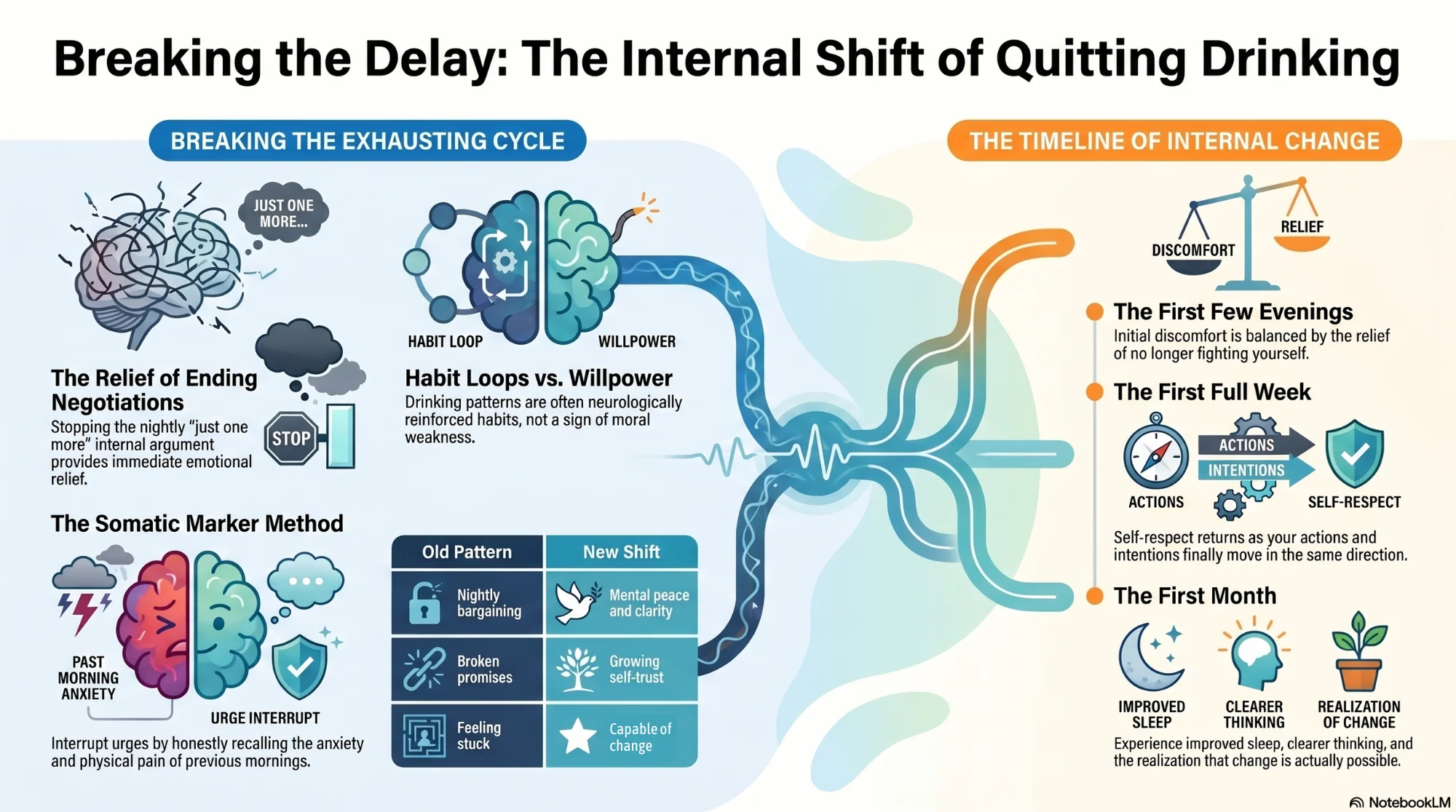
This Is Not Simply a Willpower Problem
A lot of nightly drinkers secretly believe repeated nightly drinking means they are weak, lazy, or lacking self-control.
But nightly drinking patterns are often driven by deeply conditioned habit loops and reward associations inside the brain — especially when alcohol has become tied to stress relief, comfort, emotional escape, or evening routine.
Over time, the brain can begin anticipating alcohol automatically at certain times, emotions, or environmental cues.
That is why the urge can sometimes feel almost automatic long before you consciously decide whether you truly want to drink or not.
This does not mean you are broken.
And it does not mean change is impossible.
It means the pattern has become neurologically reinforced through repetition.
That is also why shame and self-criticism rarely solve the problem.
Understanding the pattern more clearly often helps people stop moralizing the behavior and start approaching change more calmly, honestly, and strategically.
What to Do Tonight Instead of Negotiating With Yourself
One of the hardest parts of the nightly drinking habit is the constant internal bargaining.
The conversation often sounds painfully familiar:
- “I’ll just have two.”
- “Tomorrow will be different.”
- “Tonight was stressful.”
- “I deserve it.”
- “One more night won’t matter.”
- “I’ll start Monday.”
- “I already messed up anyway.”
I remember standing in the kitchen many nights picking up the glass, then putting it back down again.
Five minutes later, I would do the exact same thing.
And eventually, I would give in.
At the time, I did not yet understand why the urge kept overriding my better intentions.
The Somatic Marker Method (which I teach more deeply inside my course) only became clear to me later, after I finally reached the point where the emotional and physical pain of the habit became impossible to ignore.
Over time, those negotiations can become so automatic that they almost feel like background mental noise rather than fully conscious decisions.
That is why trying to “win” the argument through shame or self-criticism usually does not work very well.
Instead, it often helps to interrupt the pattern earlier and reconnect with the moments that made you want to change in the first place.
This is where your own emotional memory is important.
This is part of what I later came to describe as The Somatic Marker Method — the idea that emotionally charged experiences connected to drinking can strongly influence future urges, decisions, and behavior.
Powerful somatic marker moments often stay with people, especially moments like:
- waking up ashamed
- lying awake with anxiety at 3 AM
- feeling physically awful the next morning
- saying something regrettable
- feeling frightened by how trapped the pattern has become
- realizing the habit is no longer bringing real relief
Those moments matter.
Because during a strong urge, the brain often tries to selectively remember only the temporary comfort alcohol once provided while minimizing the emotional pain attached to the habit.
That is why it helps to consciously reconnect with the full reality of the pattern instead of only the craving itself.
Sometimes the goal is not to “fight” the urge.
Sometimes the goal is to remember honestly.
Tonight, instead of automatically negotiating with yourself, pause long enough to ask:
“What was I feeling the last time I promised myself this needed to change?”
That single moment of honest reflection can sometimes interrupt the automatic cycle long enough for a different decision to become possible.
The Constant Guilt Starts Easing
When people repeatedly delay quitting, guilt often becomes part of daily life.
Not just occasional guilt.
Constant background guilt.
You may notice:
- disappointment every morning
- frustration at night
- broken promises to yourself
- anxiety about the future
- embarrassment
- self-doubt
Over time, that emotional weight builds quietly.
But when you finally begin taking real action — even imperfectly — something important happens:
your self-respect starts returning.
Not because everything becomes magically easy overnight.
But because your actions and intentions finally begin moving in the same direction again.
That feels different.
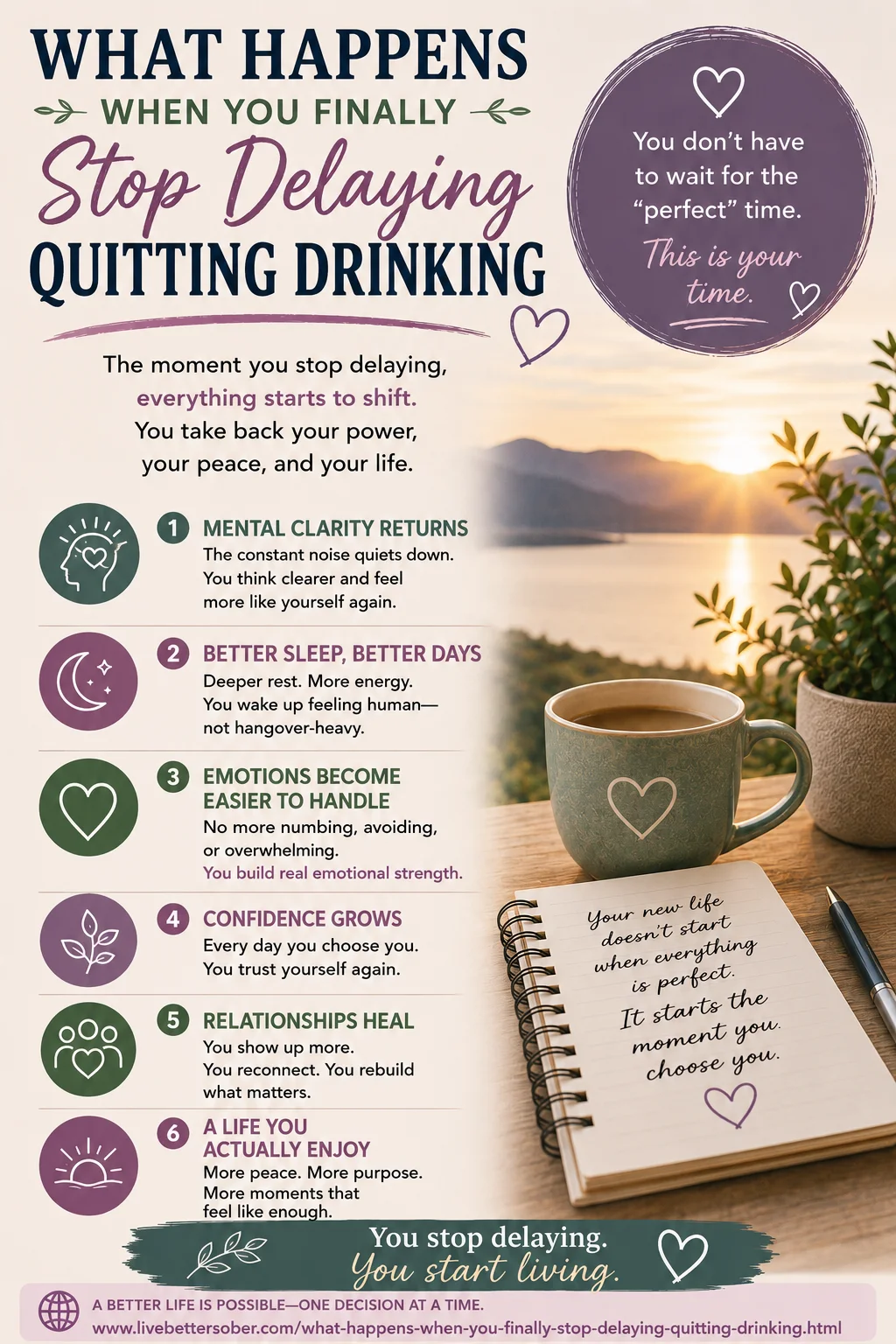
Even Small Wins Start Building Confidence
People often assume confidence comes first.
But more often, confidence is built through evidence.
Each time you:
- interrupt the routine
- handle an urge differently
- get through an uncomfortable evening
- avoid bargaining
- keep a promise to yourself
…your brain starts collecting proof that change is actually possible.
That matters enormously.
Because for many nightly drinkers, one of the deepest fears eventually becomes:
“I don’t trust myself anymore.”
Small wins slowly rebuild that trust.
What Often Begins Changing First
For many people, the earliest changes are not dramatic physical transformations.
They are often quieter internal shifts that begin happening as the nightly bargaining starts losing strength.
The First Few Evenings
The evenings may still feel uncomfortable or unfamiliar at first.
But many people also begin noticing moments of relief simply from no longer arguing with themselves all night long.
Even small interruptions to the old pattern can start creating a sense of momentum.
The First Week
People often notice slightly less mental chaos.
The constant “I’ll quit tomorrow” cycle starts easing, and some people begin feeling small flashes of self-respect returning because their actions finally match their intentions more often.
The First Month
Over time, evenings often feel calmer and more stable overall.
People often notice:
- less guilt
- clearer thinking
- improved sleep
- more confidence
- and a growing sense that change may actually be possible after all
Not because life suddenly becomes perfect.
But because the exhausting cycle of nightly back-and-forth is no longer controlling every evening.
Evenings Slowly Start Feeling Different
The constant pressure of the nightly internal argument slowly begins fading.
You are no longer spending every evening negotiating with yourself, breaking promises to yourself, or carrying the quiet shame that often follows another night of drinking you never truly wanted in the first place.
After a while, the habit itself starts feeling heavy.
And over time, some people stop trusting themselves.
They begin questioning their own strength, judgment, and ability to change. Carrying that private disappointment night after night can feel incredibly lonely.
That is why the shift often feels much bigger than simply “not drinking.”
For the first time in a long while, it can feel like you are finally breathing freely again.
You Realize You Were Carrying More Stress Than You Thought
One of the strangest realizations for many people is this: the habit itself was often creating part of the stress they believed it was relieving.
That can be difficult to see while stuck inside the cycle.
Because alcohol may temporarily numb discomfort in the moment while quietly increasing:
- anxiety
- poor sleep
- emotional instability
- guilt
- physical exhaustion
- mental fog
- self-criticism
Once the cycle starts breaking, people often realize:
“I actually feel calmer without all the internal tug-of-war.”
That realization becomes incredibly motivating.
A Quick Note About Withdrawal and Safety
For some heavier daily drinkers, stopping alcohol suddenly can involve physical withdrawal symptoms that may require medical support.
If you drink heavily every day, have experienced severe withdrawal symptoms before, or have health concerns related to alcohol use, it is important to speak with a qualified medical professional before attempting to quit abruptly on your own.
Seeking support is not weakness.
It is a responsible and compassionate step toward protecting your health and safety.
Many people are able to begin making meaningful changes gradually and safely with the right guidance and support in place.
Progress Matters More Than Perfection
This is important.
Many people think change only “counts” if everything goes perfectly from day one.
But real progress rarely works that way.
There may still be:
- difficult evenings
- emotional triggers
- setbacks
- uncomfortable moments
- hesitation
- fear
That does not erase progress.
The important shift is that you are no longer endlessly postponing change while remaining stuck in the same exact cycle.
You are moving forward now.
And forward matters.
What happens when you finally stop delaying quitting drinking is often less about dramatic transformation and more about emotional relief, growing self-trust, and finally stepping out of the exhausting cycle of nightly self-debate. The mental noise slowly quiets down, and many people begin feeling more peaceful, more capable, and more honest with themselves again.
Also, your “why I want to quit” needs to have enough meaningful reasons behind it to help carry you through those difficult moments of hesitation and bargaining.
You do not have to become perfect overnight. But the moment you stop endlessly postponing change and begin facing the pattern honestly, something important shifts inside you.
→ Back to: How to Stop Putting Off Quitting Drinking
→ Read Next: What Happens When You Stop Drinking Every Night?
Continue Exploring Starting to Stop
If you're ready to move beyond thinking about change and begin taking action, these articles will help you get started. Explore practical first steps, simple strategies, and gentle guidance to help you stop drinking one decision at a time.
→ Browse all Starting to Stop articles
Ready for More Support?
Explore Live Better Sober: Quit Drinking — Break the Alcohol Habit, a practical, shame-free 66-day course designed to help you recognize and interrupt the pattern behind your evening drinking.
➡️ Learn more about the course here: Break the Nightly Drinking Habit
Questions About Finally Stopping the Delay Cycle
Does quitting drinking immediately make life easier?
Does quitting drinking immediately make life easier?
Not instantly. But many people begin experiencing emotional relief fairly quickly once the nightly bargaining and guilt start easing.
Why does stopping the delay feel empowering?
Why does stopping the delay feel empowering?
Because you begin rebuilding trust in yourself again. Your actions and intentions finally start aligning instead of constantly conflicting.
Is it normal to still feel uncertain sometimes?
Is it normal to still feel uncertain sometimes?
Absolutely. Progress does not require perfect confidence. Most meaningful change happens gradually through repeated small shifts and growing self-awareness.
Starting to Stop
What Happens When You Stop Drinking Every Night
What happens when you stop drinking every night? Discover the real changes in sleep, mood, and energy over time.
Why Do I Always Say I’ll Quit Drinking Tomorrow?
Why do I always say I'll quit drinking tomorrow? Learn why this nightly promise keeps repeating.
Why Do I Keep Delaying Quitting Drinking?
Why do I keep delaying quitting drinking? Learn why fear, bargaining, and habit loops keep you stuck.
How to Stop Putting Off Quitting Drinking
How to stop putting off quitting drinking and break the “I’ll start tomorrow” cycle for good.
What to Do at 5 PM Instead of Drinking
Learn what to do at 5 pm when the urge to drink hits, with practical strategies to interrupt cravings, build new routines, and get through the danger hour.
Home Setup for Not Drinking at Home
Home setup for not drinking starts with removing triggers, changing routines, and making sober evenings easier to navigate.





I'm Susan, creator of Live Better Sober, and in January 2028 I'll celebrate 30 years alcohol-free.
Everything on this site comes from my own experience.
I hope that by sharing what I've learned, I can help you break the nightly drinking habit, rediscover yourself, and live better sober, too.
I'm Susan, creator of Live Better Sober, and in January 2028 I'll celebrate 30 years alcohol-free.
Everything on this site comes from my own experience.
I hope that by sharing what I've learned, I can help you break the nightly drinking habit, rediscover yourself, and live better sober, too.
Stay Connected with Live Better Sober
Get new articles, personal stories, podcasts, and practical ideas to help make sober evenings easier.
No lectures. No labels. Just useful support from someone who's been there.


NEWSLETTER
HOME ABOUT CONTACT DISCLAIMER PRIVACY TERMS
FOLLOW US ON:



|
|
|
|
|
SEARCH THIS SITE
LIVE BETTER SOBER IS BASED ON SUSAN GAST'S PERSONAL EXPERIENCE WITH QUITTING ALCOHOL AND LONG-TERM SOBRIETY.
ALL CONTENT COPYRIGHT © 2026 LIVE BETTER SOBER BY SUSAN GAST • ALL RIGHTS RESERVED REGARDLESS OF LINKS OR ATTRIBUTIONS.
POWERED BY SBI! (SOLO BUILD IT!)
