- HOME
- Starting to Stop
- Quit Tomorrow
Why Do I Always Say I’ll Quit Drinking Tomorrow?

Written by Susan — Quit drinking at 37 • Sober since 1998 • Sharing what actually works
Written by Susan — Quit drinking at 37 • Sober since 1998 • Sharing what actually works
Why do I always say I'll quit drinking tomorrow? If you’ve asked yourself that question over and over again, you are far from alone.
Many nightly drinkers genuinely mean it when they say tomorrow will be different. The promise feels real in the moment. You go to bed frustrated, disappointed, and mentally exhausted from repeating the same cycle again.
Then the next evening arrives — and somehow the entire conversation starts all over again.
✅ Quick Answer: Why do I always say I’ll quit drinking tomorrow?
Many people keep saying they’ll quit drinking tomorrow because part of them truly wants change, while another part still depends on the comfort, routine, or emotional relief alcohol provides. This creates a nightly cycle of procrastination, bargaining, and delayed action that can repeat for months or even years.
🎙️ Want to hear the podcast hosts’ take?
The podcast conversation explores this topic from another perspective.
Jump to the podcast episode.
It’s Usually Not About Weakness
Most people assume this pattern means they lack willpower or discipline. But that is rarely the real issue.
The truth is, two different parts of your brain are often pulling in opposite directions at the exact same time.
One side of you is tired of:
- waking up disappointed
- feeling sluggish
- breaking promises to yourself
- worrying about your health
- planning life around alcohol
But another side still sees drinking as:
- relief
- comfort
- reward
- transition time
- emotional escape
- familiarity
And when both of those feelings exist together, you end up stuck in the middle.
That’s why you can sound completely sincere at 11 PM when you say:
“Tomorrow is it. I mean it this time.”
And yet find yourself pouring another drink the very next evening.
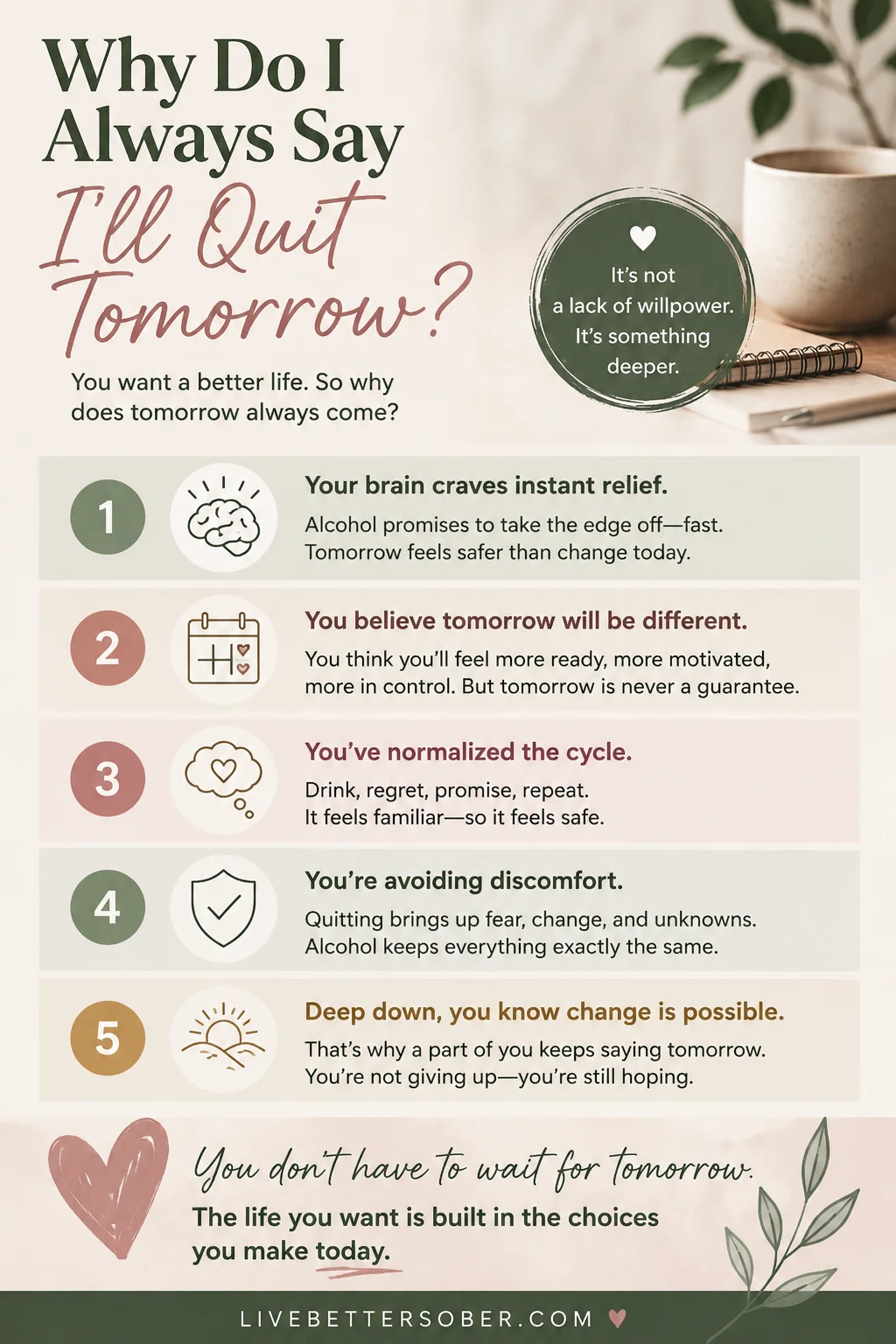
The “Tomorrow” Promise Feels Safe
One reason this cycle repeats is because “tomorrow” creates emotional distance.
You are not quitting tonight.
You are not facing discomfort tonight.
You are not changing your routine tonight.
So your brain gets temporary relief from guilt without needing to face immediate change.
That’s important to understand.
The promise itself becomes emotionally soothing.
It calms the anxiety for a little while because it allows you to believe:
- change is coming
- you still have control
- you’re “serious this time”
- you haven’t fully given up
But because no actual action happens in the present moment, the cycle quietly resets again the next day.
The Brain Loves Familiar Patterns
Alcohol habits are deeply connected to routine and repetition.
Your brain learns:
- when you drink
- where you drink
- what time cravings appear
- what emotions trigger the urge
- what relief follows afterward
Over time, the entire evening becomes emotionally linked to drinking.
At Live Better Sober, this emotional memory pattern is part of what I call The Somatic Marker Method — the way the brain attaches emotional relief, anticipation, habits, and remembered feelings to certain routines and situations.
That’s one reason nightly drinking habits can begin feeling so automatic.
The brain is not simply remembering alcohol itself.
It’s remembering the emotional experience connected to the routine.
The more often this loop repeats, the more automatic it becomes.
Why Do I Always Say I'll Quit Drinking Tomorrow?
Fear of Change Is Part of It Too
Many people believe they are afraid of quitting drinking.
But often, they are actually afraid of:
- who they’ll be without it
- how evenings will feel
- boredom
- emotional discomfort
- social changes
- losing their “reward”
- permanent commitment
That fear creates hesitation.
And hesitation creates delay.
That’s why people often say:
- “I’ll quit after this weekend”
- “I’ll start next month”
- “I just need to get through this stressful period first”
The brain keeps searching for a “better time” to change because change itself feels emotionally uncomfortable.
Recognition Is the First Real Shift
The important thing here is this:
If you keep repeating this promise, it does NOT mean you secretly want to stay stuck forever.
In many cases, it means you are beginning to wake up to the problem emotionally — but haven’t yet learned how to interrupt the cycle.
That awareness matters more than you may realize.
Because eventually, many people reach a point where the nightly negotiation itself becomes exhausting.
The mental back-and-forth starts feeling heavier than the habit itself.
And that is often where real change finally begins.
You’re Probably More Ready Than You Think
If you are constantly thinking about quitting, questioning your habits, or feeling frustrated with the repetition, those thoughts are not meaningless.
People who truly have no concern rarely spend time emotionally wrestling with the issue every single night.
The conflict itself is a signal.
It means part of you already knows something needs to change.
- You may not fully trust yourself yet.
- You may still feel stuck.
- You may still be bargaining internally.
But awareness is often the very first stage of breaking the pattern.
Saying “I’ll quit tomorrow” over and over can feel discouraging, especially when you genuinely mean it every single time. But this cycle is usually much deeper than simple lack of willpower. It often comes from emotional habit loops, fear of change, comfort-seeking, and the brain’s desire to avoid discomfort in the present moment.
Also, your “why I want to quit” needs to have enough meaningful reasons behind it to help carry you through those difficult moments of hesitation and bargaining.
What to Do Tonight Instead of Bargaining With Yourself
If you notice the familiar “I’ll quit tomorrow” conversation starting again tonight, try interrupting the pattern before the first drink instead of arguing with yourself for hours.
You do not need to solve your entire future tonight.
You only need to change this one evening moment.
A few simple things that can help:
- leave the kitchen or drinking area for 15 minutes
- make tea, flavored water, or another comforting non-alcoholic drink
- take a quick shower to break the emotional “after work” transition
- write down exactly how you felt after drinking last night
- remind yourself why you wanted to quit in the first place
The goal is not perfection.
The goal is creating a small interruption in the automatic evening routine long enough for your thinking brain to re-engage before habit takes over.
Sometimes even a tiny pause can change the direction of the night.
The good news is that once you start recognizing the pattern clearly, you can begin interrupting it. And that’s exactly what we’ll look at next.
→ Read Next: Why Do I Keep Delaying Quitting Drinking?
→ You may also enjoy: Break the Drinking Habit & Live Better Sober
Want the Podcast Version of this Page?
Want to go deeper? The podcast version of this page explores these ideas in a more conversational and reflective way. You can listen to it below.
Continue Exploring Starting to Stop
If you're ready to move beyond thinking about change and begin taking action, these articles will help you get started. Explore practical first steps, simple strategies, and gentle guidance to help you stop drinking one decision at a time.
→ Browse all Starting to Stop articles
Ready for More Support?
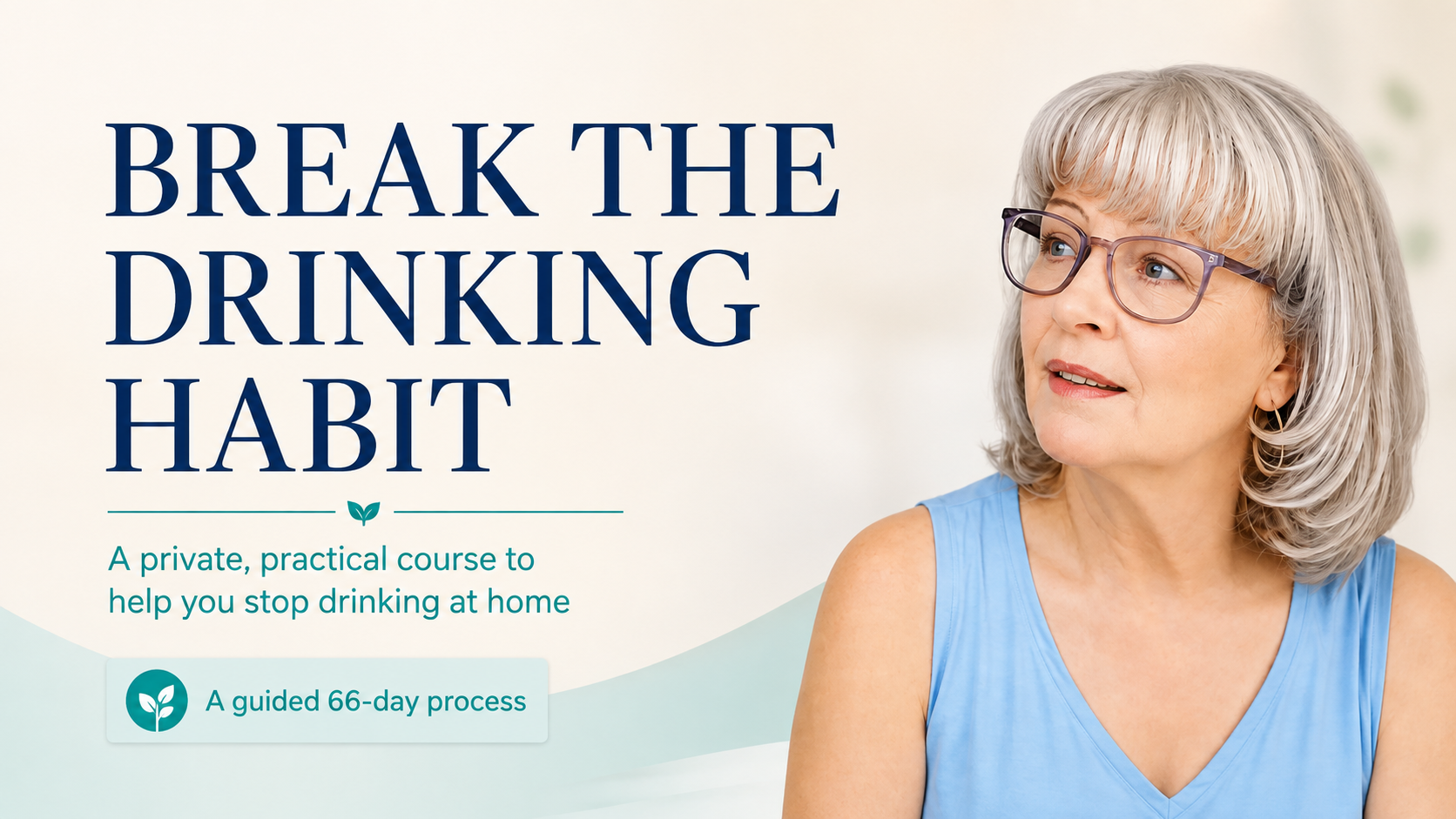
Explore Live Better Sober: Quit Drinking — Break the Alcohol Habit, a practical, shame-free 66-day course designed to help you recognize and interrupt the pattern behind your evening drinking.
➡️ Learn more about the course here: Break the Nightly Drinking Habit
Questions About Saying “I’ll Quit Tomorrow”
Why do I keep promising myself I’ll quit tomorrow?
Why do I keep promising myself I’ll quit tomorrow?
Because part of you wants change while another part still depends on the comfort or routine alcohol provides. The brain often postpones difficult change to avoid immediate discomfort.
Is saying “one last night” normal?
Is saying “one last night” normal?
Yes — many people go through repeated bargaining phases before making lasting changes. It is a very common mental pattern among nightly drinkers.
Does this mean I’m weak?
Does this mean I’m weak?
No. This pattern is usually connected to emotional conditioning, habit loops, and avoidance — not simply weakness or lack of character.
Starting to Stop
What Happens When You Stop Drinking Every Night
What happens when you stop drinking every night? Discover the real changes in sleep, mood, and energy over time.
Why Do I Keep Delaying Quitting Drinking?
Why do I keep delaying quitting drinking? Learn why fear, bargaining, and habit loops keep you stuck.
How to Stop Putting Off Quitting Drinking
How to stop putting off quitting drinking and break the “I’ll start tomorrow” cycle for good.
What Happens When You Finally Stop Delaying Quitting Drinking
What happens when you finally stop delaying quitting drinking? Discover the emotional shift that follows.
What to Do at 5 PM Instead of Drinking
Learn what to do at 5 pm when the urge to drink hits, with practical strategies to interrupt cravings, build new routines, and get through the danger hour.
Home Setup for Not Drinking at Home
Home setup for not drinking starts with removing triggers, changing routines, and making sober evenings easier to navigate.






I'm Susan, creator of Live Better Sober, and in January 2028 I'll celebrate 30 years alcohol-free.
Everything on this site comes from my own experience.
I hope that by sharing what I've learned, I can help you break the nightly drinking habit, rediscover yourself, and live better sober, too.
I'm Susan, creator of Live Better Sober, and in January 2028 I'll celebrate 30 years alcohol-free.
Everything on this site comes from my own experience.
I hope that by sharing what I've learned, I can help you break the nightly drinking habit, rediscover yourself, and live better sober, too.
Stay Connected with Live Better Sober
Get new articles, personal stories, podcasts, and practical ideas to help make sober evenings easier.
No lectures. No labels. Just useful support from someone who's been there.


NEWSLETTER
HOME ABOUT CONTACT DISCLAIMER PRIVACY TERMS
FOLLOW US ON:



|
|
|
|
|
SEARCH THIS SITE
LIVE BETTER SOBER IS BASED ON SUSAN GAST'S PERSONAL EXPERIENCE WITH QUITTING ALCOHOL AND LONG-TERM SOBRIETY.
ALL CONTENT COPYRIGHT © 2026 LIVE BETTER SOBER BY SUSAN GAST • ALL RIGHTS RESERVED REGARDLESS OF LINKS OR ATTRIBUTIONS.
POWERED BY SBI! (SOLO BUILD IT!)
