- HOME
- Starting to Stop
- Stop Putting It Off
How to Stop Putting Off Quitting Drinking


Written by Susan — Quit drinking at 37 • Sober since 1998 • Sharing what actually works
Written by Susan — Quit drinking at 37 • Sober since 1998 • Sharing what actually works
How to stop putting off quitting drinking can feel confusing when every morning you tell yourself you won’t drink that night — yet by evening, the decision somehow changes again. You fully intend to stop, but once the familiar sequence starts, the emotional pull of the habit can suddenly appear stronger than your earlier intentions.
That does not mean you are weak or hopeless. It usually means you are caught in a deeply familiar habit loop that seems logical in the morning but emotionally different at night.
Learning how to stop putting off quitting drinking often begins by understanding that contradiction instead of shaming yourself for it.
✅ Quick Answer: How to stop putting off quitting drinking?
To stop putting off quitting drinking, it helps to stop focusing on “forever” and start focusing on interrupting tonight’s habit loop instead. Small mindset shifts, replacement routines, and reducing emotional pressure can make the process more manageable and less overwhelming.
Stop Thinking About Forever
One of the biggest mistakes people make is mentally turning quitting into a lifetime prison sentence.
The brain hears:
- forever
- never again
- permanent
- lifelong change
…and immediately starts resisting.
That resistance often triggers panic, bargaining, or delay.
Instead of focusing on:
“Can I never drink again?”
try focusing on:
“Can I get through this evening differently?”
That shift matters enormously.
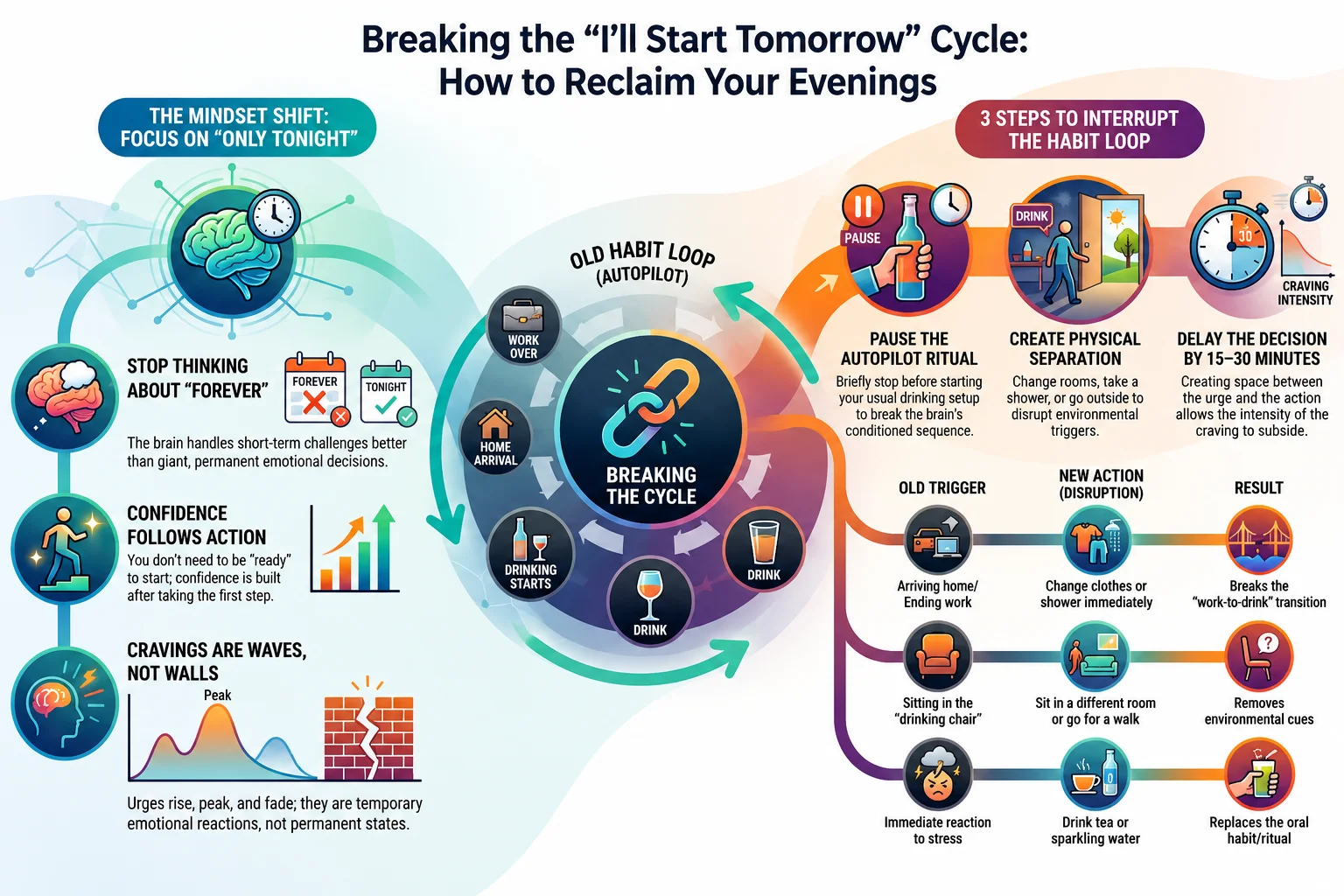
Because the brain handles short-term challenges much better than giant, permanent emotional decisions.
You do not need to solve the rest of your life right now.
You only need to break the current behavior loop.
The nightly habit often started the second I got home. I’d strip off my bra, mentally exhale from the day, and start fixing a drink.
The after-work routine had become subconsciously wired into my evening long before I actively decided whether I was going to drink or not.
This is part of what I later came to understand through The Somatic Marker Method. Certain routines, emotions, and environmental cues can become deeply associated with drinking over time, which is why nightly rationalizing can become automatic instead of fully conscious.
Understand That Cravings Rise and Fall
When the evening drinking habit feels reflexive, trying to rely on willpower alone often backfires. It helps more to create small breaks between the urge and the action.
That can happen in four simple stages:
1. Pause the Autopilot Ritual
The minute you notice yourself moving toward the usual drinking setup, pause briefly before continuing.
Even a short interruption matters psychologically because it breaks the brain’s conditioned sequence.
2. Create Physical Separation
Small physical changes can help disrupt habit momentum.
For example:
- move to a different room
- take a shower
- go outside briefly
- make tea or sparkling water
- put on comfortable clothes earlier
- turn off triggering TV shows
The goal is not perfection.
The goal is to make the evening different enough to interrupt autopilot behavior.
3. Delay the Decision Briefly
Instead of arguing with yourself about “forever,” try delaying the impulse by 15–30 minutes. If the craving starts increasing again, consciously recall a powerful somatic marker moment that reminds you why you wanted to stop in the first place.
Many cravings lose intensity when you stop reacting immediately.
4. Reduce Emotional Pressure
You do not need to solve your entire future tonight.
You are only trying to get through this evening differently than yesterday.
That mindset often feels far less mentally paralyzing.
Many people delay quitting because they fear the mental agitation will last forever once it starts.
But cravings and the emotional pull usually work more like waves.
They rise.
They peak.
Then they gradually fade again.
The problem is that most people instinctively react the moment that inner tension appears.
They never stay with the experience long enough to realize:
“This actually passes.”
That realization is powerful.
Because once you understand those reactions are temporary, they become far less frightening.
How to Stop Putting Off Quitting Drinking: Make the Evening Feel Different
One reason people keep slipping back into the same behavior is because the environment stays the same.
The same:
- chair
- TV viewing
- time of night
- kitchen habit
- stress trigger
- “reward time”
…can trigger the old behavior loop.
Even small adjustments can help disrupt the pattern psychologically.
For example:
- taking a shower earlier
- changing rooms
- going for a walk
- drinking tea
- journaling
- reading
- eating earlier
- turning off triggering shows
- sitting somewhere different
The goal is not perfection.
The goal is disruption.
Because habits thrive on repetition and predictability.
Stop Romanticizing the Drinking Part
This one matters more than many people realize.
When people delay quitting repeatedly, they are often still instinctively focusing on what alcohol “gives” them instead of what it costs them.
The brain remembers:
- relaxation
- comfort
- laughter
- escape
- reward
But often downplays:
- poor sleep
- anxiety
- guilt
- health concerns
- lost energy
- disappointment
- repeated promises
That’s why your “why I want to quit” needs to be physically strong and real — not vague or forced.
Because eventually, your reasons for changing need to outweigh the emotional attachment to the habit itself.
You Don’t Need Perfect Confidence First
A lot of people believe they need to be:
- fully ready
- completely motivated
- emotionally certain
- confident they’ll succeed
…before they can begin.
But confidence usually comes AFTER action — not before it.
Most meaningful change starts awkwardly.
Uncertainly.
Imperfectly.
Nervously.
And that is completely normal.
Waiting to magically “be ready” often becomes another form of delay.
Sometimes the real shift happens when you finally decide:
“I’m tired of negotiating with myself every night.”
Small Wins Matter More Than You Think
People often underestimate how powerful even one reclaimed evening can be.
Because every time you:
- pause
- delay the craving
- shift the evening rhythm
- get through one difficult night
- create space between emotion and action
…you begin teaching your brain something new.
You start building evidence that things really can shift.
And that slowly reshapes the relationship between:
- urge
- habit
- emotion
- action
One small win does not solve everything overnight.
But it often becomes the first real evidence that the old routine can be broken.
Learning how to stop putting off quitting drinking is not about becoming perfect overnight. It’s about understanding the emotional cycles that keep pulling you back into the same nightly cycle and beginning to interrupt them one step at a time.
Also, the reasons you want to quit need to be psychologically strong enough to carry you through those difficult periods of hesitation and making deals with yourself.
The important thing is this: every time you pause, reflect, or challenge the old behavior — even briefly — you are already beginning to loosen the old conditioning by reconnecting with the somatic markers that helped wake you up to the reality of the nightly drinking cycle.
→ Back to: Why Do I Keep Delaying Quitting Drinking?
→ Read Next: What Happens When You Finally Stop Delaying Quitting Drinking
Continue Exploring Starting to Stop
If you're ready to move beyond thinking about change and begin taking action, these articles will help you get started. Explore practical first steps, simple strategies, and gentle guidance to help you stop drinking one decision at a time.
→ Browse all Starting to Stop articles
Ready for More Support?
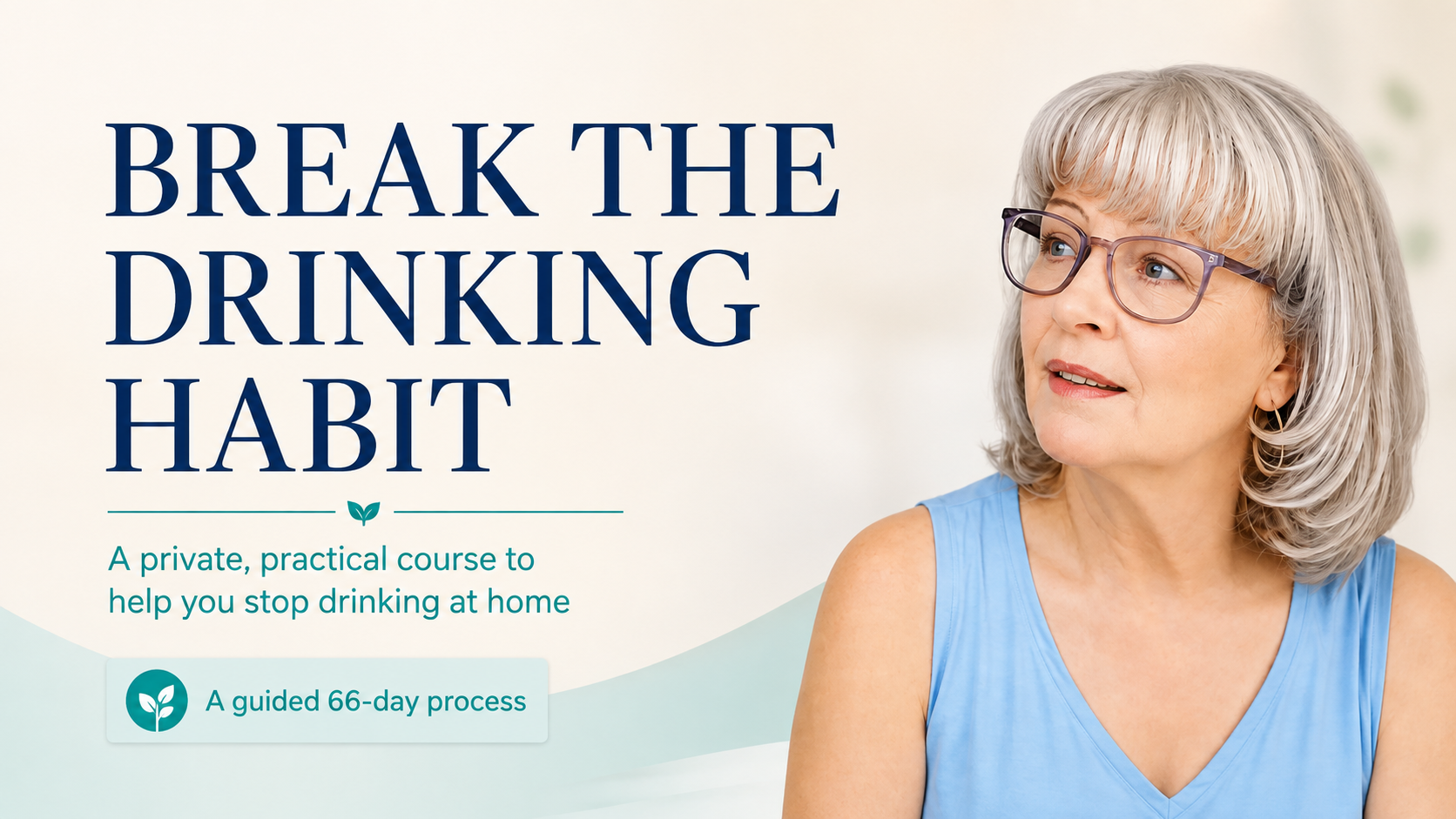
Explore Live Better Sober: Quit Drinking — Break the Alcohol Habit, a practical, shame-free 66-day course designed to help you recognize and interrupt the pattern behind your evening drinking.
➡️ Learn more about the course here: Break the Nightly Drinking Habit
Questions About Putting Off Quitting Drinking
Why do I keep saying I’ll quit tomorrow?
Why do I keep saying I’ll quit tomorrow?
Because the brain naturally avoids immediate discomfort and often chooses familiar emotional relief, even when long-term change is desired.
Do cravings last forever if I ignore them?
Do cravings last forever if I ignore them?
No. Cravings and urges usually rise and fall like waves. Learning this can help reduce fear and make them more manageable.
What’s the first step to breaking the cycle?
What’s the first step to breaking the cycle?
Focus on interrupting tonight’s familiar flow instead of thinking about forever. Small changes often create the first real momentum.
Starting to Stop
What Happens When You Stop Drinking Every Night
What happens when you stop drinking every night? Discover the real changes in sleep, mood, and energy over time.
Why Do I Always Say I’ll Quit Drinking Tomorrow?
Why do I always say I'll quit drinking tomorrow? Learn why this nightly promise keeps repeating.
Why Do I Keep Delaying Quitting Drinking?
Why do I keep delaying quitting drinking? Learn why fear, bargaining, and habit loops keep you stuck.
What Happens When You Finally Stop Delaying Quitting Drinking
What happens when you finally stop delaying quitting drinking? Discover the emotional shift that follows.
What to Do at 5 PM Instead of Drinking
Learn what to do at 5 pm when the urge to drink hits, with practical strategies to interrupt cravings, build new routines, and get through the danger hour.
Home Setup for Not Drinking at Home
Home setup for not drinking starts with removing triggers, changing routines, and making sober evenings easier to navigate.





I'm Susan, creator of Live Better Sober, and in January 2028 I'll celebrate 30 years alcohol-free.
Everything on this site comes from my own experience.
I hope that by sharing what I've learned, I can help you break the nightly drinking habit, rediscover yourself, and live better sober, too.
I'm Susan, creator of Live Better Sober, and in January 2028 I'll celebrate 30 years alcohol-free.
Everything on this site comes from my own experience.
I hope that by sharing what I've learned, I can help you break the nightly drinking habit, rediscover yourself, and live better sober, too.
Stay Connected with Live Better Sober
Get new articles, personal stories, podcasts, and practical ideas to help make sober evenings easier.
No lectures. No labels. Just useful support from someone who's been there.


NEWSLETTER
HOME ABOUT CONTACT DISCLAIMER PRIVACY TERMS
FOLLOW US ON:



|
|
|
|
|
SEARCH THIS SITE
LIVE BETTER SOBER IS BASED ON SUSAN GAST'S PERSONAL EXPERIENCE WITH QUITTING ALCOHOL AND LONG-TERM SOBRIETY.
ALL CONTENT COPYRIGHT © 2026 LIVE BETTER SOBER BY SUSAN GAST • ALL RIGHTS RESERVED REGARDLESS OF LINKS OR ATTRIBUTIONS.
POWERED BY SBI! (SOLO BUILD IT!)
