- HOME
- Susan Unscripted Videos
- You Were Drinking Before You Drank
You Were Drinking Before You Drank

Written by Susan — Quit drinking at 37 • Sober since 1998 • Sharing what actually works
Written by Susan — Quit drinking at 37 • Sober since 1998 • Sharing what actually works
Most people don't realize this: you were drinking before you drank.
How so?
Drinking begins when they pour the first drink.
I used to think that too.
I believed the battle started sometime later in the evening when the craving showed up and I found myself standing in the kitchen reaching for a bottle.
Looking back, I no longer think that's true.
Many nightly drinkers are already moving toward alcohol hours before the first drink is poured.
Not consciously.
Not deliberately.
But emotionally and mentally, the process has often already begun.
That is what this Susan Unscripted video explores.
✅ Quick Answer: What does "you were drinking before you drank" mean?
Many nightly drinkers begin mentally preparing to drink long before alcohol enters the picture. The transition from work mode into evening life often activates familiar routines, thoughts, emotions, and expectations that quietly move the brain toward drinking before the first sip ever happens.
Why The First Drink Is Often Not The Beginning
For years, I believed alcohol was the problem.
And alcohol certainly was part of the problem.
But what I eventually realized was that my evening routine had become just as powerful as the drinking itself.
Around the same time every day, the same sequence would begin.
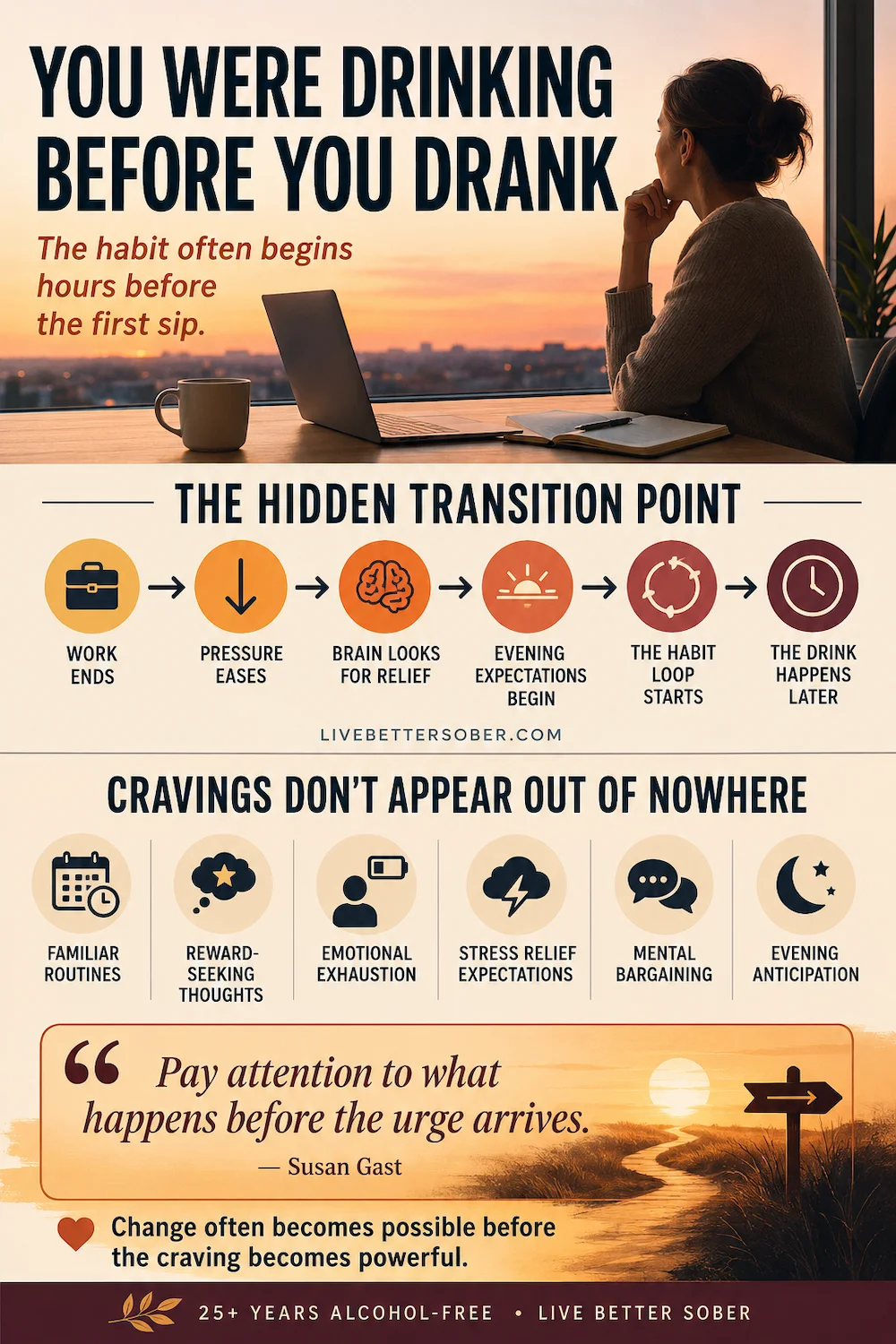
- Work would end.
- The pressure would ease.
- The brain would start looking for relief.
And without realizing it, I was already walking down a familiar path.
The drink itself simply happened later.
The Hidden Transition Point
One of the most important concepts I teach today is what I call the transition point.
This is the period between one part of your day ending and another beginning.
For many nightly drinkers, that transition happens sometime during the late afternoon or early evening.
It is the moment when responsibilities begin winding down and the brain starts looking ahead to comfort, reward, relaxation, or escape.
That does not automatically mean someone will drink.
But it often creates the conditions where drinking starts feeling increasingly attractive.
And once that process starts, the evening can unfold almost automatically.
Why The Craving Often Feels So Powerful
Many people blame themselves when cravings show up.
- They think they lack discipline.
- They think they should be stronger.
But cravings rarely appear out of nowhere.
Usually there are earlier signals.
Thoughts.
Emotions.
Routines.
Expectations.
The brain begins anticipating a familiar reward.
By the time the craving arrives, the habit loop may already be well underway.
That is one reason the urge can feel so overwhelming.
You are not only fighting a craving. You are interrupting a pattern that may have been repeated hundreds or even thousands of times.
What I Wish I Had Understood Earlier
If I could go back and tell my drinking self one thing, it would be this:
Pay attention to what happens before the urge arrives.
- Notice what changes emotionally.
- Notice what thoughts begin appearing.
- Notice when the brain starts bargaining.
- Notice when the evening starts feeling predictable.
Because that is often where the opportunity for change lives.
Not at the moment you pour the drink.
But much earlier.
The Somatic Marker Method And The Transition Point
Instead of waiting for a craving to become overwhelming, you begin noticing the early signals that precede it.
Those signals might include:
- Emotional exhaustion
- Reward-seeking thoughts
- Evening anticipation
- Stress relief expectations
- Familiar routines
- Automatic mental bargaining
Once you recognize those patterns, you have a better chance of interrupting them before they gather momentum.
That does not make change easy.
But it often makes change possible.
Why I Made This Video
I made this video because so many people believe they are failing when they cannot stop themselves once a craving becomes intense.
What I eventually learned is that the process often begins much earlier.
Understanding that changed the way I viewed my own drinking habit.
It also became one of the foundations behind how I teach habit change today.
I used to finish work and find myself thinking about that first drink long before I actually poured it. At the time, I thought I was simply looking forward to the evening. Looking back, I can see the habit had already started moving.
The goal is not simply to fight alcohol.
The goal is to understand the sequence that leads to it.
Because once you can see the pathway clearly, you finally have a chance to choose a different direction.
→ Back to: Susan Unscripted Videos on Live Better Sober
Ready for More Support?
Explore Live Better Sober: Quit Drinking — Break the Alcohol Habit, a practical, shame-free 66-day course designed to help you recognize and interrupt the pattern behind your evening drinking.
➡️ Learn more about the course here: Break the Nightly Drinking Habit
Frequently Asked Questions About You Were Drinking Before You Drank
What does "you were drinking before you drank" mean?
What does "you were drinking before you drank" mean?
It means the drinking process often begins mentally and emotionally before alcohol is involved. People often start anticipating, planning, or justifying drinking hours before the first drink is poured.
Why does the urge to drink often feel strongest in the evening?
Why does the urge to drink often feel strongest in the evening?
For many people, evenings become linked to relaxation, reward, stress relief, or routine. Over time, the brain begins expecting alcohol during that part of the day, making cravings feel stronger as evening approaches.
What is the transition point in a drinking habit?
What is the transition point in a drinking habit?
The transition point is the period between one part of the day ending and another beginning—often between work and evening life. This can be a vulnerable time because familiar thoughts, routines, and expectations start nudging the brain toward drinking.
Can changing my evening routine help reduce drinking urges?
Can changing my evening routine help reduce drinking urges?
Yes. Small changes during the transition period — such as going for a walk, changing rooms, eating earlier, calling a friend, or starting a new activity — can help interrupt the automatic pathway that often leads to drinking. This is one reason early awareness is so important when breaking a nightly drinking habit.
More Susan Unscripted Videos
Susan Unscripted Videos on Live Better Sober
Susan Unscripted videos — honest reflections about quitting drinking, habit loops, emotional clarity, and sober life.
The Real Reason I Quit Drinking
The real reason I quit drinking was exhaustion, fear, and finally realizing I could not keep living that way.
Why I Kept Wanting to Go Back to Drinking
Why I kept wanting to go back to drinking had less to do with alcohol itself and more to do with familiarity.
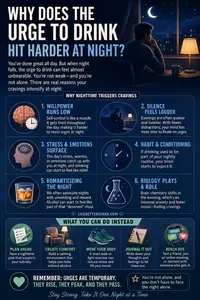
Why Does the Urge to Drink Hit Harder at Night?
Why does the urge to drink hit harder at night? Susan explains the emotional routines behind evening cravings.
You Can’t Put a Price on Sobriety
You can’t put a price on sobriety once you experience the peace, clarity, and freedom alcohol no longer controls.
Did I Inherit the Alcoholic Gene?
Did I inherit the alcoholic gene? Susan reflects on genetics, family drinking patterns, and learned behavior.
What Life Really Feels Like After Quitting Drinking
What life really feels like after quitting drinking may surprise you — especially the emotional relief.
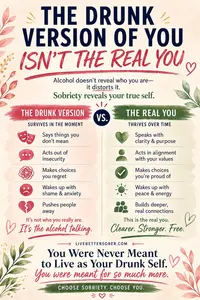
The Drunk Version of You Isn’t the Real You
The drunk version of you isn’t the real you. Susan reflects on alcohol, personality changes, regret, and emotional clarity.
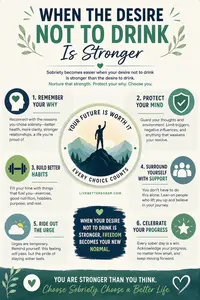
When the Desire Not to Drink Is Stronger
When the desire not to drink is stronger than the desire to drink, real change can finally begin.
What if This Time Actually Works?
What if this time actually works? Susan explores fear, relapse, emotional exhaustion, and quitting drinking with The Somatic Marker Method.

I'm Susan, creator of Live Better Sober, and in January 2028 I'll celebrate 30 years alcohol-free.
Everything on this site comes from my own experience.
I hope that by sharing what I've learned, I can help you break the nightly drinking habit, rediscover yourself, and live better sober, too.
I'm Susan, creator of Live Better Sober, and in January 2028 I'll celebrate 30 years alcohol-free.
Everything on this site comes from my own experience.
I hope that by sharing what I've learned, I can help you break the nightly drinking habit, rediscover yourself, and live better sober, too.
Stay Connected with Live Better Sober
Get new articles, personal stories, podcasts, and practical ideas to help make sober evenings easier.
No lectures. No labels. Just useful support from someone who's been there.


NEWSLETTER
HOME ABOUT CONTACT DISCLAIMER PRIVACY TERMS
FOLLOW US ON:



|
|
|
|
|
SEARCH THIS SITE
LIVE BETTER SOBER IS BASED ON SUSAN GAST'S PERSONAL EXPERIENCE WITH QUITTING ALCOHOL AND LONG-TERM SOBRIETY.
ALL CONTENT COPYRIGHT © 2026 LIVE BETTER SOBER BY SUSAN GAST • ALL RIGHTS RESERVED REGARDLESS OF LINKS OR ATTRIBUTIONS.
POWERED BY SBI! (SOLO BUILD IT!)
