- HOME
- Shame-Free First Steps
- Evening Starter Routine
Alcohol-Free Evening Starter Routine
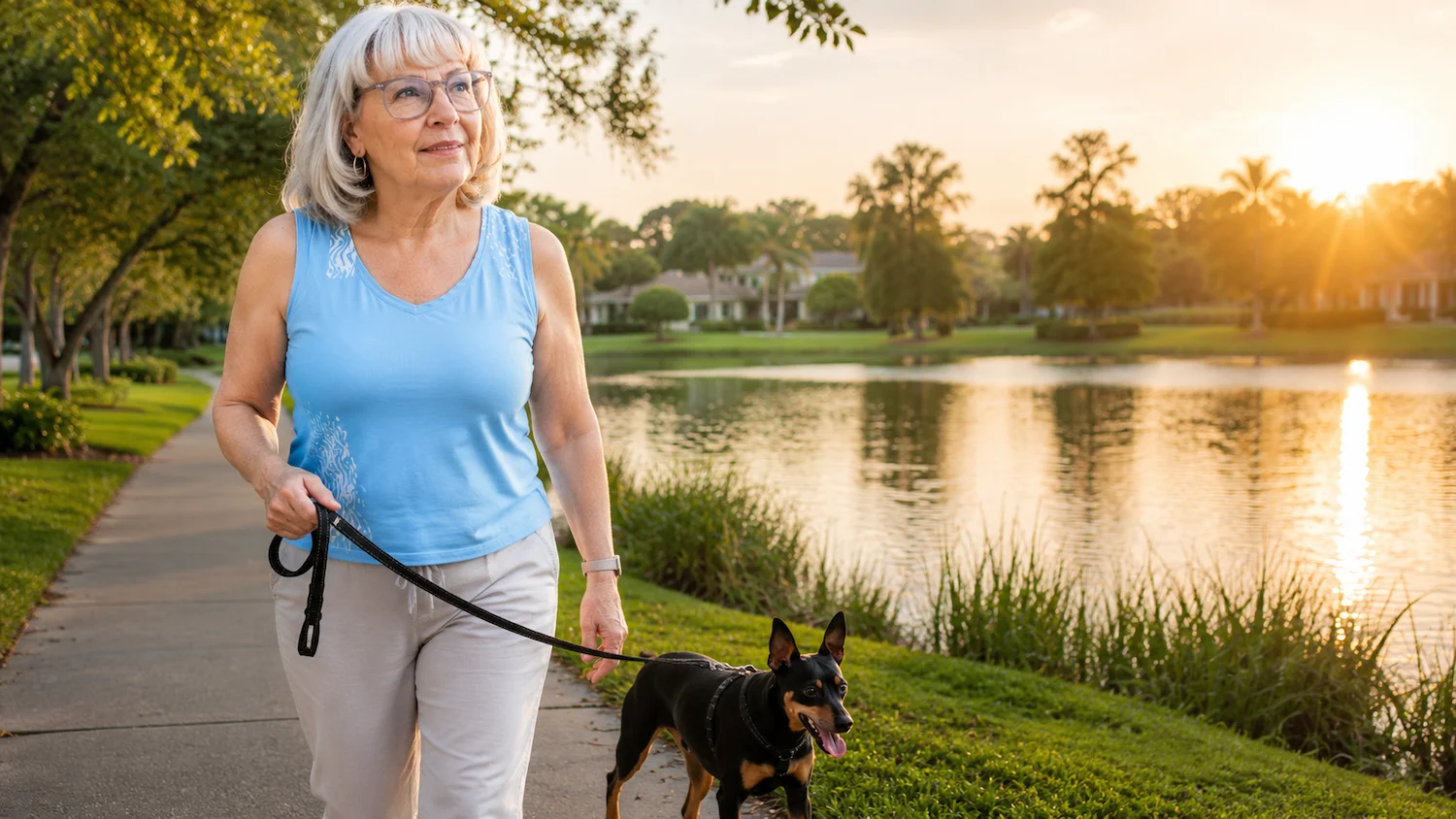
Alcohol-free evening starter routines aren't about filling every minute of your night. They're about changing what happens during the first part of the evening, when drinking usually feels automatic.
A simple routine gives your brain something familiar to follow instead of reaching for alcohol, making each evening a little easier than the last.
✅ Quick Answer: An alcohol-free evening starter routine focuses on the first 15 to 30 minutes after work or dinner.
Rather than trying to redesign your whole evening, create a short sequence you can repeat every day after work or dinner. The goal isn't to stay busy forever — it's to gently interrupt the habit loop before it takes over.
Why Evenings Feel So Automatic
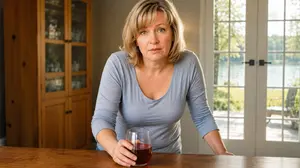
If you've been drinking every evening for months or years, it's hardly surprising that your brain starts expecting alcohol at a certain time of day. That doesn't make you weak. It makes you human.
When something happens often enough, your brain treats it as your normal routine. Work ends, you arrive home and get comfy — and pour a drink.
Before long, one event starts triggering the next almost automatically.
That's why so many women say, "I wasn't even thinking about drinking until I walked into the kitchen," or, "As soon as I got home, I found myself opening the wine without really deciding to."
The decision often feels as though it's already been made.
An alcohol-free evening starter routine begins by changing what happens during those first few minutes after work or dinner. You're gently teaching your brain a new sequence.
At first it may feel unfamiliar, but with repetition it begins to feel just as normal as the old one once did.
You're not trying to become a different person.
You're simply helping your brain learn a different way to begin the evening.
What Is an Alcohol-Free Evening Starter Routine?
An alcohol-free evening starter routine doesn't have to fill your entire evening. In fact, it shouldn't.
Think of it as your new way of getting the evening started.
Instead of automatically pouring a drink, you replace that old familiar beginning with a few simple actions that you can repeat every day.
A starter routine isn't about creating the perfect evening or keeping yourself busy every minute. It's simply about giving yourself a different place to begin.
Once you've made it through those first few minutes, you can breathe a little easier for the rest of the evening.
You're no longer reacting out of habit — you're making a conscious choice about what comes next.
Build Your Alcohol-Free Evening Starter Routine
There's no single "right" starter routine. The best one is the one you'll actually repeat.
Start by thinking about what usually happens between finishing work or dinner and pouring your first drink. That's the part of the evening we're going to replace.
Now choose three or four simple actions that feel easy to do in the same order every day.
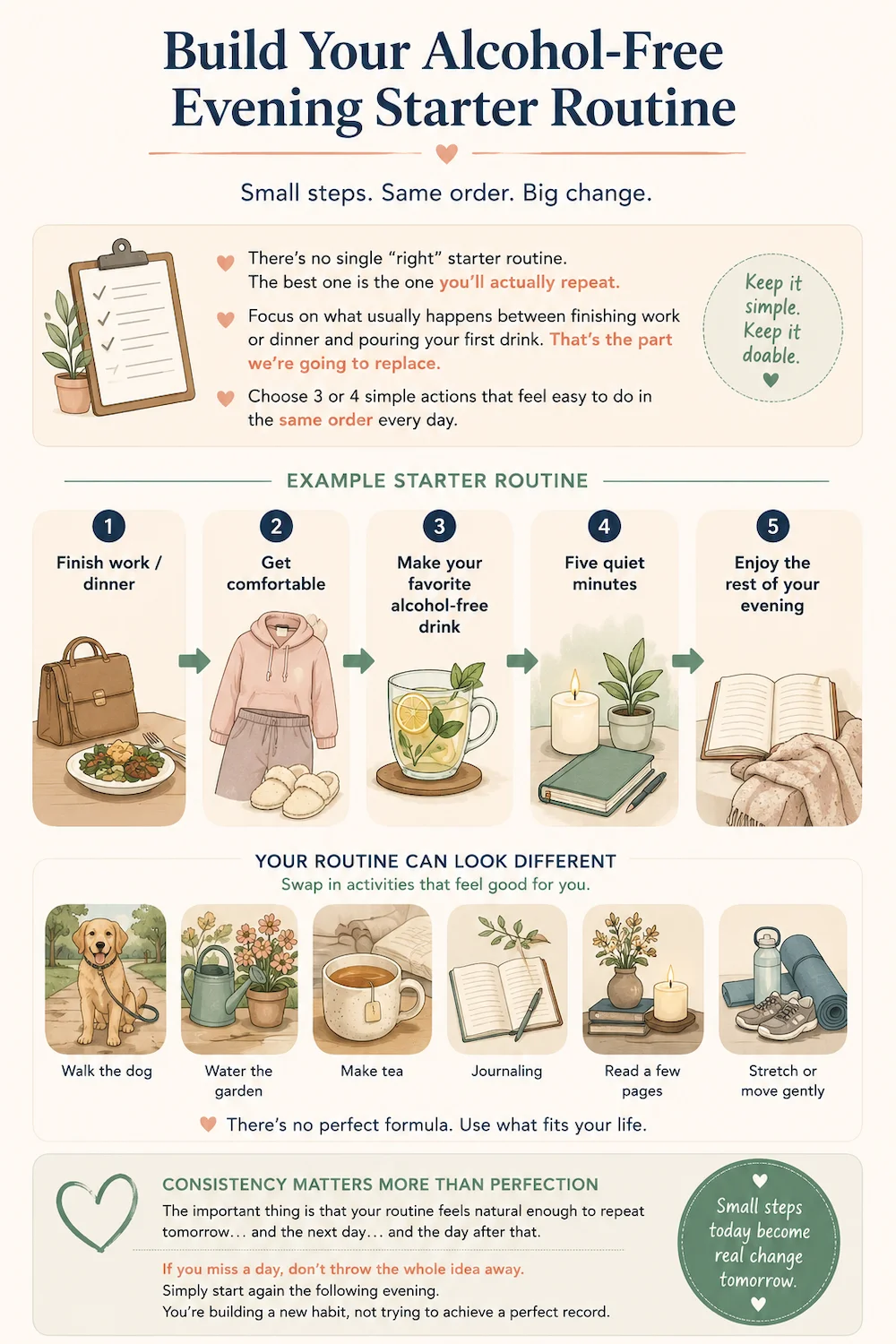
Don't worry if your routine looks different. Perhaps you'd rather take the dog for a short walk, water the garden, or spend a few minutes reading before you do anything else. There's no perfect formula.
The important thing is that your routine feels natural enough to repeat tomorrow... and the next day... and the day after that.
If you miss a day, don't throw the whole idea away. Simply start again the following evening. You're building a new habit, not trying to achieve a perfect record.
Why Simple Routines Work Better Than Big Plans
When we're determined to change, it's tempting to make big plans.
We tell ourselves we're going to:
- exercise for an hour every evening
- cook healthy meals from scratch
- meditate for thirty minutes
- read a book from cover to cover
- declutter the house
... and never think about drinking again.
It's exhausting just reading that list.
Simple routines ask much less of you.
The easier your routine is to begin, the more likely you are to repeat it tomorrow.
What If Cravings Still Show Up?
Don't assume that a craving means your starter routine isn't working.
Cravings are perfectly normal, especially while you're teaching your brain a different way to begin the evening. They don't mean you've failed, and they don't mean you have to give in to them.
When the urge appears, keep following your routine. Don't stop halfway through because your brain starts telling you that one drink won't matter.
This is the best time to use what I call a Somatic Marker Moment.
Instead of focusing on the drink you're imagining, deliberately bring to mind one of those past drinking experiences that didn't end well. Perhaps it was waking up at three o'clock in the morning full of regret. Perhaps it was another promise broken to yourself. Perhaps it was feeling anxious, ashamed, or disappointed the following day.
You're not doing this to punish yourself. You're gently reminding yourself of the whole story, not just the first sip.
I found that when I deliberately replayed one of those memories, the craving lost its appeal. It was as though my brain remembered what alcohol really brought me, rather than the comforting picture it was trying to paint in that moment.
If you'd like some help identifying your own Somatic Marker Moments, I've created a workbook that guides you through the process. Once you have a few of those memories ready to call upon, you'll have another practical tool to use whenever an urge catches you by surprise.
Don't assume that a craving means your starter routine isn't working.
Cravings are perfectly normal, especially while you're teaching your brain a different way to begin the evening. They don't mean you've failed, and they don't mean you have to give in to them.
When the urge appears, keep following your routine. Don't stop halfway through because your brain starts telling you that one drink won't matter.
This is the best time to use what I call a Somatic Marker Moment.
Instead of focusing on the drink you're imagining, deliberately bring to mind one of those past drinking experiences that didn't end well. Perhaps it was waking up at three o'clock in the morning full of regret. Perhaps it was another promise broken to yourself. Perhaps it was feeling anxious, ashamed, or disappointed the following day.
You're not doing this to punish yourself. You're gently reminding yourself of the whole story, not just the first sip.
I found that when I deliberately replayed one of those memories, the craving lost its appeal. It was as though my brain remembered what alcohol really brought me, rather than the comforting picture it was trying to paint in that moment.
If you'd like some help identifying your own Somatic Marker Moments, I've created a workbook that guides you through the process. Once you have a few of those memories ready to call upon, you'll have another practical tool to use whenever an urge catches you by surprise.
Your Evening Routine Will Evolve
Don't worry if your evening starter routine feels a little awkward at first.
Anything new usually does.
What matters isn't finding the perfect routine on day one. What matters is giving yourself permission to keep adjusting it until it feels like a natural part of your evening.
You might discover that a short walk works better than sitting quietly. You may find that reading helps you unwind more than watching television, or that making a cup of tea becomes the signal that your day is over.
That's perfectly normal.
Your routine will grow and change as you do.
The important thing is that you've broken the automatic link between finishing the day and reaching for a drink.
So, here's something simple to try this week.
Before the evening begins, decide on just three things you'll do immediately after work or dinner. Write them down and keep the same sequence every evening for the next seven days.
Don't worry about making it perfect or choosing the "right" activities.
Your only goal is to repeat the routine.
That's how new habits begin.
Continue Exploring Shame-Free First Steps
If you've started questioning your relationship with alcohol, you're already taking an important first step. These articles are designed to help you move forward without shame, pressure, or labels. Explore practical guidance, gentle encouragement, and real-life insights that can help you build confidence one sober decision at a time.
→ Browse all Shame-Free First Steps articles
Ready for More Support?
Explore Live Better Sober: Quit Drinking — Break the Alcohol Habit, a practical, shame-free 66-day course designed to help you recognize and interrupt the pattern behind your evening drinking.
➡️ Learn more about the course here: Break the Nightly Drinking Habit
Frequently Asked Questions
How long should an alcohol-free evening starter routine be?
How long should an alcohol-free evening starter routine be?
Around 15 to 30 minutes is usually enough. The purpose is simply to guide you through the most vulnerable part of the evening before old habits take over.
What should I include in my alcohol-free evening starter routine?
What should I include in my alcohol-free evening starter routine?
Choose a calming, repeatable sequence such as changing into comfortable clothes, making a favorite alcohol-free drink, reading, walking, journaling, or preparing dinner. The specific activities matter less than repeating them consistently.
What if I still feel like drinking?
What if I still feel like drinking?
That's completely normal. Cravings don't mean your routine isn't working. Continue following your planned sequence anyway, allowing the urge time to rise and pass without immediately acting on it.
Do I need to plan my entire evening?
Do I need to plan my entire evening?
No. Most people only need a reliable routine for the first part of the evening. Once you've successfully broken the automatic drinking pattern, the rest of the evening often becomes much easier.
Shame-Free First Steps
Talking Yourself Out of Drinking
Talking yourself out of drinking tonight? Learn why urges keep returning, how the internal debate works, and what helps you stay committed.
Quietly Stopping Drinking at Home
Quietly stopping drinking at home is possible for many people. Learn practical first steps, safety considerations, and how to begin.
I Already Poured a Drink. Now What?
I Already Poured a Drink. Now What? If you haven't taken a sip, learn how to pause, interrupt, and change course tonight without regret.
How Tomorrow-Me Thinking Can Help You Stay Sober Tonight
Tomorrow-me thinking is a simple way to talk yourself out of drinking tonight by focusing on how you'll feel when you wake up tomorrow.
What to Say Back to “I Deserve a Drink”
What to say back to “I deserve a drink” when the thought is defending a familiar habit loop and trying to pull you back into drinking.
Sober Curious First Steps: Where to Begin
Sober curious first steps for women wondering if it's time to rethink nightly drinking without pressure, shame, or labels.
2-Minute Walk in the Door Reset
What's a 2-minute walk in the door reset to interrupt autopilot pouring? How to interrupt the habit before you reach the fridge.



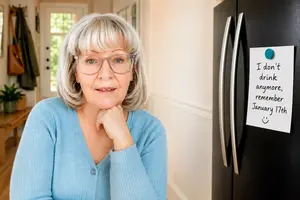

I'm Susan, creator of Live Better Sober, and in January 2028 I'll celebrate 30 years alcohol-free.
Everything on this site comes from my own experience.
I hope that by sharing what I've learned, I can help you break the nightly drinking habit, rediscover yourself, and live better sober, too.
I'm Susan, creator of Live Better Sober, and in January 2028 I'll celebrate 30 years alcohol-free.
Everything on this site comes from my own experience.
I hope that by sharing what I've learned, I can help you break the nightly drinking habit, rediscover yourself, and live better sober, too.
Stay Connected with Live Better Sober
Get new articles, personal stories, podcasts, and practical ideas to help make sober evenings easier.
No lectures. No labels. Just useful support from someone who's been there.


NEWSLETTER
HOME ABOUT CONTACT DISCLAIMER PRIVACY TERMS
FOLLOW US ON:



|
|
|
|
|
SEARCH THIS SITE
LIVE BETTER SOBER IS BASED ON SUSAN GAST'S PERSONAL EXPERIENCE WITH QUITTING ALCOHOL AND LONG-TERM SOBRIETY.
ALL CONTENT COPYRIGHT © 2026 LIVE BETTER SOBER BY SUSAN GAST • ALL RIGHTS RESERVED REGARDLESS OF LINKS OR ATTRIBUTIONS.
POWERED BY SBI! (SOLO BUILD IT!)
