- HOME
- Shame-Free First Steps
- Talking Yourself Out of Drinking
- I Deserve a Drink
What to Say Back to “I Deserve a Drink”

Written by Susan — Quit drinking at 37 • Sober since 1998 • Sharing what actually works
Written by Susan — Quit drinking at 37 • Sober since 1998 • Sharing what actually works
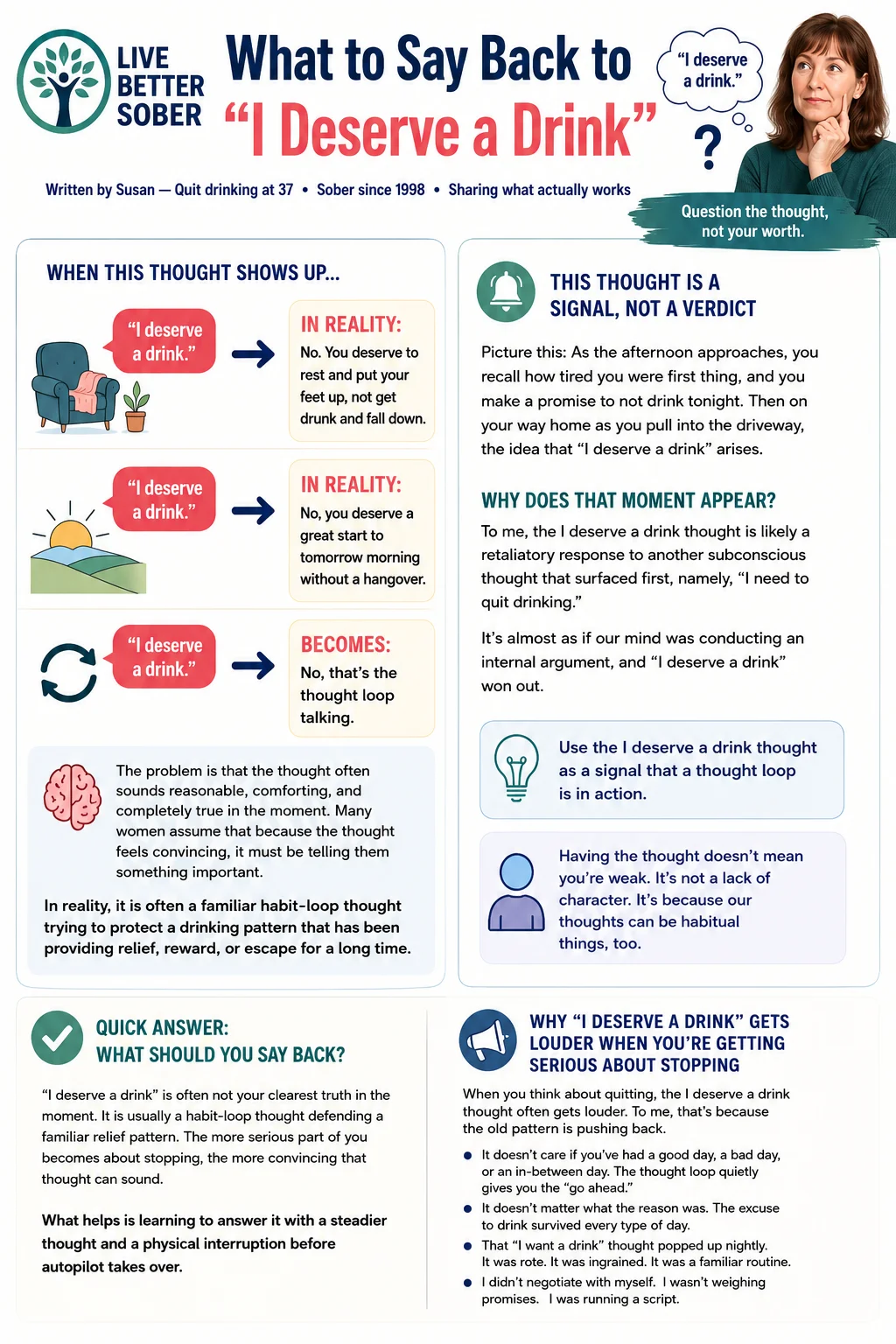
What to say back to “I deserve a drink” can feel surprisingly difficult when the thought shows up after a long day. Such as:
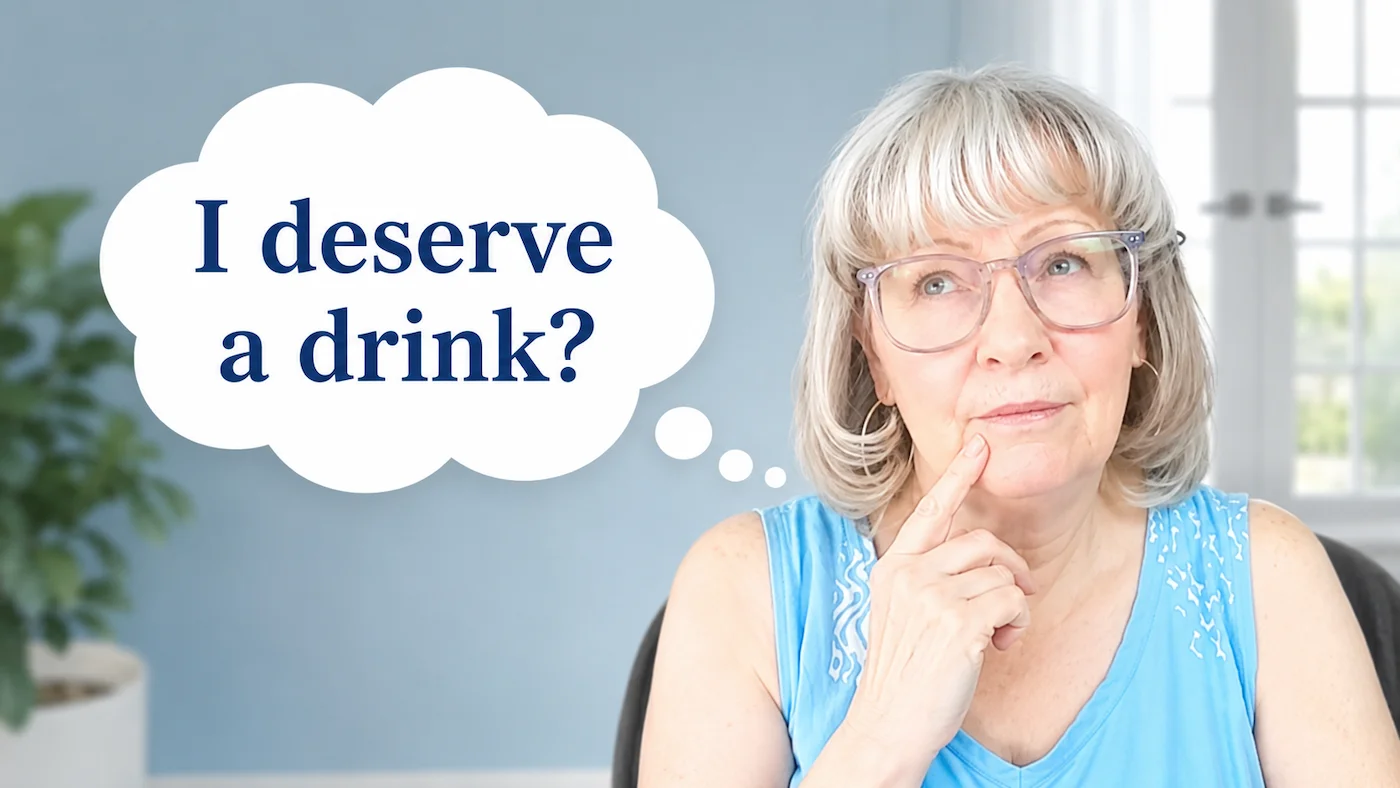
"I deserve a drink."
In reality:
No. You deserve to rest and put your feet up, not get drunk and fall down.
"I deserve a drink."
In reality:
No, you deserve a great start to tomorrow morning without a hangover.
"I deserve a drink."
Becomes:
No, that's the thought loop talking.
The problem is that the thought often sounds reasonable, comforting, and completely true in the moment. Many women assume that because the thought feels convincing, it must be telling them something important.
In reality, it is often a familiar habit-loop thought trying to protect a drinking pattern that has been providing relief, reward, or escape for a long time.
✅ Quick Answer: What should you say back to “I deserve a drink”?
“I deserve a drink” is often not your clearest truth in the moment. It is usually a habit-loop thought defending a familiar relief pattern. The more serious part of you becomes about stopping, the more convincing that thought can sound. What helps is learning to answer it with a steadier thought and a physical interruption before autopilot takes over.
This Thought Is a Signal, Not a Verdict
Picture this: As the afternoon approaches, you recall how tired you were first thing, and you make a promise to not drink tonight. Then on your way home as you pull into the driveway, the idea that "I deserve a drink" arises.
Why does that "I deserve a drink" moment appear?
To me, the I deserve a drink thought is likely a retaliatory response to another subconscious thought that surfaced first, namely, "I need to quit drinking."
It's almost as if our mind was conducting an internal argument, and "I deserve a drink" won out.
Use the I deserve a drink thought as a signal that a thought loop is in action.
Having the thought doesn't mean you're weak. It's not a lack of character. It's because our thoughts can be habitual things, too.
Why “I Deserve a Drink” Often Gets Louder When You're Getting Serious About Stopping
When you think about quitting, the I deserve a drink thought often gets louder. To me, that's because the old pattern is pushing back.
And this becomes the basis of your thought loop.
It doesn't care if you've had a good day, a bad day, or an in-between day. The thought loop quietly gives you the "go ahead."
I didn't drink just because I'd had a stellar day. I didn't drink just because the day was bad. And those ordinary days? Still a great excuse. I mention this because when we try to understand why we drink, we assume that it's because we feel good, or because we feel bad.
It doesn't matter what the reason was.
The excuse to drink survived every type of day.
Looking back, when that "I want a drink" thought popped up nightly, it was rote.
Having a drink was what I did. I didn't argue with it. It was ingrained. It was a familiar routine.
I didn't negotiate with myself. I wasn't weighing promises. I was running a script.
Why “I Deserve a Drink” Reasons Fall Flat
Towards the end of my 20-year drinking stint, I simply drank without reason. But in my early drinking days, I most definitely used more than a few reasons to drink!
How about:
"Heck, I'm tired. A few drinks will perk me right up!"
Or:
"I'm going to have a couple of drinks before this party tonight. I don't want to appear shy."
And:
"Yeah, I'll have a few drinks after work. That buzz makes me feel good!"
Date night:
"I must have a few drinks. I know it makes me feel prettier, less boring, and more easy to be around." (Operative word: easy).
Upon reflection:
Those reasons to drink were an attempt to change how I felt about myself and how I fit in. In my twenties, I was trying to gain confidence and be accepted for who I was.
I discovered I didn't find confidence in a glass of Chardonnay. Annoyingly, confidence seems to come with age.
What to Say Back Instead
When the thought "I deserve a drink" appears, try responding with one of these:
- I deserve rest, not a hangover.
- I deserve a good tomorrow morning.
- I deserve relief, but alcohol isn't my only option.
- That's the thought loop talking.
- I don't need to decide this right now.
- This feeling will pass whether I drink or not.
You do not need to believe every thought that appears in your mind. Sometimes the goal is simply to create enough space to choose differently.
What I Did When the Drinking Thought Hit
Before January 17, 1998 (go read that then come on back here), I had no real strong enough reason to resist the urge to drink. The behavior was pretty much on autopilot towards the end.
In my early days of sobriety — when that urge to drink hit — I'd acknowledge I had the thought, then ignore it.
When it crept back in, I'd bring to mind my strongest somatic marker moment. I created my moments by dredging up past bad events tied to drinking episodes that ended poorly.
They became very effective reminders of why I chose NOT to drink.
Please download my free workbook and write down your moments.
The ramifications of drinking and their outcomes were enough to quell the urge. Completely.
If you're reading this and are on the fence where quitting is concerned, try this:
When the urge hits — pause.
Give yourself sixty seconds.
- Breathe deeply.
- Clear your mind.
- Go do something different.
- Walk away from the fridge.
- Go take a shower.
Break the routine.
If the Thought Keeps Winning, It Does Not Mean You Are Failing
If that annoying thought returns and if it wins out occasionally, it does not mean you are a failure. It means that the new routine (of not drinking) hasn't fully taken root.
It needs time for the new message to take over the old "I want a drink" message. The longer you stick with something, the more it gains ground and lessens the power of the old way of thinking.
My first attempt at quitting lasted a whole nine months but I fell off the wagon. You see, I thought I'd give "near beer" a try. Thing is, the taste reminded me so much of the "real thing" that I promptly went out and bought real beer.
Yes, I felt like I'd failed forever. But it took a few more years before I reached my personal rock bottom on January 17, 1998 (scroll back up and go read the story if you didn't).
Where to Go Next
Tonight, when the “I deserve a drink” thought appears, do not try to bargain with it. Simply say, “That's the thought loop talking,” then pause for sixty seconds before taking any action.
Give yourself a chance to change direction before reaching for alcohol.
After realizing that my somatic marker moments are what worked for me, I decided to share my method with you. It's all inside my course which takes you on a journey of 66 days. Why 66 days? That's the new average for changing an old habit into a new one.
Watch: I Deserve a Drink — Oh, Really?
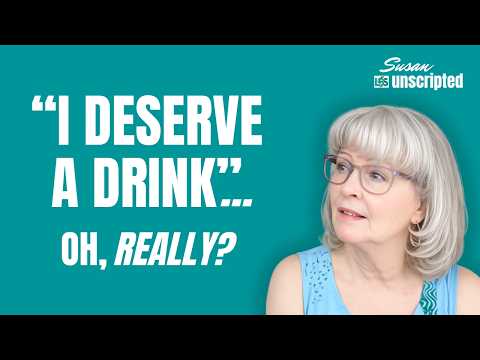
What if the thought isn't responding to your day at all?
In this short Susan Unscripted video, I explore why "I deserve a drink" showed up after good days, bad days, and ordinary days — and what changed when I finally started questioning it.
Continue Exploring Shame-Free First Steps
If you've started questioning your relationship with alcohol, you're already taking an important first step. These articles are designed to help you move forward without shame, pressure, or labels. Explore practical guidance, gentle encouragement, and real-life insights that can help you build confidence one sober decision at a time.
→ Browse all Shame-Free First Steps articles
Ready for More Support?
Explore Live Better Sober: Quit Drinking — Break the Alcohol Habit, a practical, shame-free 66-day course designed to help you recognize and interrupt the pattern behind your evening drinking.
➡️ Learn more about the course here: Break the Nightly Drinking Habit
Frequently Asked Questions
Why does “I deserve a drink” feel so true?
Why does “I deserve a drink” feel so true?
Because it usually appears alongside genuine feelings such as stress, exhaustion, frustration, or the desire for relief. The feeling is real. The conclusion that alcohol is the answer may not be.
Is “I deserve a drink” a habit-loop thought?
Is “I deserve a drink” a habit-loop thought?
Often, yes. For many people, it becomes an automatic thought linked to a familiar reward pattern. The thought helps justify repeating the same routine.
What should I tell myself instead of “I deserve a drink”?
What should I tell myself instead of “I deserve a drink”?
Try saying, “I deserve relief, but alcohol isn't my only option,” or “I deserve tomorrow morning too.” The best response is one that feels believable rather than forced.
Why does this thought get stronger when I try to quit?
Why does this thought get stronger when I try to quit?
Because the drinking routine is being challenged. As your commitment to stopping grows, the mind often produces stronger arguments for keeping the familiar routine.
Does it mean I'm failing if I keep having this thought?
Does it mean I'm failing if I keep having this thought?
No. The appearance of the thought is not failure. Learning to recognize it sooner and respond differently is part of changing the pattern.
Shame-Free First Steps
Talking Yourself Out of Drinking
Talking yourself out of drinking tonight? Learn why urges keep returning, how the internal debate works, and what helps you stay committed.
Quietly Stopping Drinking at Home
Quietly stopping drinking at home is possible for many people. Learn practical first steps, safety considerations, and how to begin.
I Already Poured a Drink. Now What?
I Already Poured a Drink. Now What? If you haven't taken a sip, learn how to pause, interrupt, and change course tonight without regret.
How Tomorrow-Me Thinking Can Help You Stay Sober Tonight
Tomorrow-me thinking is a simple way to talk yourself out of drinking tonight by focusing on how you'll feel when you wake up tomorrow.
Sober Curious First Steps: Where to Begin
Sober curious first steps for women wondering if it's time to rethink nightly drinking without pressure, shame, or labels.
Alcohol-Free Evening Starter Routine
Alcohol-free evening starter routine to help you replace nightly drinking with a calming habit that actually sticks.
2-Minute Walk in the Door Reset
What's a 2-minute walk in the door reset to interrupt autopilot pouring? How to interrupt the habit before you reach the fridge.







I'm Susan, creator of Live Better Sober, and in January 2028 I'll celebrate 30 years alcohol-free.
Everything on this site comes from my own experience.
I hope that by sharing what I've learned, I can help you break the nightly drinking habit, rediscover yourself, and live better sober, too.
I'm Susan, creator of Live Better Sober, and in January 2028 I'll celebrate 30 years alcohol-free.
Everything on this site comes from my own experience.
I hope that by sharing what I've learned, I can help you break the nightly drinking habit, rediscover yourself, and live better sober, too.
Stay Connected with Live Better Sober
Get new articles, personal stories, podcasts, and practical ideas to help make sober evenings easier.
No lectures. No labels. Just useful support from someone who's been there.


NEWSLETTER
HOME ABOUT CONTACT DISCLAIMER PRIVACY TERMS
FOLLOW US ON:



|
|
|
|
|
SEARCH THIS SITE
LIVE BETTER SOBER IS BASED ON SUSAN GAST'S PERSONAL EXPERIENCE WITH QUITTING ALCOHOL AND LONG-TERM SOBRIETY.
ALL CONTENT COPYRIGHT © 2026 LIVE BETTER SOBER BY SUSAN GAST • ALL RIGHTS RESERVED REGARDLESS OF LINKS OR ATTRIBUTIONS.
POWERED BY SBI! (SOLO BUILD IT!)
