- HOME
- Shame-Free First Steps
- Quietly Stop Drinking
Quietly Stopping Drinking at Home


Written by Susan — Quit drinking at 37 • Sober since 1998 • Sharing what actually works
Written by Susan — Quit drinking at 37 • Sober since 1998 • Sharing what actually works
Quietly stopping drinking at home often begins much more simply than people imagine. There is no requirement to make a public announcement, tell everyone you know, or wait for some dramatic turning point.
Sometimes there comes a quiet moment when the nightly drinking habit no longer feels worth it. The poor sleep, wasted evenings, and constant promises to "cut back tomorrow" begin to wear thin.
If that's where you are today, the good news is that you can start making positive changes privately while still taking sensible steps to stay safe and supported.
✅ Quick Answer: Can you quietly stop drinking at home?
A surprising number of successful alcohol-free journeys begin privately at home. The important distinction is that quitting quietly is not the same as quitting unsafely. For some people, home-based change is entirely appropriate. For others, especially heavy daily drinkers, medical guidance may be needed to manage withdrawal safely.
Can You Quietly Stop Drinking at Home?
Yes, absolutely. I'm living proof of that.
Despite what movies, television programs, and social media might suggest, quitting drinking does not always begin with a dramatic announcement or a trip to rehab.
Often, it starts with a simple realization that something needs to change. You become tired of spending every evening drinking, tired of feeling sluggish the next day, or tired of wondering whether alcohol is slowly becoming too important and taking over parts of your life.
Quietly stopping drinking at home simply means you are making a personal decision without turning it into a public event. There is nothing wrong with that. In fact, some find it easier to focus on the change itself when they are not worrying about what everyone else thinks. For me? I attended one AA Meeting, and it wasn't for me. I didn't like having to stand up, state my first name, and admit "I'm an alcoholic."
That said, quietly stopping drinking should not mean ignoring potential health concerns or pretending everything is fine if you are struggling. Privacy can be helpful. Isolation is something different.
Quietly Stopping Drinking at Home Does Not Mean Doing It Alone
One of the biggest misconceptions about quitting drinking is that you must either tell everyone or tell no one. In reality, there is a middle ground.
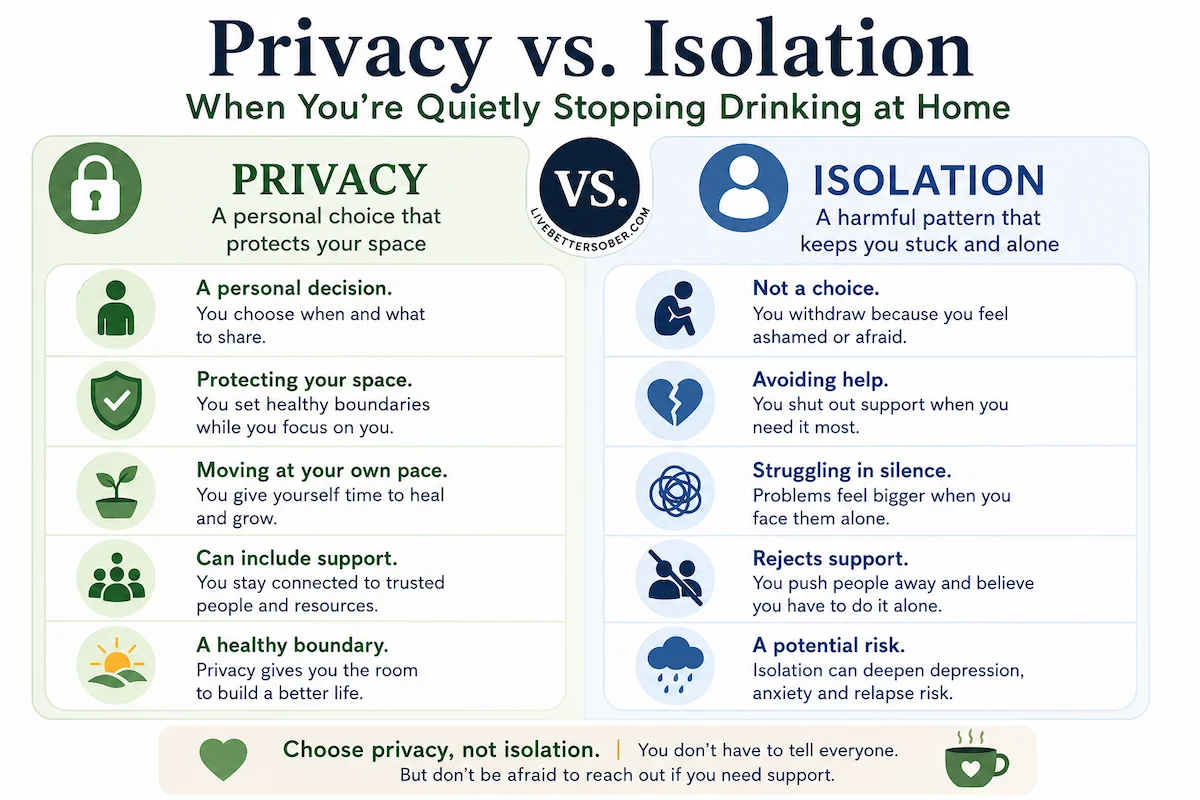
You may decide not to announce your plans to family, friends, coworkers, or social media. That is entirely your choice. However, support can still be valuable.
Support might come from a trusted friend, a spouse, a doctor, a therapist, an online community, a course, or even a book that helps you understand what you are experiencing. The goal is not to create an audience. The goal is to have access to guidance and encouragement if you need it.
It's perfectly reasonable to keep the early stages of change private. What matters is knowing that help exists if you need it and being willing to reach out if things become difficult.
Know When Home-Based Quitting May Not Be Safe
This is an important point.
For some, quietly stopping drinking at home is a perfectly reasonable approach. For others, especially those who drink heavily every day, suddenly stopping alcohol can create serious withdrawal symptoms.
Alcohol withdrawal can range from mild discomfort to medical emergencies. Symptoms may include shaking, sweating, anxiety, nausea, rapid heartbeat, confusion, or seizures in severe cases.
If you have been drinking heavily for a long time, have experienced withdrawal before, or are unsure whether it is safe for you to stop suddenly, speak with a healthcare professional before making major changes.
There is no shame in getting medical advice. In fact, it is one of the smartest things you can do.
What to Do During Your First Alcohol-Free Evenings
For most nightly drinkers, the hardest part of stopping drinking is not the morning. It is the evening.
Alcohol often becomes attached to routines.
- The end of the workday
- Making dinner
- Watching television
- Sitting on the patio
- Relaxing after a stressful day
When alcohol disappears, the routine remains.
This is why replacing the habit is often more effective than simply removing it. Plan something for your usual drinking time. Take a walk. Read a book. Watch a favorite program. Work on a hobby. Call a friend. Prepare a nice hot cup of soothing tea.
You do not need to redesign your entire life overnight. Your goal is simply to get through tonight without drinking. Tomorrow can take care of itself.
What If You Don't Want to Tell Anyone Yet?
It's not always the drinking itself that worries people. Sometimes it's how family members, friends, or coworkers might react when they decide to stop drinking.
- Will people ask questions?
- Will they think something is wrong?
- Will they pressure you to have "just one"?
The truth is that you do not owe anyone a detailed explanation.
Simple responses are often enough.
"I'm taking a break for a while."
"I'm focusing on my health."
"I just don't feel like drinking tonight."
Most people are far more interested in their own lives than what's in your glass.
If and when you choose to tell others more, that decision belongs to you. There is no rule that says your recovery journey must be announced to the world.
A Quiet Decision Can Still Change Your Life
One of the most powerful things about personal change is that it often begins in private.
Nobody applauds the first evening you choose not to drink. Nobody hands out trophies for getting through a difficult Friday night. Yet those quiet moments matter.
Every alcohol-free evening builds confidence. Every good decision strengthens the next one. What feels impossible today can become surprisingly normal over time.
I did not quit drinking because of a dramatic public moment. I simply reached a point where I knew something needed to change. Looking back, that quiet decision ended up changing the course of my life.
Your journey may begin just as quietly.
That does not make it any less important.
If you'd like to learn more about my own journey, you can read my story about why I stopped drinking at 37. My decision wasn't dramatic or public. It started with the growing realization that I couldn't continue living the way I was.
Continue Exploring Shame-Free First Steps
If you've started questioning your relationship with alcohol, you're already taking an important first step. These articles are designed to help you move forward without shame, pressure, or labels. Explore practical guidance, gentle encouragement, and real-life insights that can help you build confidence one sober decision at a time.
→ Browse all Shame-Free First Steps articles
Ready for More Support?
Explore Live Better Sober: Quit Drinking — Break the Alcohol Habit, a practical, shame-free 66-day course designed to help you recognize and interrupt the pattern behind your evening drinking.
➡️ Learn more about the course here: Break the Nightly Drinking Habit
Frequently Asked Questions
Can I stop drinking without telling anyone?
Can I stop drinking without telling anyone?
Yes. Starting privately is often the most comfortable approach. However, if withdrawal symptoms are a concern, it is wise to involve a healthcare professional regardless of whether you tell friends or family.
Is quietly stopping drinking at home safe?
Is quietly stopping drinking at home safe?
It depends on your drinking history. For some people, home-based quitting is safe. For heavy daily drinkers, alcohol withdrawal can be serious and medical advice is recommended before stopping.
What should I do instead of drinking at night?
What should I do instead of drinking at night?
Focus on replacing the habit rather than simply removing it. Evening walks, hobbies, reading, podcasts, movies, journaling, or preparing a favorite alcohol-free drink can help bridge the transition.
Do I have to join a support group to quit drinking?
Do I have to join a support group to quit drinking?
No. People stop drinking in many different ways. Some prefer support groups, while others use books, courses, therapy, online communities, or self-directed approaches.
What if I change my mind after a few days?
What if I change my mind after a few days?
That is common. Most people experience moments of doubt. Rather than viewing it as failure, treat it as information about your triggers and continue learning from the experience.
Shame-Free First Steps
Talking Yourself Out of Drinking
Talking yourself out of drinking tonight? Learn why urges keep returning, how the internal debate works, and what helps you stay committed.
I Already Poured a Drink. Now What?
I Already Poured a Drink. Now What? If you haven't taken a sip, learn how to pause, interrupt, and change course tonight without regret.
How Tomorrow-Me Thinking Can Help You Stay Sober Tonight
Tomorrow-me thinking is a simple way to talk yourself out of drinking tonight by focusing on how you'll feel when you wake up tomorrow.
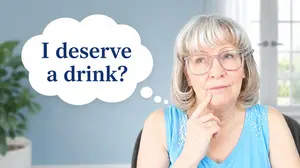
What to Say Back to “I Deserve a Drink”
What to say back to “I deserve a drink” when the thought is defending a familiar habit loop and trying to pull you back into drinking.
Sober Curious First Steps: Where to Begin
Sober curious first steps for women wondering if it's time to rethink nightly drinking without pressure, shame, or labels.
Alcohol-Free Evening Starter Routine
Alcohol-free evening starter routine to help you replace nightly drinking with a calming habit that actually sticks.
2-Minute Walk in the Door Reset
What's a 2-minute walk in the door reset to interrupt autopilot pouring? How to interrupt the habit before you reach the fridge.

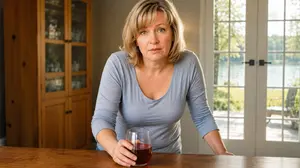


I'm Susan, creator of Live Better Sober, and in January 2028 I'll celebrate 30 years alcohol-free.
Everything on this site comes from my own experience.
I hope that by sharing what I've learned, I can help you break the nightly drinking habit, rediscover yourself, and live better sober, too.
I'm Susan, creator of Live Better Sober, and in January 2028 I'll celebrate 30 years alcohol-free.
Everything on this site comes from my own experience.
I hope that by sharing what I've learned, I can help you break the nightly drinking habit, rediscover yourself, and live better sober, too.
Stay Connected with Live Better Sober
Get new articles, personal stories, podcasts, and practical ideas to help make sober evenings easier.
No lectures. No labels. Just useful support from someone who's been there.


NEWSLETTER
HOME ABOUT CONTACT DISCLAIMER PRIVACY TERMS
FOLLOW US ON:



|
|
|
|
|
SEARCH THIS SITE
LIVE BETTER SOBER IS BASED ON SUSAN GAST'S PERSONAL EXPERIENCE WITH QUITTING ALCOHOL AND LONG-TERM SOBRIETY.
ALL CONTENT COPYRIGHT © 2026 LIVE BETTER SOBER BY SUSAN GAST • ALL RIGHTS RESERVED REGARDLESS OF LINKS OR ATTRIBUTIONS.
POWERED BY SBI! (SOLO BUILD IT!)
