- HOME
- Starting to Stop
- What to Do at 5 pm
What to Do at 5 PM Instead of Drinking


Written by Susan — Quit drinking at 37 • Sober since 1998 • Sharing what actually works
Written by Susan — Quit drinking at 37 • Sober since 1998 • Sharing what actually works
If you've been searching for what to do at 5 pm because that's when the urge to drink shows up, you're not alone. For many people, 5 pm becomes the moment when the workday ends, responsibilities slow down, and the drinking habit quietly begins nudging for attention.
The important thing to understand is that 5 pm itself is not the problem. The problem is you've learned to associate that time of day with alcohol. The good news is that habits can be changed. And often, the first step is much simpler than people expect.
✅ Quick Answer: What to do at 5 pm when drinking feels automatic?
At 5 pm, do one simple thing before the drinking habit has time to take over. Change your location, pour a non-alcoholic drink, start dinner, step outside, or text someone supportive. The goal is not to fix your whole life in one evening. The goal is to interrupt the automatic "wine o'clock" pattern long enough to choose something better.
A Simple 5 PM Sober Plan for Tonight
If you're wondering what to do at 5 pm tonight, try this simple plan.
At 4:55 pm:
Prepare your alcohol-free drink.
At 5:00 pm:
Leave the room where you usually pour alcohol.
At 5:05 pm:
Start dinner, go for a walk, or begin another planned activity.
At 5:15 pm:
Eat something healthy if you're hungry.
At 5:30 pm:
Notice whether the urge has changed.
Most cravings rise, peak, and fade on their own when you stop arguing with them.
You don't have to win the rest of your life tonight. You only have to get through this evening.
Then repeat the process tomorrow.
Each successful evening builds confidence for the next one.
Why 5 PM Can Feel So Hard When You’re Trying Not to Drink
It's easy to assume that if alcohol is on your mind at 5 pm, something must be wrong with you.
Usually, that's not true.
What often happens is that you've developed a predictable routine. Day after day, week after week, the same sequence repeats itself:
- Work finishes.
- Dinner preparations begin.
- The house gets quiet.
- A drink appears.
Eventually, the expectation of alcohol starts showing up before the bottle is even opened.
That expectation can create restlessness, anticipation, and thoughts about drinking. It can feel like a craving, but much of it is actually a learned habit loop.
This is why the desire for a drink often shows up at almost the same time every evening.
This isn't a moral judgment about you.
It's a response pattern that's been repeated many times before.
When I quit drinking at 37, I didn't overcome the evening urge by relying on willpower alone. I reminded myself exactly why I had quit.
Whenever alcohol started looking attractive, I deliberately recalled the reality of where drinking had taken me. That memory became stronger than the urge itself.
Today I call that a Somatic Marker Moment—a deliberate reminder that helps interrupt the automatic pull toward alcohol. A Somatic Marker Moment is a deliberate reminder of where drinking really leads, helping you remember the truth before the urge rewrites the story.
What to Do at 5 PM When the Urge Hits
When the urge first appears, don't sit there debating with yourself. The longer you negotiate, the stronger the urge often feels.
Instead, take immediate action.
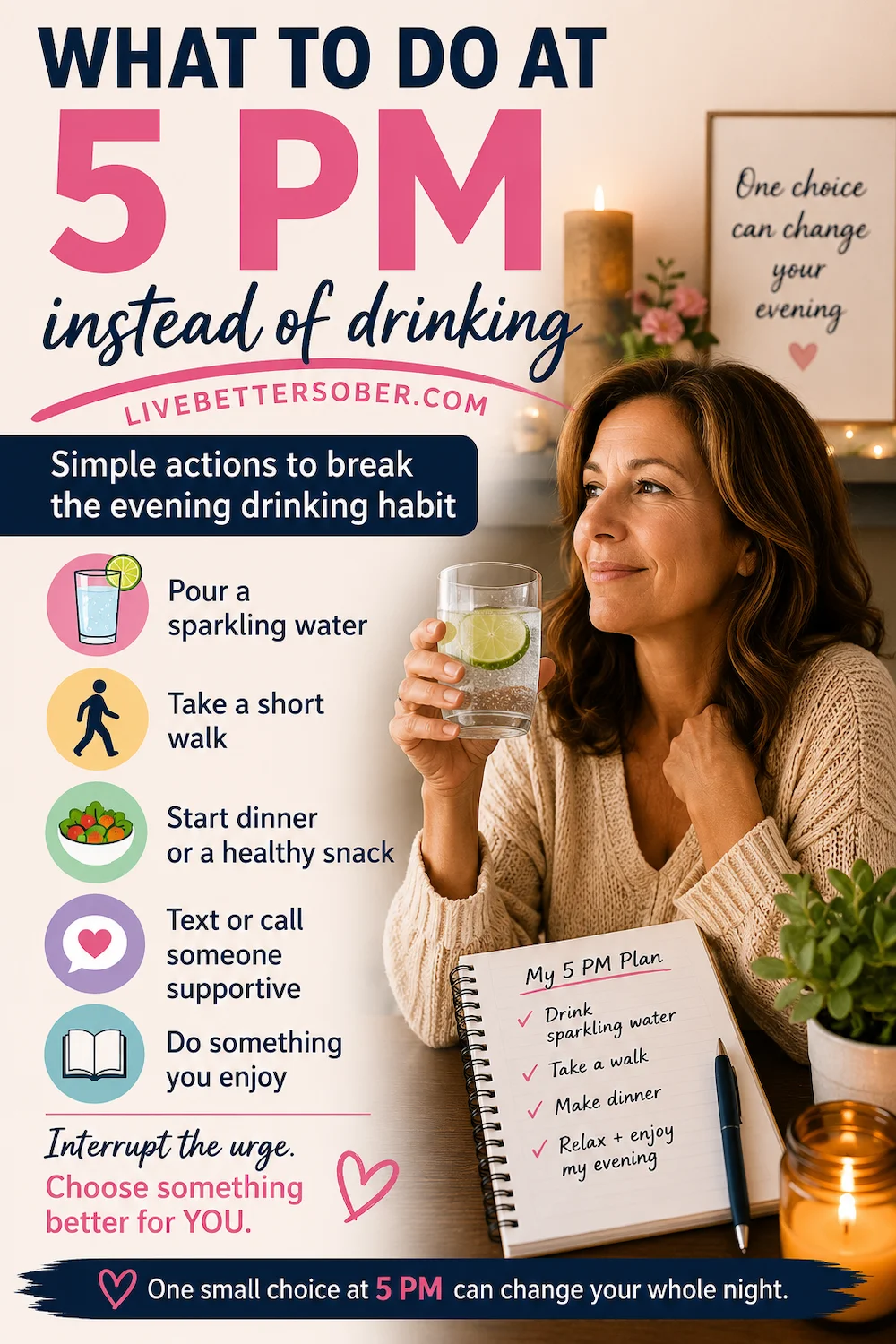
Some simple options include:
- Pour a large glass of sparkling water.
- Make a cup of tea or coffee.
- Start preparing dinner.
- Take a quick walk around the block.
- Step outside into fresh air.
- Call or text a supportive friend.
- Take a shower.
- Put on music, a podcast, or an audiobook.
- Tidy one small area of the house.
- Begin a hobby that keeps your hands busy.
- Revisit this website (Live Better Sober)!
The specific activity matters less than the interruption itself.
You're creating a gap between the urge and the old drinking routine.
Even ten or fifteen minutes can be enough to reduce the intensity of the craving.
Create a New 5 PM Ritual Before the Old One Starts
One of the most effective ways to change a habit is to replace it with another routine.
Most people focus on removing alcohol.
A better strategy is often adding something new.
Think about what currently happens at 5 pm.
If your usual routine is pouring wine while making dinner, create a different routine that begins first.
Maybe now it could be:
- Sparkling water with lime.
- A ten-minute walk.
- Changing into comfortable clothes.
- Listening to your favorite podcast.
- Preparing a healthy snack.
The key is consistency.
When you repeat the same replacement action often enough, the new routine starts becoming associated with that time of day instead of the old one.
Over time, the new ritual begins to feel normal.
When 5 PM Feels Boring, Empty, or Unfair
One surprise for many women is realizing that alcohol wasn't just a drink.
It was also an event. It had become part of the evening experience.
It marked the transition between work and relaxation.
Without it, evenings can initially feel flat.
You might feel bored.
You might feel restless.
You might even think life seems less enjoyable.
This is a common experience.
For years, alcohol may have been providing a predictable reward signal. When that reward disappears, it takes time to adjust. That adjustment period does not last forever.
As weeks and months pass, many people find themselves enjoying things they barely noticed before.
- Conversations become more meaningful.
- Sleep improves.
- Mornings feel easier.
- Energy returns.
The sense of peace that develops often feels far more satisfying than the brief buzz alcohol once provided.
Your 5 PM Challenge for Tonight
Tonight, choose your 5 pm replacement before 5 pm arrives.
Pick one simple action:
Make a cup of tea, sparkling water, or another alcohol-free drink.
Start dinner immediately.
Go outside for ten minutes.
Take a shower.
Text someone and say, “I’m getting through my danger hour.”
Do not wait until the urge is already loud. Your job is to interrupt the pattern early.
Final Thoughts
If you've been searching for what to do at 5 pm because that's when drinking feels hardest, remember this:
The urge is not a command.
It's not proof that you need alcohol.
And it's not proof that you've failed.
It's a familiar signal you've learned to recognize.
Every evening that you interrupt the pattern, you're reinforcing a new way of responding.
One small action at 5 pm can eventually become the beginning of a completely different life.
If this 5 pm plan helps but you find yourself facing the same struggle night after night, a more structured approach may help.
A quick note: If you drink heavily every day or are concerned about withdrawal symptoms, speak with a healthcare professional before stopping suddenly.
Continue Exploring Starting to Stop
If you're ready to move beyond thinking about change and begin taking action, these articles will help you get started. Explore practical first steps, simple strategies, and gentle guidance to help you stop drinking one decision at a time.
→ Browse all Starting to Stop articles
Ready for More Support?
Explore Live Better Sober: Quit Drinking — Break the Alcohol Habit, a practical, shame-free 66-day course designed to help you recognize and interrupt the pattern behind your evening drinking.
➡️ Learn more about the course here: Break the Nightly Drinking Habit
Frequently Asked Questions
Why do I always want a drink at 5 pm?
Why do I always want a drink at 5 pm?
For many women, 5 pm becomes linked to drinking through repetition. After months or years of following the same routine, the mind begins expecting alcohol at that time of day. The urge often has more to do with habit and association than a genuine need for a drink.
What is the best thing to do when a 5 pm craving hits?
What is the best thing to do when a 5 pm craving hits?
Take action immediately instead of debating with yourself. Pour an alcohol-free drink, go for a short walk, start dinner, call a friend, or use a Somatic Marker Moment to remind yourself why you chose to quit. The goal is to interrupt the automatic pattern before it gains momentum.
How long does a craving usually last?
How long does a craving usually last?
Most cravings are temporary. They often rise, peak, and fade within 15 to 30 minutes, especially when you redirect your attention elsewhere. While cravings can feel overwhelming in the moment, they rarely stay at the same intensity for long.
Starting to Stop
What Happens When You Stop Drinking Every Night
What happens when you stop drinking every night? Discover the real changes in sleep, mood, and energy over time.
Why Do I Always Say I’ll Quit Drinking Tomorrow?
Why do I always say I'll quit drinking tomorrow? Learn why this nightly promise keeps repeating.
Why Do I Keep Delaying Quitting Drinking?
Why do I keep delaying quitting drinking? Learn why fear, bargaining, and habit loops keep you stuck.
How to Stop Putting Off Quitting Drinking
How to stop putting off quitting drinking and break the “I’ll start tomorrow” cycle for good.
What Happens When You Finally Stop Delaying Quitting Drinking
What happens when you finally stop delaying quitting drinking? Discover the emotional shift that follows.
Home Setup for Not Drinking at Home
Home setup for not drinking starts with removing triggers, changing routines, and making sober evenings easier to navigate.


I'm Susan, creator of Live Better Sober, and in January 2028 I'll celebrate 30 years alcohol-free.
Everything on this site comes from my own experience.
I hope that by sharing what I've learned, I can help you break the nightly drinking habit, rediscover yourself, and live better sober, too.
I'm Susan, creator of Live Better Sober, and in January 2028 I'll celebrate 30 years alcohol-free.
Everything on this site comes from my own experience.
I hope that by sharing what I've learned, I can help you break the nightly drinking habit, rediscover yourself, and live better sober, too.
Stay Connected with Live Better Sober
Get new articles, personal stories, podcasts, and practical ideas to help make sober evenings easier.
No lectures. No labels. Just useful support from someone who's been there.


NEWSLETTER
HOME ABOUT CONTACT DISCLAIMER PRIVACY TERMS
FOLLOW US ON:



|
|
|
|
|
SEARCH THIS SITE
LIVE BETTER SOBER IS BASED ON SUSAN GAST'S PERSONAL EXPERIENCE WITH QUITTING ALCOHOL AND LONG-TERM SOBRIETY.
ALL CONTENT COPYRIGHT © 2026 LIVE BETTER SOBER BY SUSAN GAST • ALL RIGHTS RESERVED REGARDLESS OF LINKS OR ATTRIBUTIONS.
POWERED BY SBI! (SOLO BUILD IT!)
