- HOME
- Starting to Stop
- Home Setup
Home Setup for Not Drinking at Home
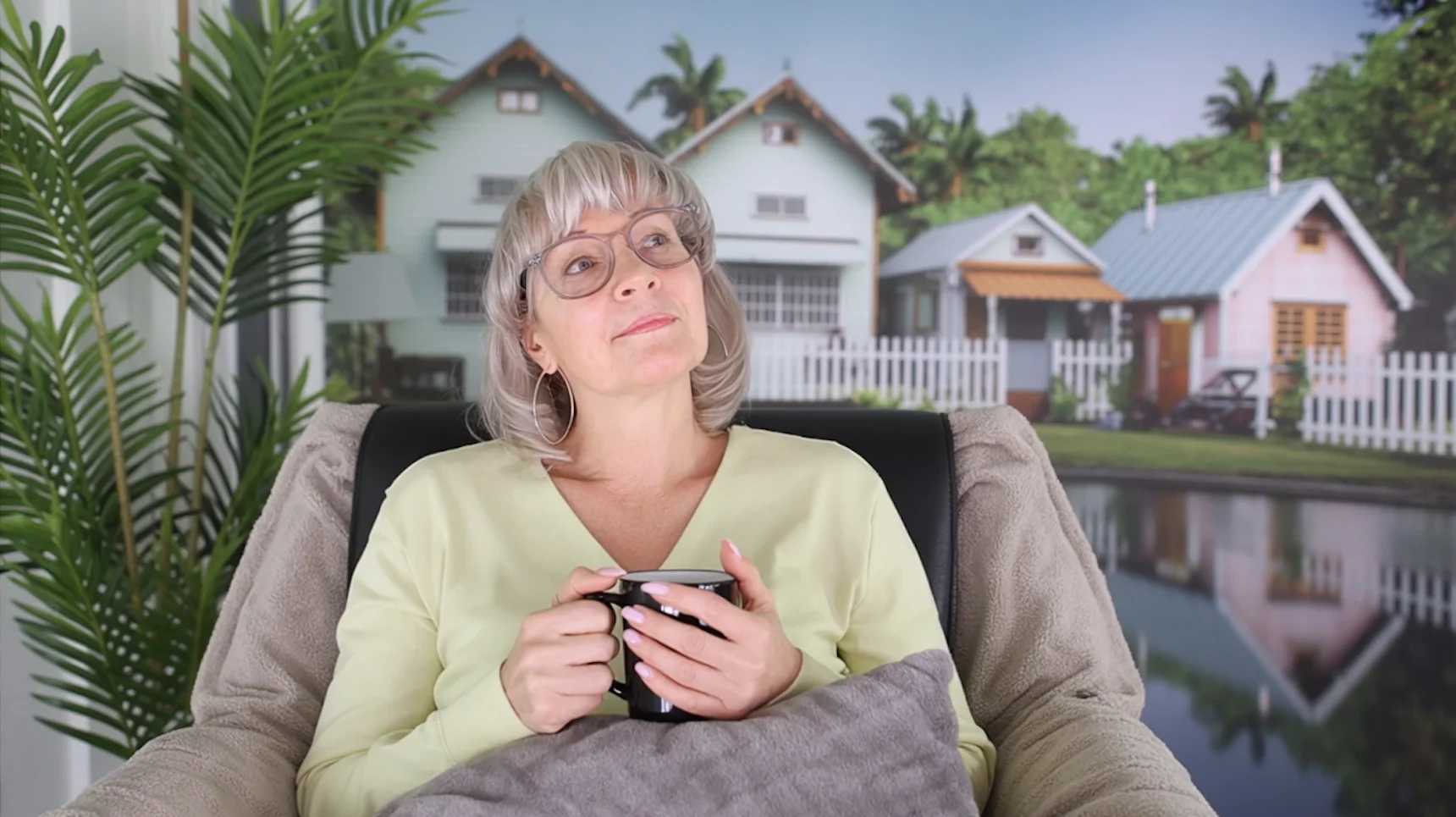

Written by Susan — Quit drinking at 37 • Sober since 1998 • Sharing what actually works
Written by Susan — Quit drinking at 37 • Sober since 1998 • Sharing what actually works
Thinking about your home setup for not drinking can make a bigger difference than most women think. Having a set of pretty wine glasses and decanters sitting in the glass-front cabinet can be a constant reminder of your "drinking days."
✅ Quick Answer: What is a home setup for not drinking?
It simply means creating an environment that supports the version of who you want to be by removing alcohol-related triggers and changing evening routines. Small changes around your home can make not drinking feel easier and more automatic.
Why Your Home May Be Keeping the Habit Alive
Humans love routine, at least I do! It keeps me grounded and I feel productive on those "blah days."
We women love nesting. We plump the cushions, put fresh flowers in vases, and set the scene that is pleasing to us. It makes us happy.
Thing is, when you arrive home from work — or shopping! — and you drop the car keys on the buffet table top, it's all too easy to catch a glimpse of glasses and bottles of wine.
Before you know it, your hand reaches for a glass. Half an hour later, you're refilling it.
Coming home to the same home setup day after day builds a sense of safety. It's reliably the same. It's comfortable.
The problem is, your home as it is right now may be supporting your drinking habit without you even realizing it.
Home Setup for Not Drinking Starts With Removing Triggers
Back in my "drinking days," I had the obligatory wrought-iron wine rack on the kitchen counter. I even bought a small wine fridge. Seeing it stacked meant I was ready to party!
I especially loved sitting outside on the patio with a glass full of whiskey and Coke — with one of those tiny umbrellas in it. What?... I live in Florida.
It's funny how we accumulate all the bar stuff that keeps the idea alive that "drinking is fun."
After January 17, 1998, I gave all the stuff away. I had no need for it anymore.
Should You Keep Alcohol "Just in Case"?
If the thought of tossing out the glasses, corkscrews, bar paraphernalia... and booze makes you cringe... I understand.
You see, my closet contains a row of "skinny clothes." And another row of, shall we say, "fat clothes." (I'm back in the fat clothes row right now, sigh.) But I'm holding on to the skinny clothes "just in case" I get down to goal weight — again.
If you're keeping alcohol, wine glasses, and bar gear "just in case," you're leaving the door open for a return to drinking. If it's in plain sight, it's too easy to grab.
The easier you can make it on yourself in those first tender days of sobriety, the better.
What to Remove and What to Replace
So when the cupboard is bare, what do you put in it?
My "alcohol station" was replaced with a pod-brewing coffee maker and nice canisters of coffee — decaf, high-test Colombian — and an assortment of tea bags (I'm an ex-Brit).
In other words, put stuff in there that supports your new non-drinking routine.
Quick Home Reset Checklist
□ Remove visible alcohol bottles
□ Box up wine glasses and bar accessories
□ Replace alcohol gear with coffee, tea, books, or flowers
□ Create one comfortable alcohol-free evening space
□ Identify your three strongest drinking triggers
□ Remove or relocate one trigger tonight
Create a Go-To Evening Space
If you've given away the two-tier trolley that was in the corner, stick a nice big fake tree in its place. I have a super realistic palm tree, and a fiddle leaf fig tree! (I love Amazon).
Even though I am in sunny Florida, I love sitting by that palm tree with the fan on overhead.
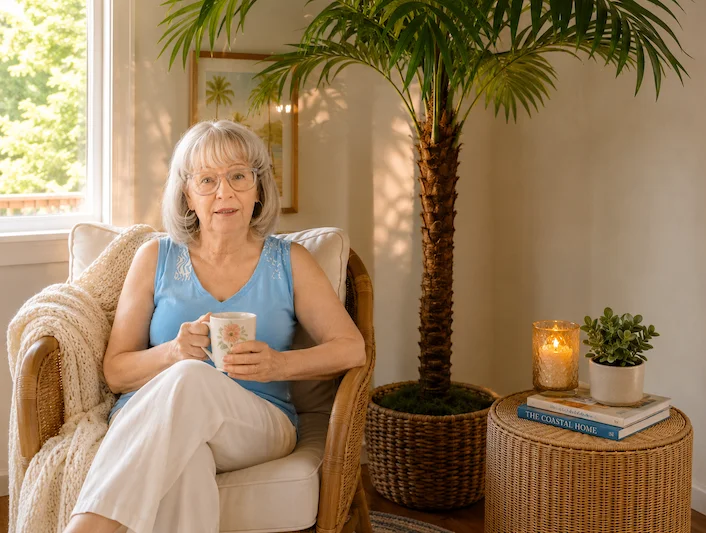
It's peaceful.
I close my eyes and I'm walking down Duval Street in Key West.
Cute cottages with metal roofs.
Cockerels crowing at any time of day!
Magical. This is my happy place.
What could your happy place look like?
Create that.
Why Food and Alcohol Are Not the Same Thing
That might sound like an oddball headline, but hear me out. In one of my stories, I talk about how quitting drinking is easier than losing weight. Honest! But why do I say that?
Food is necessary for life. Alcohol isn't. Having food in the cupboard is a necessity. Having alcohol in a cupboard is not. Fill it with food instead.
How to Prepare for the First Few Alcohol-Free Evenings
So you're now prepared to face your first alcohol-free evening. Take a deep breath. Go sit in your happy place. Close your eyes... and relax.
But let's be realistic.
- Cravings will arise.
- Your old routine is disrupted.
Once you're aware of those possibilities, it's easier to manage them.
Cravings Cure: Retrieve your best somatic marker moment that will crush the craving.
Old Routine: Acknowledge that you're beginning a new chapter. It'll take time for you to settle into your new routine. Take your time. Enjoy it!
Above all, keep in mind why you're doing all this. Your desire to be alcohol-free doesn't come at a price. It'll end up paying you dividends.
When Home Changes Are Not Enough
It's all fine and dandy creating nice, comfy spaces...
But what if you are a heavy daily drinker who experiences blackouts? Suddenly stopping drinking may cause withdrawal symptoms beyond the scope of this website. In those situations, I highly recommend you seek proper medical advice.
One Small Change Tonight
First things first. Before you can create something new, you need to remove the old.
Tonight, walk through your home and identify the three strongest drinking cues you see every day.
Remove, box up, relocate, donate, or replace at least one of them before you go to bed.
Focus on progress, not perfection.
Continue Exploring Starting to Stop
If you're ready to move beyond thinking about change and begin taking action, these articles will help you get started. Explore practical first steps, simple strategies, and gentle guidance to help you stop drinking one decision at a time.
→ Browse all Starting to Stop articles
Ready for More Support?
Explore Live Better Sober: Quit Drinking — Break the Alcohol Habit, a practical, shame-free 66-day course designed to help you recognize and interrupt the pattern behind your evening drinking.
➡️ Learn more about the course here: Break the Nightly Drinking Habit
Frequently Asked Questions
Can changing my home really help me stop drinking?
Can changing my home really help me stop drinking?
Yes. Drinking habits are often connected to environmental cues and routines. Changing those cues can make cravings less automatic.
Should I get rid of all alcohol in the house?
Should I get rid of all alcohol in the house?
Many people find it easier to stop drinking when alcohol is no longer easily available. Removing alcohol reduces temptation and removes the "just one tonight" option.
What if my partner still drinks?
What if my partner still drinks?
You can still create a home setup for not drinking by focusing on your own routines, spaces, and triggers. The goal is to build an environment that supports your choices.
Do I need to throw away my wine glasses?
Do I need to throw away my wine glasses?
Not necessarily, but some people find that boxing them up, donating them, or storing them away helps create psychological distance from the drinking habit.
How long does it take for a new home routine to feel normal?
How long does it take for a new home routine to feel normal?
Most people experience an adjustment period. The first few weeks often feel awkward, but new routines become easier as they are repeated.
Starting to Stop
What Happens When You Stop Drinking Every Night
What happens when you stop drinking every night? Discover the real changes in sleep, mood, and energy over time.
Why Do I Always Say I’ll Quit Drinking Tomorrow?
Why do I always say I'll quit drinking tomorrow? Learn why this nightly promise keeps repeating.
Why Do I Keep Delaying Quitting Drinking?
Why do I keep delaying quitting drinking? Learn why fear, bargaining, and habit loops keep you stuck.
How to Stop Putting Off Quitting Drinking
How to stop putting off quitting drinking and break the “I’ll start tomorrow” cycle for good.
What Happens When You Finally Stop Delaying Quitting Drinking
What happens when you finally stop delaying quitting drinking? Discover the emotional shift that follows.
What to Do at 5 PM Instead of Drinking
Learn what to do at 5 pm when the urge to drink hits, with practical strategies to interrupt cravings, build new routines, and get through the danger hour.
I'm Susan, creator of Live Better Sober, and in January 2028 I'll celebrate 30 years alcohol-free.
Everything on this site comes from my own experience.
I hope that by sharing what I've learned, I can help you break the nightly drinking habit, rediscover yourself, and live better sober, too.
I'm Susan, creator of Live Better Sober, and in January 2028 I'll celebrate 30 years alcohol-free.
Everything on this site comes from my own experience.
I hope that by sharing what I've learned, I can help you break the nightly drinking habit, rediscover yourself, and live better sober, too.
Stay Connected with Live Better Sober
Get new articles, personal stories, podcasts, and practical ideas to help make sober evenings easier.
No lectures. No labels. Just useful support from someone who's been there.


NEWSLETTER
HOME ABOUT CONTACT DISCLAIMER PRIVACY TERMS
FOLLOW US ON:



|
|
|
|
|
SEARCH THIS SITE
LIVE BETTER SOBER IS BASED ON SUSAN GAST'S PERSONAL EXPERIENCE WITH QUITTING ALCOHOL AND LONG-TERM SOBRIETY.
ALL CONTENT COPYRIGHT © 2026 LIVE BETTER SOBER BY SUSAN GAST • ALL RIGHTS RESERVED REGARDLESS OF LINKS OR ATTRIBUTIONS.
POWERED BY SBI! (SOLO BUILD IT!)
