- HOME
- Susan Unscripted Videos
- Drinking vs Weight Loss
Is Quitting Drinking Harder Than Losing Weight?
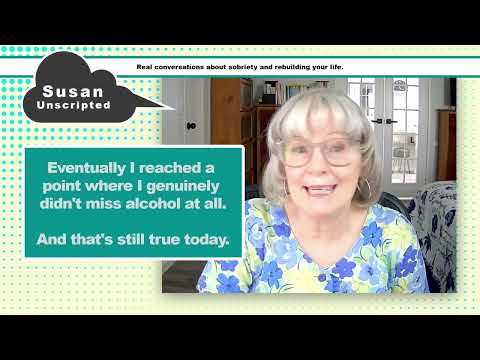

Written by Susan — Quit drinking at 37 • Sober since 1998 • Sharing what actually works
Written by Susan — Quit drinking at 37 • Sober since 1998 • Sharing what actually works
Is quitting drinking harder than losing weight? Most people assume the answer is yes, but I do not think it is always that simple. In my own life, staying sober has become much easier than managing my weight, and the reason comes down to one important difference: food is something you still have to deal with every single day, but alcohol is something you do not need in order to live.
✅ Quick Answer: Is quitting drinking harder than losing weight?
Quitting drinking can feel harder at first because the habit, cravings, routines, and emotional pull can be very strong. But over time, sobriety may become easier than dieting because alcohol can be removed completely, while food still has to be managed every day.
Is Quitting Drinking Harder Than Losing Weight?
Many people automatically assume quitting drinking must be harder than losing weight.
I understand why.
Alcohol can become wrapped around your evenings, your emotions, your routines, your stress relief, and your sense of comfort. If you have been drinking every night, the idea of stopping can feel huge.
But losing weight has its own kind of difficulty.
When you are trying to lose weight, you cannot simply stop eating. You still need food. You still have to shop for it, cook it, choose it, portion it, think about it, and sometimes say no to what you really want.
Food remains part of your life every single day.
Alcohol does not have to.
That is the difference.
Why Dieting Can Feel So Difficult
Dieting is not just about willpower. It is about constant decision-making.
You wake up and think about breakfast. Then lunch. Then dinner. Then snacks. Then grocery shopping. Then restaurants. Then birthdays. Then holidays. Then vacations.
Even when you are doing well, food is still there.
You cannot make one clean decision and be done with it forever.
You have to keep negotiating.
That is why dieting can feel mentally tiring. You may be making progress, but the decision points keep coming.
And yet, what often keeps someone going on a diet?
Results.
You weigh yourself after the first week and see that you have lost two pounds. Then a month later, maybe you are down eight pounds.
Suddenly, the restriction feels more worthwhile.
The success becomes motivating.
You are not just hoping it works anymore. You are seeing proof.
Why Sobriety Can Build Momentum
Quitting drinking can work the same way.
At first, the focus may be on what you are giving up.
The nightly drink.
The reward.
The comfort.
The routine.
The feeling of “finally, my time.”
But then something else starts to happen.
You wake up without regret.
You sleep better.
Your anxiety may start to ease.
Your evenings become calmer.
Your mornings feel clearer.
You keep one promise to yourself, and then another.
One sober night becomes two.
Two becomes a week.
A week becomes real evidence.
That evidence matters.
It tells your brain, “This is possible.”
And that is where the success starts to become fuel.
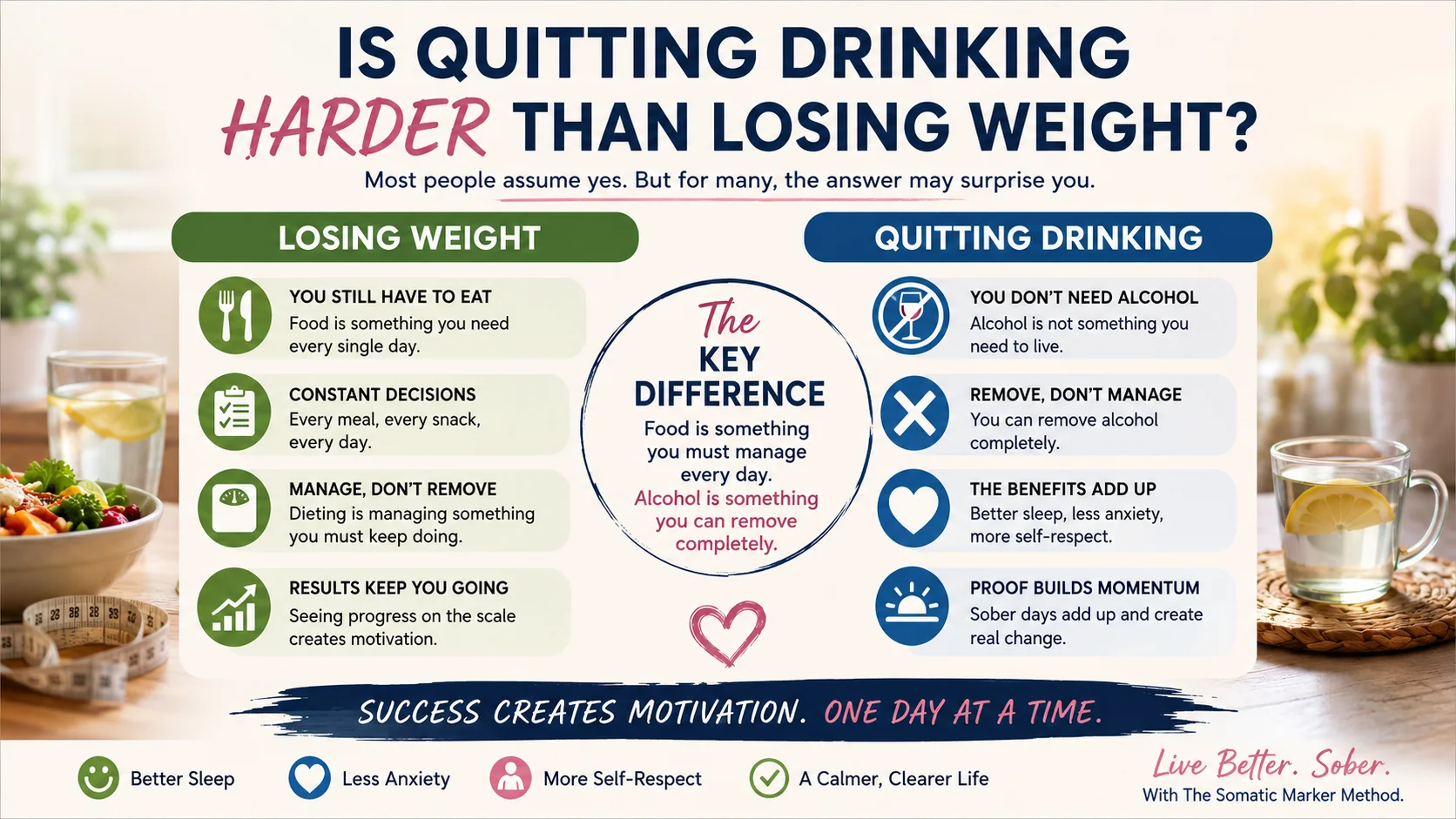
Dieting Means Managing. Sobriety Means Removing.
This is the key distinction.
Dieting asks you to manage something you must keep doing.
Quitting drinking asks you to stop doing something you never needed in the first place.
That does not mean quitting drinking is easy in the beginning. It may not be.
If alcohol has become part of your nightly routine, your brain may expect it. Your body may expect it. Your evening may feel strange without it.
You may feel restless, irritable, bored, emotional, or unsure what to do with yourself.
That is real.
But once alcohol is out of your life, you are not required to keep interacting with it in the same way you must keep interacting with food.
You do not have to drink a little alcohol to survive.
You do not need alcohol nutrients.
You do not need a balanced alcohol plan.
You do not need alcohol for breakfast, lunch, or dinner.
You can remove it completely.
For many people, that clean break becomes a huge relief.
Ask Me How I Know
I have been sober since 1998.
I do not miss alcohol.
I do not wish I could drink.
I do not feel deprived when other people drink.
Alcohol has no pull for me anymore.
But food?
That is different.
I still have to think about what I eat. I still have to manage my weight. I still have to make food choices every day.
That is why, looking back, I can honestly say that for me, losing weight has often felt harder than staying sober.
Not because drinking was harmless. It was not.
Not because quitting was meaningless. It changed my life.
But because once I stopped drinking, I eventually stopped having to negotiate with alcohol.
Food is still part of daily life.
Alcohol is not.
Why This Matters If You Are Early In Sobriety
If you are early in the process, you may be thinking, “Well, it does not feel easier to me.”
That is completely understandable.
The early days can feel awkward and uncomfortable because the old habit is still loud.
Your brain may still say:
“Just one drink.”
“You deserve it.”
“You can start again tomorrow.”
“This is too hard.”
But that is why success matters so much.
Every sober night gives you something to build on.
Every clear morning becomes a new somatic marker — a remembered feeling your brain can start using as evidence.
Instead of only remembering the relief of the first drink, you begin remembering the relief of not drinking.
- The calm morning.
- The pride.
- The steadiness.
- The quiet self-respect.
That is where The Somatic Marker Method becomes so useful. You are not just trying to talk yourself out of drinking. You are building new emotional evidence that sobriety feels better than the old routine.
The Real Shift Is Proof
The more sober days you stack, the more proof you collect.
- Proof that you can do this.
- Proof that one craving does not have to control the evening.
- Proof that discomfort passes.
- Proof that your future does not have to keep repeating your past.
And proof is powerful.
When someone loses weight and sees the scale move, they feel encouraged because the effort is producing a result.
Sobriety works the same way.
You start noticing the result.
- Better sleep.
- Less guilt.
- More peace.
- More emotional stability.
- More trust in yourself.
And little by little, the question changes.
At first, you may ask, “How am I going to live without drinking?”
Later, you may ask, “Why did I ever think I needed it?”
Real Change Happens One Day At A Time
Nobody becomes emotionally stronger overnight.
But every sober evening teaches the brain something important.
Every difficult night you get through helps weaken the old habit loop a little more.
And eventually:
- the cravings calm down
- the bargaining loses strength
- the evenings feel lighter
- the constant mental battle starts fading
That calmer version of you slowly becomes the new normal.
Why I Made This Video
I made this video because people often assume quitting drinking must be one of the hardest things a person can do.
And while I understand that belief, my own experience has been different.
I've been sober since 1998, and looking back over all these years, I've often found that managing my weight has been harder than staying sober. That realization surprised me at first, but the more I thought about it, the more it made sense.
This video isn't about minimizing how difficult quitting drinking can feel in the beginning. It's about sharing a perspective that might give you hope if you're struggling. Sometimes the thing we fear most becomes much easier once we start seeing the benefits and building momentum.
Where To Go From Here
If this idea speaks to you, you may also want to read (and watch):
→ Back to: Susan Unscripted Videos on Live Better Sober
The important thing to remember is this: you do not have to feel fully confident before you begin.
Confidence often comes after the first few wins.
One sober night matters.
One clear morning matters.
One kept promise matters.
Because success creates motivation.
And the more proof you give yourself, the easier it becomes to keep going.
Live Better.
Sober.
With The Somatic Marker Method.
Continue Reading Susan's Story
If this story resonated with you, you may enjoy reading more about my own journey from nightly drinking to lasting sobriety. Each story shares a different lesson, challenge, or turning point that helped me build the alcohol-free life I have today.
→ Browse all of Susan's Stories
Ready for More Support?
Explore Live Better Sober: Quit Drinking — Break the Alcohol Habit, a practical, shame-free 66-day course designed to help you recognize and interrupt the pattern behind your evening drinking.
➡️ Learn more about the course here: Break the Nightly Drinking Habit
Frequently Asked Questions About Quitting Drinking and Weight Loss
Is quitting drinking always easier than losing weight?
Is quitting drinking always easier than losing weight?
No. Quitting drinking can feel very difficult, especially in the beginning. The point is that alcohol can eventually be removed completely, while food still has to be managed every day.
Why does success help people stay sober?
Why does success help people stay sober?
Success gives your brain evidence. Each sober day shows you that change is possible, and that proof can make the next sober choice feel more believable.
Can quitting drinking help with weight loss?
Can quitting drinking help with weight loss?
It can for some people, especially if alcohol was adding extra calories, late-night snacking, poor sleep, or emotional eating. But the bigger benefit is often feeling clearer, calmer, and more in control.
What is The Somatic Marker Method?
What is The Somatic Marker Method?
The Somatic Marker Method is a framework used by Live Better Sober that focuses on using emotional memory and personal emotional experiences to interrupt the nightly drinking habit before the first drink happens.
Stay Connected with Live Better Sober
Get new articles, personal stories, podcasts, and practical ideas to help make sober evenings easier.
No lectures. No labels. Just useful support from someone who's been there.


NEWSLETTER
HOME ABOUT CONTACT DISCLAIMER PRIVACY TERMS
FOLLOW US ON:



|
|
|
|
|
SEARCH THIS SITE
LIVE BETTER SOBER IS BASED ON SUSAN GAST'S PERSONAL EXPERIENCE WITH QUITTING ALCOHOL AND LONG-TERM SOBRIETY.
ALL CONTENT COPYRIGHT © 2026 LIVE BETTER SOBER BY SUSAN GAST • ALL RIGHTS RESERVED REGARDLESS OF LINKS OR ATTRIBUTIONS.
POWERED BY SBI! (SOLO BUILD IT!)
