- HOME
- Shame-Free First Steps
- Talking Yourself Out of Drinking
- Tomorrow-Me Thinking
How Tomorrow-Me Thinking Can Help You Stay Sober Tonight


Written by Susan — Quit drinking at 37 • Sober since 1998 • Sharing what actually works
Written by Susan — Quit drinking at 37 • Sober since 1998 • Sharing what actually works
If you're tempted to drink tonight, try using tomorrow-me thinking. Instead of focusing on how good a drink might feel right now, pause and ask yourself how you'll feel when you wake up tomorrow.
Will tomorrow-you be grateful that you stayed sober, slept better, and kept your promise to yourself? Or will tomorrow-you be dealing with a headache, poor sleep, anxiety, regret, or disappointment?
Tomorrow-me thinking helps you look beyond the immediate craving and make a choice based on how you want to feel tomorrow morning.
✅ Quick Answer: Think about tomorrow morning, not tonight's craving
Tomorrow-me thinking helps you talk yourself out of drinking tonight by shifting your focus from how a drink might feel right now to how you'll feel when you wake up tomorrow. Before you pour a drink, pause and ask yourself: "How will I feel about this decision in the morning?" That simple question can help you make a choice you'll be glad you made tomorrow.
What Is Tomorrow-Me Thinking?
Tomorrow-me thinking is a simple way of looking beyond the immediate urge to drink and considering how you'll feel about your decision tomorrow morning.
An alcohol craving naturally focuses your attention on "right now." It promises relief, comfort, relaxation, or escape in the moment. The problem is that cravings rarely spend much time thinking about tomorrow.
Using tomorrow-me thinking widens your perspective. Before you pour a drink, pause and ask yourself how you'll feel when you wake up tomorrow. Will you be glad you drank, or glad you didn't?
It's not about guilt or shame. It's about making a decision tonight that tomorrow-you will thank you for.
Why We Often Forget About Tomorrow
At the end of a long day, the last thing on your mind is tomorrow. You just want to relax after getting through today.
That's when the habit loop can take over. Your brain naturally focuses on rewarding you for making it through the day. In my case, it was almost as if my brain was saying, "Good job today, Susan. You've earned this."
Before you know it, the drink is poured almost automatically. Stress, routine, and habit work together to keep your attention on immediate relief rather than tomorrow's consequences.
At 5 PM, you're in relaxation mode. That's why tomorrow morning can feel very far away when the urge to drink is strong.
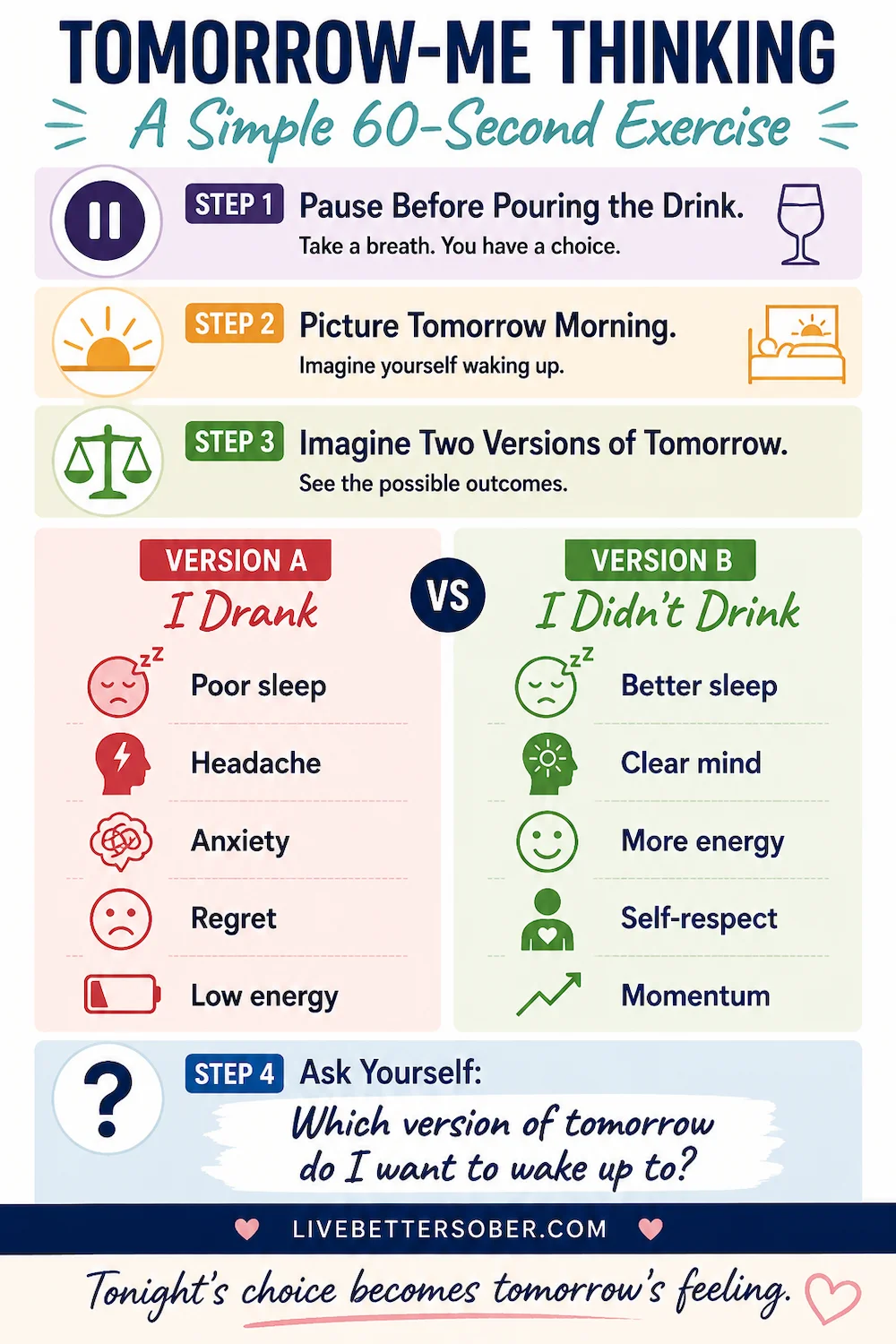
Tomorrow-Me Thinking in 4 Steps
This simple exercise takes less than a minute, but it can completely change the way you think about an evening craving. Instead of focusing on how a drink might make you feel right now, you're comparing two possible tomorrows and deciding which one you'd rather wake up to.
- Pause before pouring the drink.
- Picture yourself waking up tomorrow morning.
- Compare the two possible outcomes.
- Ask which version of tomorrow you want.
Tomorrow-me thinking works because it helps you compare two possible outcomes before you make a decision. But where do those predictions come from in the first place? That's where past experience becomes important.
When Tomorrow-Me Needs Help From Past-Me
In order for tomorrow-me thinking to work, past-me often needs to step in and help.
After all, how do you know how you'll feel tomorrow if you drink tonight?
The answer is that you're not really guessing. Your brain is searching for similar experiences from the past and using them to predict what tomorrow is likely to feel like.
That's where my Somatic Marker Method comes in.
A somatic marker moment is a vivid memory of a past drinking experience that helps override the urge to take the first drink. It might be a pounding headache, a sleepless night, a wave of anxiety, an embarrassing moment, or simply the disappointment of breaking another promise to yourself. For me, it was recalling the morning of January 17th, 1998.
When you ask yourself how you'll feel tomorrow morning if you drink tonight, those memories provide the answer.
That's why I often say:
"Tomorrow-you asks the question, and past-you supplies the answer."
The goal isn't to scare yourself or dwell on past mistakes. The goal is to make a better decision tonight by remembering what happened before.
If you'd like help identifying your own somatic marker moments, you can download a free copy of My Somatic Marker Moments Workbook and write down the experiences that remind you why you want to stop drinking.
The real choice isn't between drinking and not drinking. It's between two possible tomorrows. One version wakes up feeling proud, rested, and in control. The other wakes up with a headache, an upset stomach, poor sleep, and the familiar feeling of wishing things had gone differently.
What If I Still Want the Drink?
If you've tried tomorrow-me thinking and still want the drink, don't panic. A craving doesn't disappear just because you've recognized it. The important thing is not to go on autopilot.
Give yourself another sixty seconds. You don't have to decide right now. Go grab a banana, take a short walk, or send a text. The goal is to interrupt the automatic sequence that leads from craving to pouring the drink.
I also find that calling a friend or sending a quick text can help break the cycle. Sometimes all it takes is a small interruption to stop the urge from gaining momentum.
This is also a good time to revisit your reasons for quitting and review your somatic marker moments. Those reminders can help bring tomorrow morning back into focus when the craving is trying to keep your attention on right now.
Remember, interrupting the desire to drink is the goal. The more often the urge gets interrupted, the weaker its hold becomes over time.
If you'd like additional ideas, see my page on talking yourself out of drinking for more practical strategies you can use when the urge strikes.
One Small Question That Can Change Tonight
Before you pour that drink, take a moment and think about tomorrow morning.
Do you want to wake up feeling proud of your decision, or wishing you had made a different one?
Tomorrow-me thinking only takes a minute, but that minute may be enough to help you change the direction of your evening.
Continue Exploring Shame-Free First Steps
If you've started questioning your relationship with alcohol, you're already taking an important first step. These articles are designed to help you move forward without shame, pressure, or labels. Explore practical guidance, gentle encouragement, and real-life insights that can help you build confidence one sober decision at a time.
→ Browse all Shame-Free First Steps articles
Ready for More Support?
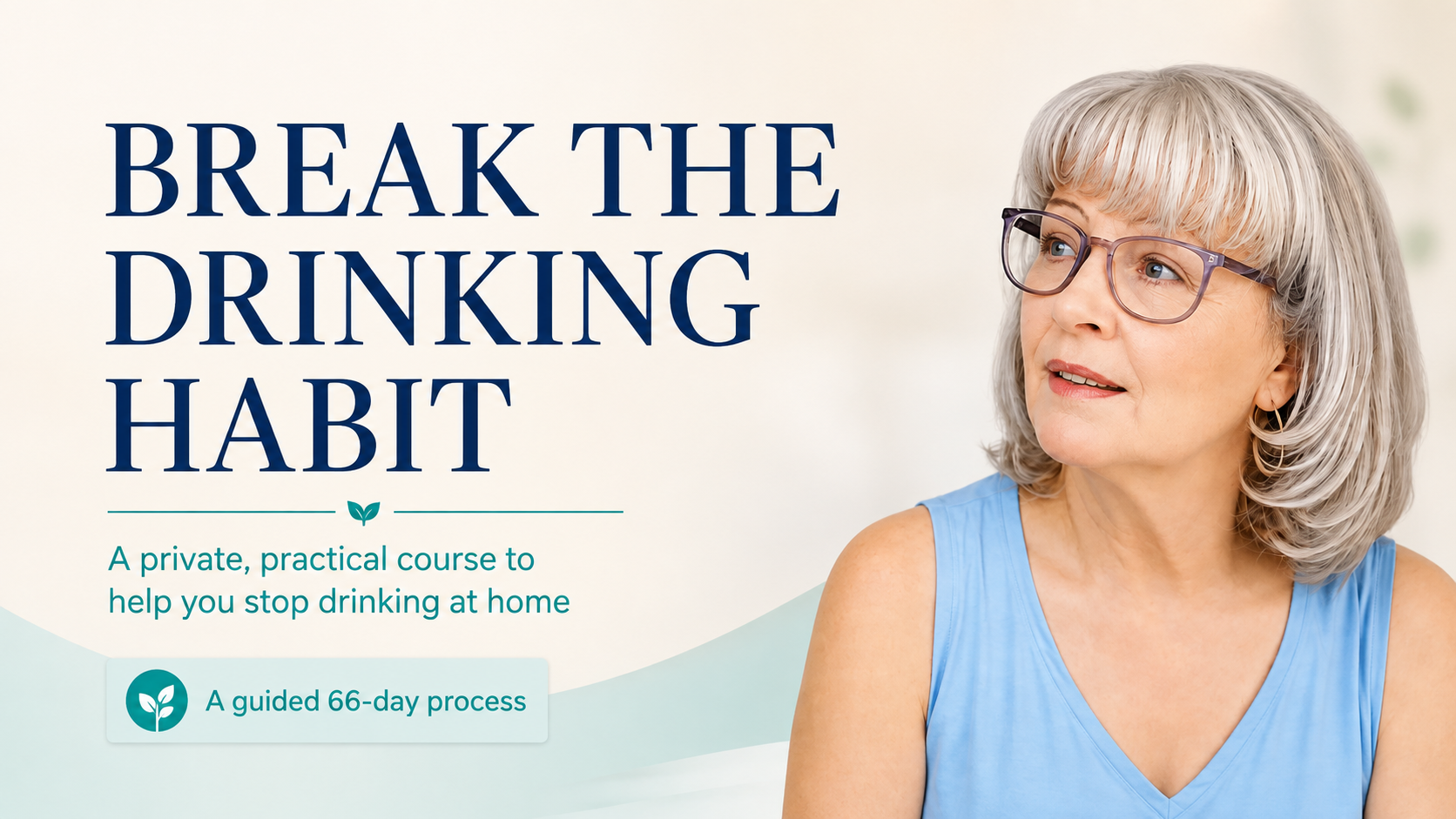
Explore Live Better Sober: Quit Drinking — Break the Alcohol Habit, a practical, shame-free 66-day course designed to help you recognize and interrupt the pattern behind your evening drinking.
➡️ Learn more about the course here: Break the Nightly Drinking Habit
If you drink heavily every day, have experienced alcohol withdrawal symptoms before, or are unsure whether it is safe to stop suddenly, speak with a healthcare professional before making major changes to your drinking.
Frequently Asked Questions
What is tomorrow-me thinking?
What is tomorrow-me thinking?
Tomorrow-me thinking is a simple mental exercise that helps you consider how today's choices will affect how you feel tomorrow. It can be especially helpful when you're tempted to drink.
How can tomorrow-me thinking help me avoid drinking tonight?
How can tomorrow-me thinking help me avoid drinking tonight?
Instead of focusing on the immediate urge to drink, tomorrow-me thinking encourages you to consider how you'll feel when you wake up. This shift in perspective can make it easier to choose not to drink.
What should I ask myself before having a drink?
What should I ask myself before having a drink?
Try asking, "How will I feel about this decision tomorrow morning?" Thinking about tomorrow's consequences can help interrupt an impulsive decision.
What if I already know I'll regret drinking?
What if I already know I'll regret drinking?
Reminding yourself of previous experiences can strengthen tomorrow-me thinking. Many people find it easier to make a better choice when they remember how drinking affected them in the past.
Is tomorrow-me thinking the same as willpower?
Is tomorrow-me thinking the same as willpower?
No. Tomorrow-me thinking is a decision-making tool, not a test of willpower. It helps you look beyond the craving and focus on the outcome you want.
What if tomorrow-me thinking doesn't stop the urge?
What if tomorrow-me thinking doesn't stop the urge?
That's normal. Cravings don't always disappear immediately. If the urge continues, try delaying your decision, eating something, taking a walk, or distracting yourself until the craving passes.
Shame-Free First Steps
Talking Yourself Out of Drinking
Talking yourself out of drinking tonight? Learn why urges keep returning, how the internal debate works, and what helps you stay committed.
Quietly Stopping Drinking at Home
Quietly stopping drinking at home is possible for many people. Learn practical first steps, safety considerations, and how to begin.
I Already Poured a Drink. Now What?
I Already Poured a Drink. Now What? If you haven't taken a sip, learn how to pause, interrupt, and change course tonight without regret.
What to Say Back to “I Deserve a Drink”
What to say back to “I deserve a drink” when the thought is defending a familiar habit loop and trying to pull you back into drinking.
Sober Curious First Steps: Where to Begin
Sober curious first steps for women wondering if it's time to rethink nightly drinking without pressure, shame, or labels.
Alcohol-Free Evening Starter Routine
Alcohol-free evening starter routine to help you replace nightly drinking with a calming habit that actually sticks.
2-Minute Walk in the Door Reset
What's a 2-minute walk in the door reset to interrupt autopilot pouring? How to interrupt the habit before you reach the fridge.





I'm Susan, creator of Live Better Sober, and in January 2028 I'll celebrate 30 years alcohol-free.
Everything on this site comes from my own experience.
I hope that by sharing what I've learned, I can help you break the nightly drinking habit, rediscover yourself, and live better sober, too.
I'm Susan, creator of Live Better Sober, and in January 2028 I'll celebrate 30 years alcohol-free.
Everything on this site comes from my own experience.
I hope that by sharing what I've learned, I can help you break the nightly drinking habit, rediscover yourself, and live better sober, too.
Stay Connected with Live Better Sober
Get new articles, personal stories, podcasts, and practical ideas to help make sober evenings easier.
No lectures. No labels. Just useful support from someone who's been there.


NEWSLETTER
HOME ABOUT CONTACT DISCLAIMER PRIVACY TERMS
FOLLOW US ON:



|
|
|
|
|
SEARCH THIS SITE
LIVE BETTER SOBER IS BASED ON SUSAN GAST'S PERSONAL EXPERIENCE WITH QUITTING ALCOHOL AND LONG-TERM SOBRIETY.
ALL CONTENT COPYRIGHT © 2026 LIVE BETTER SOBER BY SUSAN GAST • ALL RIGHTS RESERVED REGARDLESS OF LINKS OR ATTRIBUTIONS.
POWERED BY SBI! (SOLO BUILD IT!)
